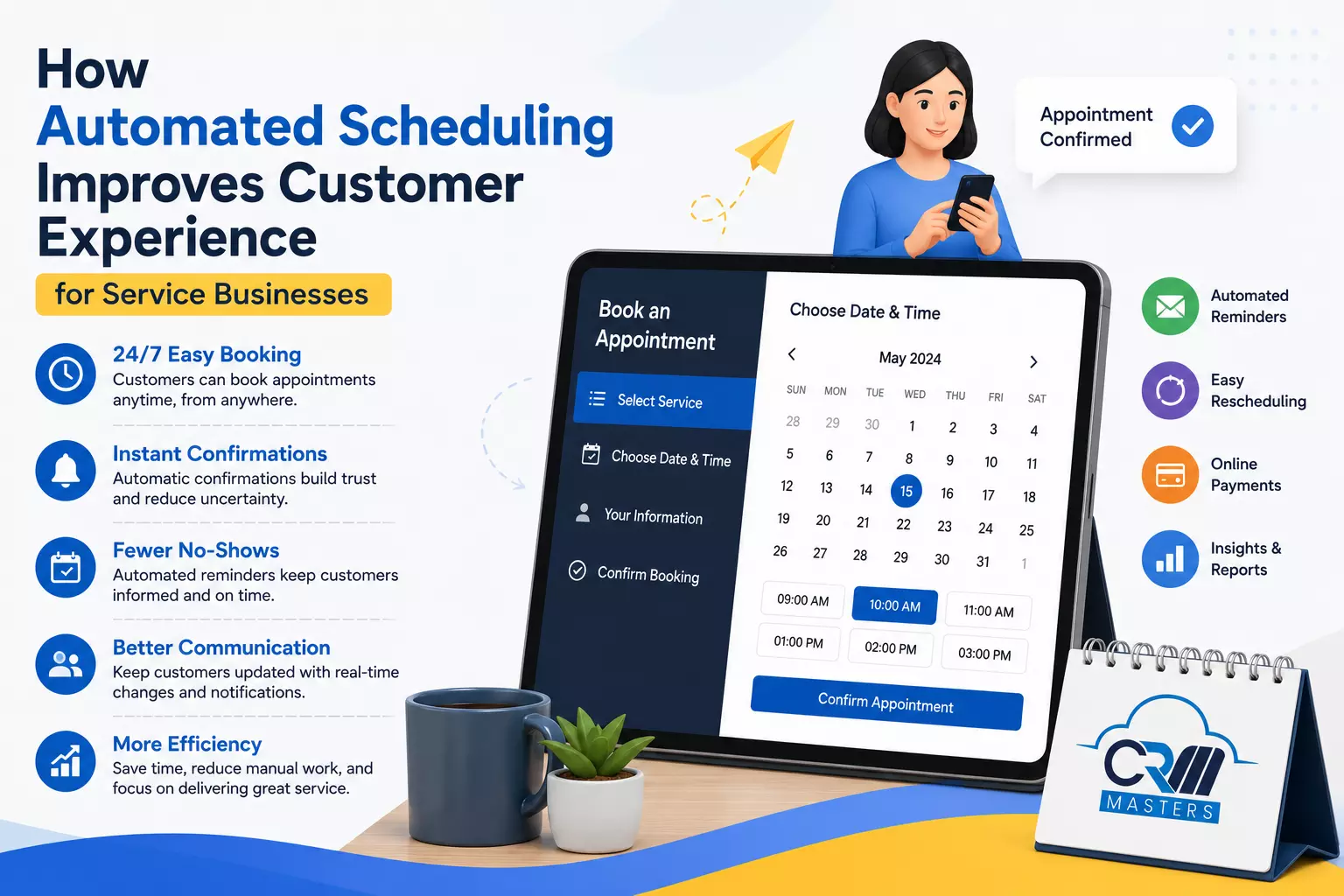
How Automated Scheduling Improves Customer Experience for Service Businesses
Customer experience has become one of the most important factors in building a successful service business.
People expect businesses to respond quickly, provide convenient communication, and make it easy to access services. Even a small inconvenience during the booking process can influence whether a customer decides to continue with a company.
One area that businesses often overlook is appointment scheduling. Traditional booking methods such as phone calls, emails, and manual calendar management can create delays and unnecessary friction.
Automated scheduling offers a simpler alternative. By allowing customers to select available time slots themselves, businesses can make appointments easier to manage while creating a more convenient customer journey.
What Is Automated Scheduling?
Automated scheduling uses software to manage appointments and availability without requiring employees to coordinate every booking manually.
Instead of contacting a business and waiting for confirmation, customers can visit an online booking page, choose a service, select an available time, and receive confirmation automatically.
The system can handle many routine scheduling activities, including:
- Checking availability
- Confirming appointments
- Sending reminders
- Processing cancellations
- Managing rescheduling
- Updating calendars
- Collecting customer information
- Sending meeting details
This reduces the amount of administrative work required from employees.
Why Scheduling Matters to Customer Experience
Customers often judge a business based on their interactions before they even purchase a service.
A complicated booking process can create frustration. For example, a customer may send an email asking for an appointment, wait for a response, discover that the suggested time doesn't work, and then continue exchanging messages until a suitable slot is found.
Each additional step increases friction.
An automated scheduling system can shorten this process considerably. Customers can see available times and make their own selection without waiting for an employee to respond.
The result is a faster and more convenient experience.
Read: How Healthcare Software Development is Transforming
24/7 Booking Can Increase Convenience
One major advantage of automated scheduling is that customers aren't limited to business hours.
Someone might want to schedule a consultation late at night or early in the morning. If the only option is to call during office hours, the customer has to wait.
An online booking system can remain available around the clock.
This doesn't mean employees need to work 24/7. The software simply allows customers to select from predefined availability and automatically records the appointment.
For businesses serving customers across different time zones, this can be especially useful.
Automated Reminders Reduce Missed Appointments
Missed appointments can be expensive for service businesses.
A customer may forget an appointment, misunderstand the time, or simply overlook an earlier confirmation email.
Automated reminders provide an additional opportunity to keep customers informed.
Depending on the scheduling platform, reminders can be sent through email or other supported communication channels. These messages can include the appointment date, time, location, and instructions for joining an online meeting.
This small automation can make the overall booking experience more reliable.
Customers Get More Control
Modern customers increasingly expect self-service options.
They don't always want to call a business to make a simple appointment. They may prefer to browse available times and choose an option that fits their schedule.
Automated booking gives customers greater control over the process.
They can often:
- Select a preferred service
- Choose a staff member
- Pick a convenient time
- Provide required information
- Reschedule when necessary
- Cancel according to business policies
Giving customers this flexibility can improve satisfaction while reducing the workload on support teams.
Automation Helps Employees Too
Customer experience and employee experience are closely connected.
When employees spend a large portion of their day responding to scheduling requests, they have less time for activities that require their expertise.
For example, a consultant shouldn't need to spend several hours each week comparing calendars and sending appointment confirmations.
Automation can take care of these repetitive tasks so employees can focus on delivering the actual service.
This can create a better experience on both sides of the interaction.
Connecting Scheduling With Other Business Tools
The benefits of automated scheduling become even greater when the scheduling system works alongside other business applications.
A business may connect its scheduling platform with:
- Customer relationship management systems
- Online calendars
- Payment platforms
- Video conferencing software
- Email marketing tools
- Customer support systems
- Business reporting tools
These integrations help prevent information from becoming trapped inside separate systems.
For example, when a potential customer books a consultation, the appointment details can become part of the customer's broader sales or service workflow.
Businesses exploring this approach can also learn more about how Zoho Bookings works as appointment booking software, including its approach to online scheduling, reminders, calendar synchronization, payments, and integrations.
Personalization Makes Automated Scheduling Better
Automation doesn't have to make customer interactions feel impersonal.
Businesses can customize booking pages and automated messages to match their brand and communication style.
Instead of sending a generic confirmation, a business can provide useful information such as:
- What the appointment is about
- Who the customer will meet
- How long the meeting will take
- What the customer should prepare
- Where the appointment will take place
- How to reschedule if necessary
This makes automation feel more like a helpful service rather than a purely technical process.
Using Scheduling Data to Understand Customers
Appointment data can also provide useful business insights.
Businesses can analyze information such as:
- Most popular appointment times
- Most frequently selected services
- Cancellation rates
- Rescheduling patterns
- Staff utilization
- Booking volume
- Customer demand
These insights can help managers make better decisions about staffing, service availability, and operating hours.
For example, if a company consistently receives more appointment requests during evenings, it may consider extending availability during those hours.
Mobile-Friendly Booking Is Essential
Many customers use smartphones for everyday tasks, and appointment scheduling is no exception.
A booking page should therefore work well on mobile devices.
Customers should be able to navigate the service options, select a time, enter their information, and complete the booking without unnecessary scrolling or complicated forms.
A poor mobile experience can undermine the convenience that online scheduling is supposed to provide.
How Businesses Can Improve Their Scheduling Process
Implementing scheduling software is only the first step. Businesses should also review how customers move through the booking process.
A good process should be:
Simple → Fast → Clear → Flexible → Automated
Businesses can improve their scheduling experience by keeping forms short, showing real-time availability, explaining services clearly, providing immediate confirmation, and sending timely reminders.
It is also important to make cancellation and rescheduling policies easy to understand.
The goal should be to remove unnecessary steps without removing useful communication.
Final Thoughts
Automated scheduling is more than a way to put appointments on a calendar. It can become an important part of the customer experience.
By allowing customers to book at their convenience, providing automatic confirmations and reminders, reducing manual communication, and connecting appointments with other business systems, scheduling automation can make service businesses more efficient and customer-friendly.
As customer expectations continue to evolve, convenience will remain an important competitive advantage. Businesses that make it easy for customers to interact with them — starting with the first appointment — are better positioned to create lasting relationships.
For service businesses looking to improve their customer journey, automated scheduling is a practical place to start.