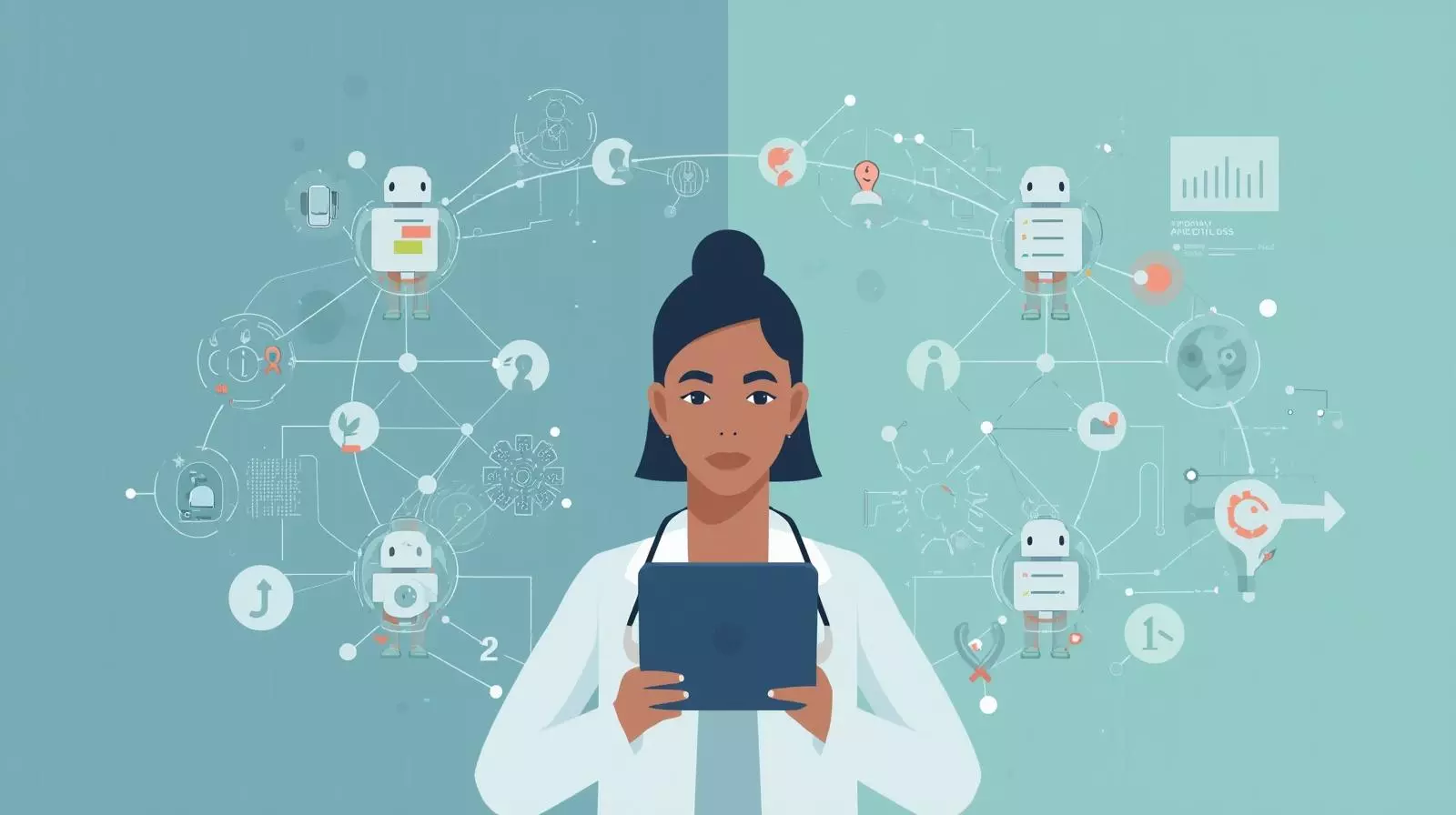
How AI-Powered Telemedicine Apps Are Transforming Mental Health Services
AI-powered telemedicine is redefining mental health care by offering continuous, data-driven support that goes far beyond traditional therapy. With intelligent algorithms, natural language processing, and predictive analytics, these systems can detect emotional patterns, recommend coping strategies, and even help prevent crises before they occur.
This digital evolution has made therapy more inclusive, bridging the gap for people in remote or underserved communities. Technology isn’t replacing empathy — it’s amplifying it.
Read: How Is AI Driving Modern Technologies?
AI-Driven Diagnostics and Emotional Insights
Mental health care often depends on subtle cues — tone, pacing, language, and consistency. AI can process those at scale. From analyzing voice inflections to recognizing emotional sentiment in written text, telemedicine platforms are becoming capable of “listening” deeply.
AI chatbots can talk with users empathetically, assess their mental state, and recommend mindfulness or behavioral interventions. This makes care proactive rather than reactive.
Building Robust Mental Health Apps with Android Expertise
For healthcare providers focusing on Android users, android application development services
are a key part of scaling mental health platforms. Quokka Labs specializes in creating secure, high-performance Android apps that deliver a seamless user experience for patients and clinicians alike.
These apps can integrate advanced AI features — such as mood tracking, chatbots, or predictive alerts — while maintaining full compliance with healthcare data standards.
Cross-Platform Efficiency with Flutter Development
When healthcare organizations want to build once and launch everywhere, Quokka Labs delivers as a custom flutter app development company. Flutter allows developers to use a single codebase for both iOS and Android, ensuring fast deployment and consistent interfaces.
For mental health startups, this means reduced costs, faster time-to-market, and a unified user experience — crucial for patient retention and trust.
Crafting User-Centric Experiences with React Native
Quokka Labs also operates as a react native app development company, helping create cross-platform mental health apps that look and feel native. React Native’s flexibility supports real-time updates, seamless animations, and smooth integrations with wearable devices.
This makes it ideal for building therapy chat interfaces, journaling features, and continuous emotional monitoring tools that help users engage comfortably with their mental wellness.
Web Portals for Therapists and Administrators
Beyond mobile, mental health solutions often need browser-based dashboards for professionals to manage sessions, track patient progress, and analyze trends. Quokka Labs offers web application development services to create these secure, scalable portals.
These dashboards integrate analytics, scheduling tools, and secure communication channels — ensuring that care teams stay connected and informed.
Intelligent Healthcare with Agentic AI Systems
To make telemedicine truly responsive, Quokka Labs develops systems through its agentic ai development company expertise. “Agentic AI” refers to AI that can act on its own initiative — like prompting a user to check in, scheduling a session, or escalating a high-risk case to a clinician.
By combining empathy-driven design with agentic AI, mental health platforms can offer continuous, personalized engagement while reducing clinical burnout.
Advantages of AI-Powered Telemedicine in Mental Health
AI-driven telemedicine offers several life-changing benefits:
- Accessibility: Patients can receive help anywhere, anytime.
- Affordability: Automation reduces therapy costs.
- Consistency: AI ensures users never go without support.
- Data-Driven Insights: Continuous learning improves patient outcomes.
- Personalization: Treatment adapts to each individual’s emotional needs.
These advantages collectively make mental health care more inclusive and effective.
Privacy and Ethics in AI Mental Health Platforms
Data sensitivity is the biggest challenge in digital mental health care. AI systems must comply with regulations like HIPAA and GDPR, while maintaining transparency about how data is used and stored.
Quokka Labs prioritizes ethical design and security-first development, ensuring patient trust remains at the heart of every innovation.
The Future of AI-Driven Mental Health Solutions
The next frontier of mental health technology will involve deeper personalization and proactive intervention. AI systems will predict emotional crises, while VR-based therapy and agentic AI models will provide immersive, real-time support.
The collaboration between healthcare professionals and AI will create a world where emotional well-being is monitored and nurtured continuously — not just in crisis moments.
FAQs About AI in Mental Health Telemedicine
1. How does AI improve mental health care?
AI personalizes therapy, detects early warning signs, and ensures patients get timely help.
2. Are AI-powered telemedicine apps secure?
Yes. When developed by experienced teams, they follow strict healthcare compliance protocols.
3. Why should healthcare providers go for custom development?
Custom-built apps ensure scalability, better patient engagement, and brand-specific features.
4. What is agentic AI in telemedicine?
It’s AI that acts autonomously but ethically to support users — like checking in on mood or alerting a therapist.
5. How does Quokka Labs fit into the ecosystem?
By offering complete mobile, web, and AI development expertise for building secure, intelligent healthcare platforms.
Conclusion
AI-powered telemedicine apps are no longer futuristic experiments — they’re the new foundation of accessible, affordable, and personalized mental health care. By integrating technology and compassion, these platforms are rewriting what it means to receive mental support.
Read: AI-Enabled Software Development for Startups in 2026
Quokka Labs stands at the center of this transformation, developing mobile, web, and AI-powered telemedicine ecosystems that empower both patients and practitioners. The future of mental health is not man versus machine — it’s man and machine, working together for empathy at scale.