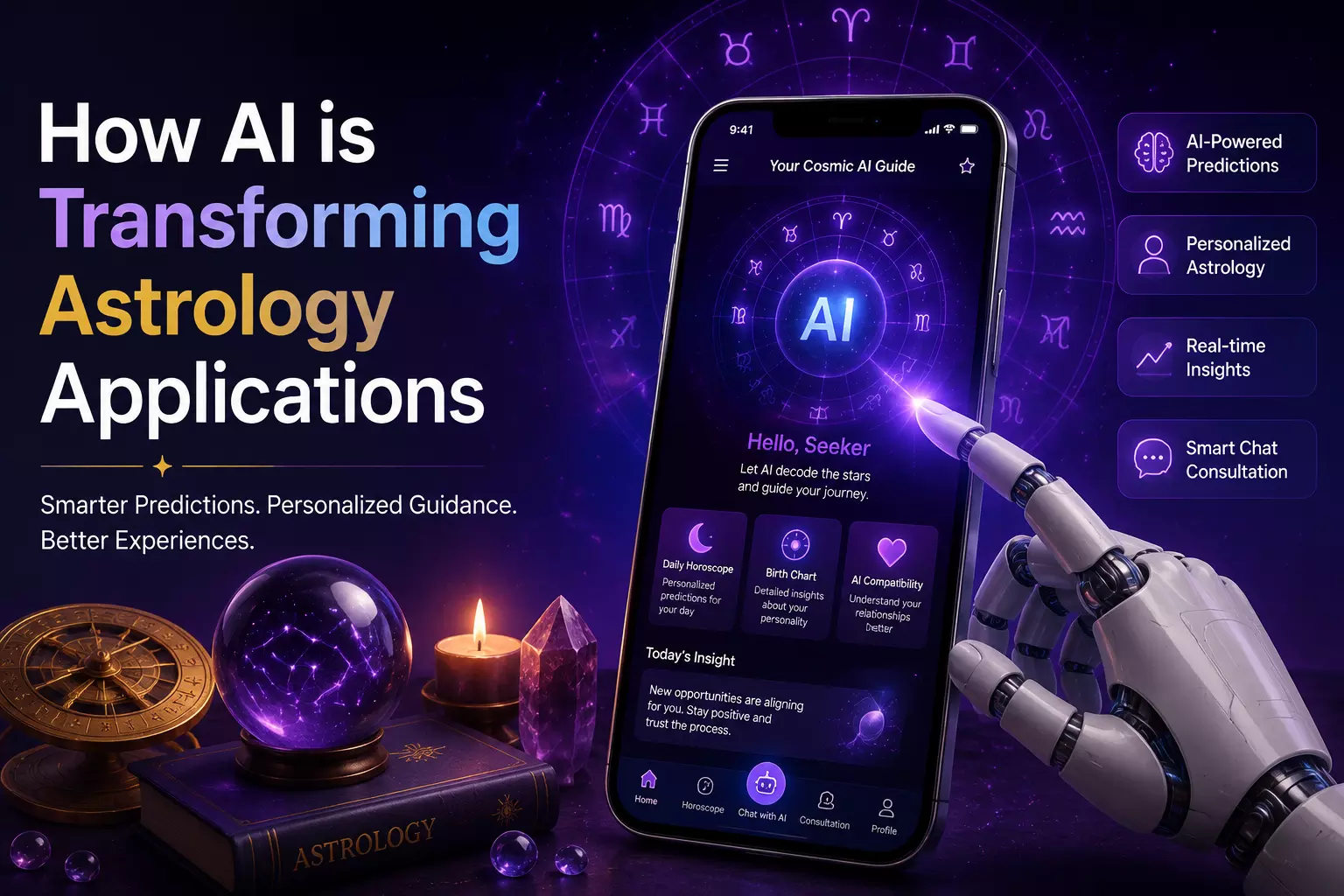
How AI is Transforming Astrology Applications
AI is transforming astrology applications in ways that would have seemed impossible just a few years ago.
What was once limited to generic daily horoscopes printed in newspapers has evolved into highly personalized, data-driven predictions delivered instantly through mobile apps.
As millions of users turn to their phones for guidance on love, career, health, and life decisions, artificial intelligence has quietly become the engine powering a smarter, more accurate, and far more engaging astrology experience.
For businesses building or investing in astrology platforms, understanding exactly how AI is reshaping this space isn't just useful, it's becoming essential for staying competitive.
In this article, we'll explore the key ways AI is transforming astrology apps and what this shift means for both users and businesses in this fast-growing niche.
The Traditional Astrology Experience vs. the AI-Powered One
Traditionally, astrology relied heavily on manual calculations and the expertise of individual astrologers to interpret birth charts, planetary positions, and their meanings.
This process was time-consuming, often inconsistent between practitioners, and difficult to scale beyond one-on-one consultations.
AI has changed that dynamic significantly. Modern astrology apps use machine learning algorithms and vast datasets of astrological interpretations to generate accurate, personalized predictions instantly, without requiring a human astrologer to manually calculate every detail.
This doesn't eliminate the value of human astrologers, but it does make astrology far more accessible, consistent, and available on demand.
Key Ways AI Is Transforming Astrology Applications
1. Highly Personalized Predictions
Instead of generic horoscopes based only on zodiac sign, AI-powered astrology apps analyze a user's exact birth date, time, and location to generate deeply personalized predictions.
Some advanced systems even factor in a user's past interactions with the app, refining future predictions based on what topics or life areas the user engages with most.
Read: Advanced Analytics for Building Astrology Apps: Strategy, Cost & ...
2. Automated Birth Chart (Kundli) Generation
Generating an accurate birth chart traditionally required precise manual astronomical calculations.
AI-powered systems now handle this instantly, calculating planetary positions and generating detailed Kundlis or natal charts in seconds, something that used to take a trained astrologer significant time to complete by hand.
3. AI Chatbots for Instant Astrological Guidance
Many astrology apps now feature AI-powered chatbots that can answer common questions, provide quick daily insights, or guide users through basic compatibility checks without needing to wait for a live astrologer.
These chatbots use natural language processing to understand user questions conversationally, making the experience feel more like talking to a knowledgeable friend than filling out a form.
4. Smarter Compatibility and Matchmaking
AI has significantly improved compatibility matching features, analyzing detailed birth chart data between two people to generate more nuanced compatibility scores than simple zodiac sign comparisons.
This is particularly valuable in markets where astrological matchmaking plays a meaningful role in relationship and marriage decisions.
5. Predictive Pattern Recognition
By analyzing large datasets of astrological patterns and historical outcomes, AI systems can identify trends and correlations that might not be obvious even to experienced astrologers.
While astrology itself remains rooted in tradition, AI adds a layer of data-driven pattern recognition that can make predictions feel more consistent and detailed.
6. Voice-Based and Conversational Astrology
As voice assistant technology improves, some astrology apps are integrating AI-driven voice interfaces, allowing users to simply ask about their day or week and receive a spoken, personalized response.
This makes the experience more natural and accessible, especially for users who prefer speaking over typing.
7. Smarter Astrologer-Customer Matching
For apps that connect users with live astrologers, AI algorithms help match users with astrologers best suited to their specific needs, whether that's expertise in a particular astrology system, language preferences, or specialization in topics like career or relationships, improving overall consultation satisfaction.
8. Real-Time Personalization Based on User Behavior
AI continuously learns from how users interact with the app, which topics they explore most, which predictions they engage with, and adjusts future content accordingly. This creates a more tailored experience over time, rather than delivering the same static content to every user regardless of their interests.
9. Fraud Detection and Astrologer Verification
Beyond predictions, AI also plays a role in maintaining platform trust, helping detect fraudulent astrologer profiles, unusual payment activity, or fake reviews, ensuring users can trust the professionals they're consulting with on the platform.
Benefits for Businesses Building Astrology Apps
For businesses in this space, integrating AI offers several concrete advantages:
- Higher user engagement, since personalized content keeps users returning to the app more consistently.
- Reduced dependency on live astrologers for basic queries, allowing human experts to focus on more complex, higher-value consultations.
- Improved scalability, since AI can handle thousands of simultaneous personalized interactions without the limitations of human availability.
- Better monetization opportunities, through premium AI-driven insights, personalized reports, and improved astrologer-matching that increases consultation bookings.
Challenges to Keep in Mind
While AI brings clear benefits, there are a few challenges worth considering when building or investing in AI-powered astrology apps:
- Maintaining authenticity: AI-generated predictions need to feel genuinely insightful rather than generic, especially since astrology is deeply personal for many users.
- Data privacy: Since these apps collect sensitive personal information like birth details, strong data protection practices are essential.
- Balancing automation with human expertise: Many users still value the option to speak with a real astrologer, so AI should complement rather than fully replace human consultations.
- Continuous model refinement: AI systems need ongoing training and adjustment based on user feedback to keep predictions relevant and accurate over time.
What This Means for the Future of Astrology Apps
As AI technology continues to advance, astrology apps are likely to become even more sophisticated, potentially incorporating deeper behavioral analysis, more natural conversational interfaces, and increasingly accurate predictive models.
Businesses that invest early in building strong AI capabilities into their astrology app development strategy are positioning themselves to meet growing user expectations for personalized, instant, and engaging astrological guidance.
Final Thoughts
AI has fundamentally changed what users expect from an astrology app, shifting the experience from generic, one-size-fits-all horoscopes to deeply personalized, data-driven insights available instantly.
From automated birth chart generation to smarter astrologer matching and conversational chatbots, AI is making astrology more accessible, engaging, and scalable than ever before.
For businesses in this space, staying competitive means recognizing AI not as a passing trend, but as a core part of how modern astrology platforms are built and continue to evolve.
As user expectations keep rising, the platforms that successfully blend AI-driven personalization with genuine astrological expertise will be the ones that build lasting trust and long-term engagement with their users.