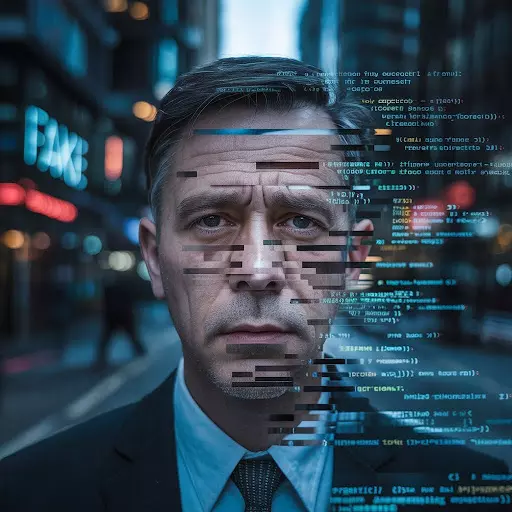
How AI Is Fighting Deepfakes: What Learners and Digital Creators Need to Know
Artificial intelligence (AI) is altering the way people create, exchange, and use information in the current digital first world.
However, along with that development, there is an upsurge in challenge through the phenomenon of deepfakes. Such AI-created videos, audios, or images seem to alter reality in such a way that it is often difficult to tell which of them is real and which one is fake.
To digital creators and learners, learning how AI is responding with deepfake detection is not only significant but necessary in safeguarding credibility, trust, and innovation on the Web.
What Are Deepfakes?
Deepfakes are made with complex AI algorithms, mostly deep learning and generative adversarial networks (GANs). They are able to map the face of an individual on the body of another or imitate voices or even create completely new and real-like works. Some of the uses are harmless such as in entertainment or gaming, others are dangerous, misleading, generating identity fraud, or ruining reputations.
To both students who have to manoeuvre their way through the academic world, and to online creators who upload their work, deepfakes are both a great demonstration of the possibilities of technology and a significant menace to authenticity.
Why Deepfake Detection Matters
The high rate of development of deepfakes implies that they are becoming more authentic and unnoticed. Think about a bogus lecture video that spreads in an online learning community, deceiving students, or a creator losing his or her reputation because of fake videos. In the absence of the deepfake detection tools, such situations can go out of control.
Deepfake detection checks the digital ecosystems by:
Authenticity: Asking to verify user content.
Prevention of fraud: forestalling in education, business, or entertainment.
Helping the creators: Protecting originality and avoiding theft or abusive use of the creative product.
Developing digital literacy: Assisting learners to be aware of suspicious information and doubt it.
How AI Is Fighting Deepfakes
Paradoxically, the technology that produced deepfakes AI is also the clue to their detection and counteraction. This is one way that AI is rising to the task:
1. Advanced Deepfake Detection Algorithms
AI-based algorithms have the capability to detect inconsistencies within deepfake content that humans may fail to notice. An example is unnatural blinking, an unmatched lip- syncing or distorted shadows, which will all show signs of manipulated contents. The machine learning models are trained with large set of authentic and fake media and thus they can flag suspicious files with great accuracy.
2. Facial and Voice Forensics
Facial recognition AI is able to identify micro expressions or skin texture abnormality or facial geometry mismatch. Likewise, voice recognition AI detects abnormal pitch, breathing, or cadence in audio files that can be used to indicate tampering. This is a forensic level of detection that makes it the more challenging to have a malicious deepfake pass unnoticed.
3. Blockchain for Authenticity Verification
There are organizations that are integrating AI and blockchain technology to trace and authentication of the origin of digital content. Cryptographic signatures can be added to original files to demonstrate their ownership and authenticity and minimize the threats of misinformation via deepfakes.
4. AI-Powered Watermarking
AI-based watermarking tools add an invisible tag to digital media so that the works of creators can be verified and are not abused. These watermarks can reveal the efforts of tampering in case they are manipulated.
5. Real-Time Detection Tools
Video conferencing and social media as well as learning management systems are now being integrated with AI tools in order to detect deepfakes in real-time. This is a proactive method that limits sharing of content that is harmful before it can inflict a lot of harm.
What Learners Need to Know
Critical thinking and awareness is as significant in the case of the students and lifelong learners as the technology itself. Here are key takeaways:
Check sources: It is always vital to see whether the information is a credible source.
Question authenticity: When something does not sound normal such as the audio not matching the moves there could be some manipulation.
Go digital: Understand the concept of AI-based deepfakes detection and why it is relevant to academic studies, distance-learning programs, and knowledge communities.
Guard your face: Do not post personal videos or audio material online, because it can be used to generate convincing deepfakes.
What Digital Makers ought to understand.
For content creators, the rise of deepfakes poses both risks and opportunities:
Authenticate originality: AI-based watermarking and authenticity solutions can be used to protect your digital rights.
Build trust in your audience: An openness regarding the tools and AI techniques you employ enhances the credibility.
Keep abreast of detection technology: Learn about the changing world of deepfake detectors in the effort to implement preventive strategies on your channels.
Make AI your partner: AI provides an opportunity to be creative, edit and protect your brand without being afraid of deepfakes, though you should remain ahead of their misuse.
The Future of AI and Deepfake Detection
The confrontation between the development of deepfakes and deepfake detection is continuing. The technology behind deepfake advances, and so AI detection tools are also required to advance at a similar pace. Research is being heavily invested by tech companies, universities and governments so that AI systems can be able to keep up with these threats.
The future may bring:
Standardized authenticity checks for all digital platforms.
Enhanced virtual classroom real-time monitoring and streaming.
Cooperation between policy-makers and AI developers to control abuse.
The end should be not only to be smarter than the deepfake, but to make the ecosystem where truth, creativity, and learning flourish without the spectre of digital deception.
Conclusion
AI will be central to the issue and the resolution of deepfakes. Awareness and digital literacy are the most important tools against misinformation in the case of learners. To digital creators, the adoption of AI-initiated authenticity will guarantee that creativity is secure and reliable.
With the strength of deepfake, we will be able to establish a world of digital that glorifies innovation and preserves authenticity in a balance that all learners and creators must have in the era of AI.