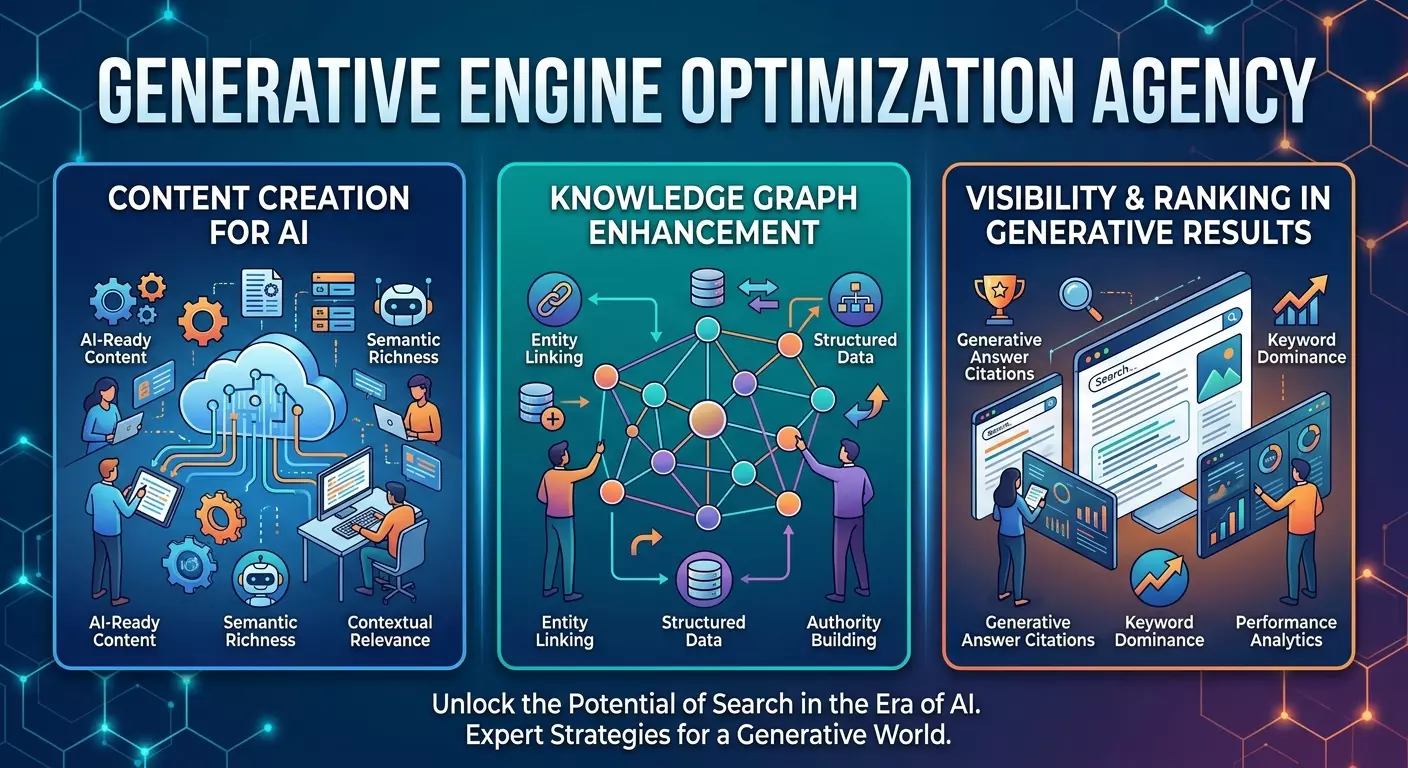
How a Generative Engine Optimization Agency Can Improve AI Search Visibility
The way people search for information online is changing. Instead of typing short keywords into a search box and visiting several websites, users can now ask detailed questions and receive conversational answers from AI-powered search platforms.
This development is creating a new opportunity for businesses to improve how their brands and content appear across modern search experiences.
A Generative Engine Optimization Agency focuses on this emerging area of digital marketing. Its goal is to help businesses create and organize information in ways that make it easier for AI-driven systems to understand the brand, its expertise, products, and services.
What Does Generative Engine Optimization Mean?
Generative Engine Optimization, commonly known as GEO, is an approach to optimizing digital content for generative search environments.
Traditional SEO generally concentrates on improving a website's ability to appear in conventional search engine results. GEO takes a broader approach by considering how artificial intelligence processes information and generates responses to user questions.
For businesses, this means creating content that is not only optimized for keywords but also provides clear context, useful explanations, and reliable information.
Why AI Search Is Changing Digital Marketing
Search is becoming increasingly conversational. Users can ask complete questions, request comparisons, seek recommendations, or ask for explanations without manually opening multiple search results.
This change means businesses need to think about how their information is represented across the wider digital ecosystem.
A company may have an excellent website, but if its services and expertise are not clearly explained, AI-powered systems may have difficulty understanding the business.
This is where a Generative Engine Optimization Agency can provide strategic support.
Understanding the Role of a GEO Agency
A GEO agency helps businesses adapt their content strategy to modern search behavior. Instead of treating every page as an isolated SEO asset, the agency can examine the overall information available about a company.
This may involve reviewing website content, identifying missing topics, improving existing resources, researching user questions, and developing a consistent content structure.
The objective is to create a stronger digital presence that communicates the business clearly to both users and search technologies.
Developing an AI Search Optimization Strategy
A successful strategy begins with research.
An agency may examine the company's industry, audience, competitors, products, services, and existing online content. From this information, it can identify subjects that deserve stronger coverage.
An AI Search Optimization strategy may include:
- Identifying important topics within the industry
- Researching conversational search questions
- Improving existing website content
- Creating detailed educational resources
- Strengthening internal content relationships
- Clarifying important business information
- Updating outdated or incomplete pages
This process can help create a website that offers more complete answers to the needs of its target audience.
Read: How an SEO Freelancer in Chennai Improves Google Rankings
Creating Content Around Real User Questions
One of the most useful approaches to GEO is understanding what people actually want to know.
Users may ask questions such as:
- How does a particular service work?
- What are the benefits of a specific solution?
- Which factors should businesses consider before choosing a provider?
- What is the difference between two related services?
- How much does a particular service typically involve?
Creating dedicated content around these questions can make a website more useful.
Instead of producing pages only to target individual keywords, businesses can build comprehensive resources that address the broader topic.
The Importance of Topical Authority
A website with a collection of useful and related resources can demonstrate stronger topical relevance than a website with only a few general pages.
For example, a digital marketing company could publish content covering SEO, content marketing, technical optimization, AI search, local search, and related subjects.
These resources can support one another through logical internal linking and consistent topic coverage.
A Generative Engine Optimization Agency may use this type of content architecture to help businesses build a more complete online knowledge base.
How GEO Differs From Traditional SEO
GEO and SEO share many principles, but their objectives can differ.
Traditional SEO commonly focuses on ranking web pages in search results. GEO considers how information may be interpreted and incorporated into AI-generated responses.
This does not mean businesses should abandon SEO.
In fact, a strong digital strategy can combine both approaches. Technical SEO, keyword research, website structure, backlinks, content quality, and user experience can remain important while businesses also prepare their content for AI-driven discovery.
Generative Engine Optimization Services Businesses Can Use
The exact services offered by agencies can vary, but Generative Engine Optimization Services may include several areas of optimization.
Content Auditing
An agency can review existing content to identify outdated information, weak sections, missing topics, and opportunities for improvement.
Topic Research
Research can reveal important subjects and questions that are relevant to a target audience.
Content Development
New articles, guides, FAQs, service pages, and educational resources can be created around relevant topics.
Content Structuring
Headings, sections, definitions, examples, and supporting information can be organized so that important concepts are easier to understand.
Entity Optimization
Businesses can provide clearer information about their brand, people, services, products, locations, and relationships between different entities.
Ongoing Content Updates
Search environments change over time, so existing content may need regular reviews and updates.
Why Clear Website Information Matters
Businesses sometimes assume that AI search visibility depends entirely on publishing more content. However, quantity alone does not guarantee useful visibility.
A website should clearly communicate basic information about the organization.
Important details can include:
- What the business does
- Which services it provides
- Who its services are designed for
- What makes its approach different
- Where it operates
- What questions customers commonly have
When this information is easy to find and understand, the website becomes a stronger source of information for visitors and search systems.
The Connection Between GEO and Answer Engine Optimization
GEO is closely related to Answer Engine Optimization, often abbreviated as AEO.
AEO focuses heavily on providing information that can satisfy direct questions, while GEO considers the broader environment of generative AI and conversational search.
Both approaches emphasize clear answers, useful information, context, and user intent.
Businesses may incorporate elements of both strategies into a broader AI-focused search marketing plan.
Building Trust Through High-Quality Information
Trust is an important consideration when creating online content.
Businesses should avoid publishing vague claims simply to attract search traffic. Instead, content should provide meaningful information and clearly distinguish facts, explanations, examples, and opinions.
Where appropriate, companies can support important claims with credible sources and demonstrate expertise through detailed educational material.
This approach can benefit human readers while also giving AI-powered systems more useful information to interpret.
Why GEO Should Be an Ongoing Strategy
Generative search is not a static environment. AI technologies, search interfaces, user behavior, and content discovery methods continue to develop.
For this reason, GEO should not necessarily be treated as a one-time optimization project.
Businesses can regularly review their content, monitor changes in search behavior, expand important topics, and improve pages that no longer provide sufficient information.
An ongoing approach can help a website remain relevant as the search landscape develops.
Choosing a Generative Engine Optimization Agency
Businesses considering GEO services should evaluate an agency based on its approach, experience, content strategy, and understanding of search technology.
Before starting a project, it can be useful to ask:
- How will the agency analyze the existing website?
- What content opportunities will it identify?
- How will it address user search intent?
- What type of content will it create?
- How will progress be monitored?
- How does the strategy complement traditional SEO?
Clear answers to these questions can help businesses understand what they are investing in.
Preparing Your Brand for the Next Stage of Search
AI-powered search is creating another layer in the digital discovery process. Businesses now have an opportunity to make their expertise more accessible through detailed, structured, and useful online information.
A Generative Engine Optimization Agency can help businesses approach this change strategically by combining content development, SEO principles, topic research, and AI-focused optimization.
The strongest foundation is not simply more content. It is better information that directly serves the needs of users.
Conclusion
Generative Engine Optimization represents a developing area of digital marketing that focuses on visibility within AI-driven search experiences.
As conversational search becomes more common, businesses can benefit from making their online information clear, relevant, detailed, and easy to understand.
By combining traditional SEO with Generative Engine Optimization Services, businesses can create a broader search strategy that addresses both conventional search results and emerging AI-powered discovery. Readmore Blogs