How a Full Stack Marketing Agency Connects Every Stage of Growth
Getting more website traffic sounds like a straightforward growth strategy. Yet many businesses discover that additional visitors do not necessarily produce additional customers.
A company might invest heavily in Google Ads while its landing pages struggle to convert. Another might generate consistent organic traffic but have no effective process for converting interested visitors into paying customers.
An ecommerce brand might acquire new buyers successfully but overlook opportunities to encourage repeat purchases.
Growth Stack Funnels helps businesses address these challenges by connecting customer acquisition, conversion optimization, and retention through an integrated marketing strategy..
A full stack marketing agency addresses this challenge by connecting customer acquisition, website performance, conversion optimization, and customer retention through one coordinated strategy.
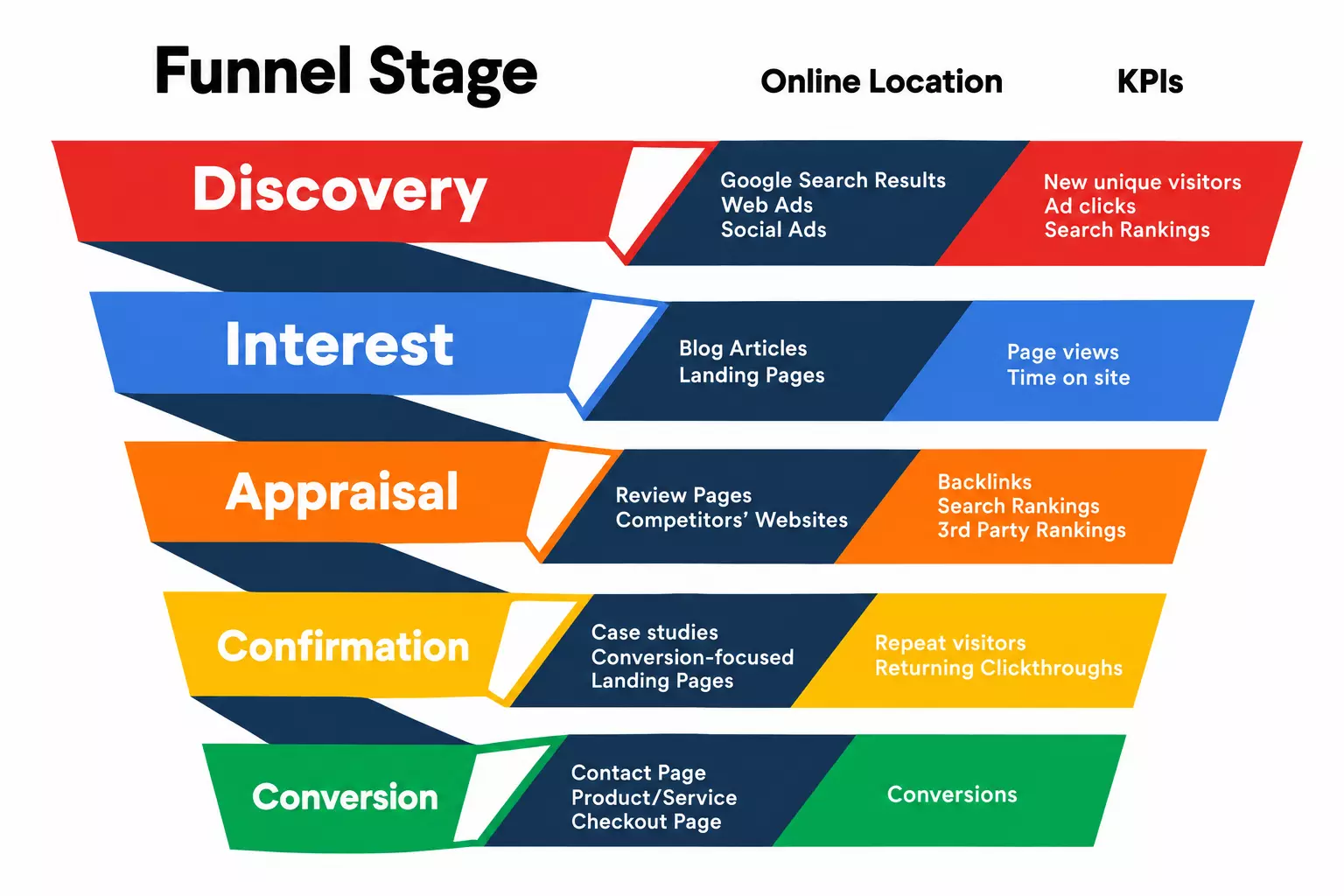
Rather than treating each marketing channel as an independent project, this approach examines how individual activities contribute to the complete customer journey.
Understanding how these connections work can help business owners make more informed marketing investments and evaluate whether their existing strategy supports sustainable growth.
What Is a Full Stack Marketing Agency?
A full stack marketing agency provides coordinated services across multiple areas of digital marketing, including search engine optimization, paid advertising, content marketing, website development, conversion optimization, analytics, and customer retention.
However, offering multiple services does not automatically make an agency effective.
The important distinction is how those services work together.
Consider an ecommerce business selling home improvement products. Its SEO team identifies the product categories attracting organic search demand.
Its paid advertising team uses those insights to test commercial offers. Its conversion specialists examine how visitors interact with product pages, while its email marketing team develops campaigns for customers who have already purchased.
Each activity serves a different purpose, but the teams share information and work toward the same commercial objectives.
This coordination is what separates integrated marketing from simply purchasing several unrelated services.
Why Do Businesses Need an Integrated Marketing Strategy?
Customer journeys rarely follow a perfectly predictable path.
Someone might discover a business through an informational article, leave without purchasing, encounter its advertising several days later, and eventually place an order after receiving an email.
When marketing channels operate independently, businesses can struggle to understand which activities contribute to conversions and which customer experiences require improvement.
An integrated marketing approach helps prevent common operational problems such as inconsistent messaging, duplicated targeting, competing promotions, and disconnected performance reporting.
By incorporating white label SEO into a coordinated marketing strategy, businesses can strengthen their search visibility while maintaining consistency across different channels.
The objective is not to advertise everywhere but to identify the channels that matter to the intended audience and align them with specific business goals.
For example, a new ecommerce business might prioritize paid acquisition and conversion optimization while gradually developing organic search visibility.
An established retailer might focus more heavily on improving customer retention and increasing revenue from existing customers.
Both can use an integrated strategy without maintaining identical marketing budgets or channel priorities.
What Services Should a Full Stack Marketing Agency Provide?
The services required depend on the business model, customer journey, available resources, and growth objectives.
Nevertheless, several capabilities frequently form the foundation of an integrated marketing strategy.
Search Engine Optimization
SEO helps businesses improve their visibility when potential customers search for relevant products, services, and information.
An effective SEO strategy considers technical website performance, search intent, website architecture, content quality, internal linking, and relevant authority signals.
Search visibility should also support commercial objectives. Attracting visitors who have little interest in the business provides limited value, regardless of how impressive the traffic report appears.
Google's Search Central documentation emphasizes creating helpful content that addresses users' needs and making websites easier for search engines to discover and understand.
For businesses exploring changing search behavior, DZ Insights has also published a useful discussion of SEO trends and AI search visibility.
Paid Advertising
Paid advertising allows businesses to reach potential customers through platforms such as Google Ads and Meta Ads.
Campaigns can target audiences based on search intent, interests, previous interactions, or other permitted signals.
However, campaign performance depends on more than audience targeting.
Landing page quality, advertising creative, offer positioning, conversion tracking, and profitability all influence whether paid acquisition is commercially useful.
Paid campaigns can also provide valuable information about which messages, products, and customer concerns deserve attention across other marketing activities.
Conversion Rate Optimization
Conversion rate optimization focuses on improving the percentage of website visitors who complete meaningful actions.
These actions might include purchasing a product, requesting a quotation, submitting an enquiry, or booking an appointment.
CRO examines what prevents visitors from taking those actions.
An ecommerce store might attract qualified traffic but lose potential customers because delivery information is difficult to find. A service business might receive regular visitors but generate few enquiries because its contact form is unnecessarily complicated.
Addressing these problems can improve the commercial value of existing traffic before the business increases its advertising expenditure.
Email Marketing and Customer Retention
Acquiring a customer is only one stage of business growth.
Email marketing helps businesses maintain relationships with subscribers and existing customers through relevant communication.
For ecommerce brands, this might include welcome sequences, abandoned cart reminders, product education, post purchase communication, and customer reactivation campaigns.
The objective should be useful communication rather than sending frequent promotional messages without considering customer interests.
A coordinated approach allows customer behavior and purchase history to inform communication, subject to applicable consent and privacy requirements.
How Do Different Marketing Channels Work Together?
The central advantage of an integrated marketing approach becomes clearer when the responsibilities of individual channels are connected.
Marketing function
Primary responsibility
Information shared with other teams
SEO
Generate relevant organic visibility
Search intent and content opportunities
Paid advertising
Reach and acquire targeted audiences
Offer performance and audience insights
Content marketing
Educate potential customers
Customer questions and buying objections
CRO
Improve website conversion
Usability issues and purchasing barriers
Email marketing
Develop customer relationships
Engagement and repeat purchase patterns
Analytics
Measure meaningful business activity
Performance data across the customer journey
Consider a product category receiving substantial traffic but relatively few purchases.
The SEO team might confirm that visitors are searching for the products being offered. The analytics team could identify where visitors leave the website, while conversion specialists investigate the category and product pages.
Meanwhile, the paid advertising team might test alternative product messages, and the email team could examine opportunities to communicate with interested subscribers.
Instead of increasing advertising budgets immediately, the business can investigate the underlying commercial problem.
This is an important principle of full stack marketing: improvements should respond to identified problems rather than departmental assumptions.
Read: How an SEO Freelancer in Chennai Improves Google Rankings
Why Shared Data Matters More Than Separate Reports
Businesses frequently receive marketing reports containing rankings, impressions, website sessions, advertising clicks, and email engagement.
These figures can be useful, but viewing them separately makes it difficult to understand how marketing contributes to business performance.
A full stack marketing agency should establish a shared measurement framework.
That begins with defining what success means.
For an ecommerce company, the primary objective might involve profitable revenue growth. For a business selling professional services, it might involve generating qualified enquiries that become paying customers.
The agency can then establish relevant measurements across individual channels.
Important considerations include:
- Tracking meaningful conversions rather than relying exclusively on website traffic and advertising clicks.
- Using consistent campaign naming and reporting definitions across marketing platforms.
- Connecting website behavior with purchasing or lead information where appropriate.
- Reviewing customer acquisition costs alongside revenue and retention performance.
- Checking tracking accuracy and respecting applicable privacy and consent requirements.
Google Analytics provides tools for measuring website events, purchases, and other valuable actions. Its official documentation also explains the importance of correctly configured measurement and responsible data collection.
Shared reporting helps businesses make decisions using a broader understanding of performance.
What Happens When a Business Focuses Only on Traffic?
Traffic growth can create the impression that marketing is progressing even when commercial performance remains unchanged.
Imagine an online store experiencing increasing search visibility and stronger advertising engagement.
More visitors reach the website each month, but product sales remain relatively stable.
A fragmented marketing approach might respond by publishing more articles or increasing advertising expenditure.
An integrated approach investigates the customer journey first.
Are visitors reaching relevant products? Is the website difficult to navigate on mobile devices? Are delivery costs clear? Do product pages answer common purchasing questions? Is the checkout process creating unnecessary friction?
Answering these questions may reveal that customer acquisition is not the main problem.
Sometimes the existing audience represents an opportunity that has not been fully developed.
This is why conversion optimization and customer experience deserve consideration alongside organic and paid traffic.
How Should Ecommerce Brands Prioritize Their Marketing Investments?
Not every business needs to invest equally in every marketing channel.
An effective full stack marketing strategy establishes priorities based on the organization's current challenges and opportunities.
For a new ecommerce brand, establishing reliable tracking and validating customer acquisition may require immediate attention.
An established store with consistent traffic could benefit from improving product page conversion and developing stronger retention campaigns.
A growing retailer with declining organic visibility might need technical SEO improvements, better category architecture, and more useful product information.
Marketing investment should therefore begin with diagnosis.
The question is not simply which marketing services an agency provides. It is which activities are most relevant to the business at its current stage.
What Should the First 90 Days Look Like?
An integrated marketing engagement should begin with understanding the business rather than immediately launching additional campaigns.
First 30 Days: Establish the Baseline
The initial phase should examine existing website performance, customer acquisition channels, conversion behavior, tracking accuracy, and commercial objectives.
An agency should identify the most important problems and establish a clear understanding of current results.
For ecommerce businesses, this includes reviewing product categories, purchasing behavior, abandoned checkout activity, and customer retention opportunities.
Days 31 to 60: Address Priority Problems
Once the main issues are identified, the agency can begin implementing improvements.
These might include correcting technical SEO problems, adjusting paid campaign structures, improving important landing pages, or introducing missing customer communication.
The activities should reflect actual business priorities rather than an identical checklist applied to every client.
Days 61 to 90: Evaluate and Refine
The next phase involves examining early performance signals, identifying successful changes, and determining which experiments require additional time.
Businesses should review both channel activity and commercial outcomes.
SEO improvements may require a longer evaluation period, while certain paid campaign or website changes can provide useful feedback sooner.
A responsible agency distinguishes promising signals from results that have been demonstrated consistently.
When Should You Hire a Full Stack Marketing Agency?
Hiring an integrated agency can make sense when a business needs expertise across several connected disciplines but does not want to build a complete internal marketing department.
It may also be useful when an organization already employs marketing specialists but lacks the capacity to coordinate technical execution, advertising, website optimization, and customer retention.
However, outsourcing every marketing activity is not necessary for every business.
Companies with established internal teams may benefit from specialist support for particular challenges.
Marketing agencies themselves may also use white label SEO or other external fulfillment arrangements when specialized delivery requirements exceed their internal capacity.
The important considerations are ownership, coordination, accountability, and the ability to demonstrate meaningful progress.
How Can Businesses Evaluate an Agency Before Hiring?
A full stack marketing agency should be evaluated according to how effectively it connects its services, not simply the number of services listed on its website.
During initial discussions, businesses should ask how the agency identifies priorities, shares information between specialists, defines conversion goals, and communicates performance.
A useful proposal should explain the reasoning behind its recommendations.
For example, an agency recommending increased advertising expenditure should also be able to explain how landing page quality, existing conversion performance, and tracking accuracy have been considered.
Businesses should also clarify which activities will remain under internal control and how communication between the agency and internal stakeholders will work.
These conversations help establish expectations before an engagement begins.
Connecting Acquisition, Conversion and Retention With Growth Stack Funnels
An example of this integrated approach is Growth Stack Funnels, which focuses on ecommerce and direct consumer growth through connected marketing services.
Its stated service areas include SEO, paid advertising, conversion optimization, email marketing, and analytics.
The agency's approach connects three important stages of the customer journey: attracting relevant audiences, improving website conversion, and developing customer relationships after the initial purchase.
For ecommerce businesses evaluating an integrated marketing partner, this provides an example of how several specialist disciplines can be coordinated within a broader growth strategy.
The underlying principle applies beyond any individual agency. Marketing becomes more useful when its activities share information, follow consistent commercial objectives, and address the complete customer experience.
Conclusion
A full stack marketing agency should deliver more than a convenient collection of digital marketing services.
Its purpose is to connect the activities that help businesses attract suitable audiences, convert interest into meaningful commercial actions, and develop stronger customer relationships.
The value of this approach depends on accurate measurement, clear priorities, effective communication between specialists, and a willingness to improve the complete customer journey rather than individual channel statistics.
Before increasing marketing expenditure, businesses should understand where their existing strategy succeeds and where potential customers encounter obstacles.
For ecommerce brands seeking coordinated support across acquisition, conversion, and retention, exploring the services offered by Growth Stack Funnels can be a starting point for identifying opportunities and developing a more connected growth strategy.