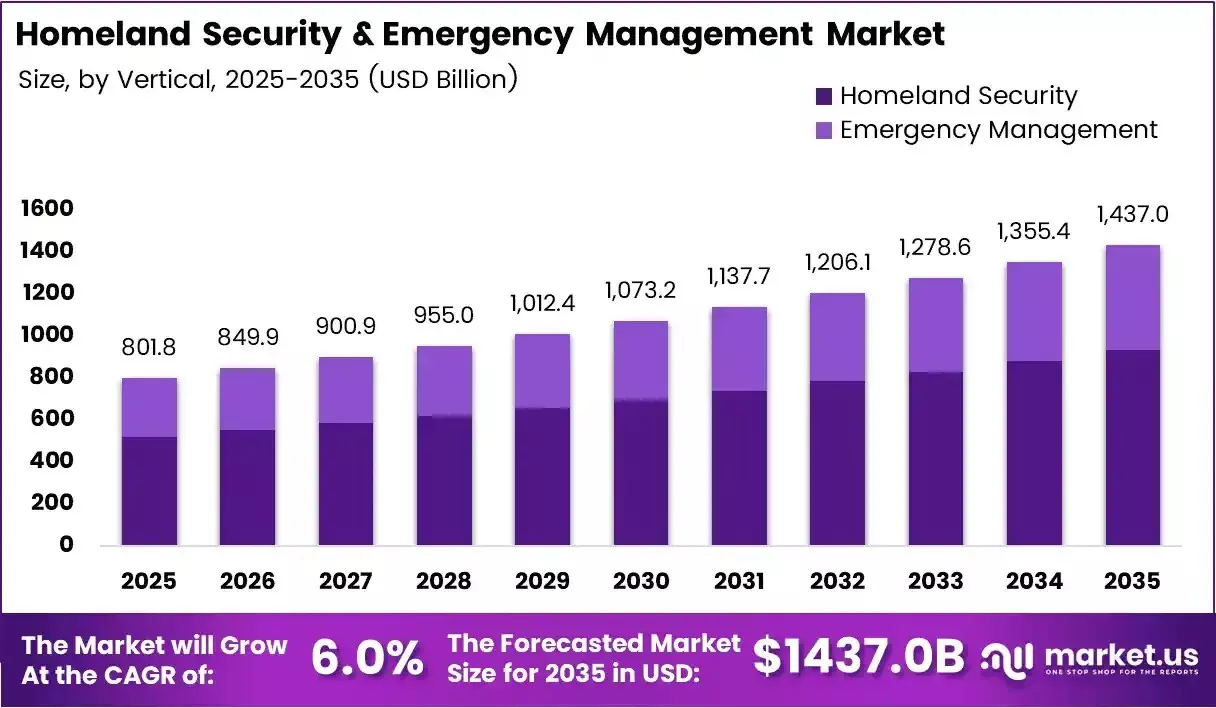
Homeland Security Market
Homeland Security and Emergency Management Market Overview
Rising Security Threats and Cyber Risks
The Homeland Security and Emergency Management Market Size has become a fundamental component of modern national defense and public safety infrastructure.
Governments worldwide are facing increasingly sophisticated threats ranging from cyberattacks and digital espionage to terrorism and critical infrastructure disruptions.
Modern economies rely heavily on interconnected digital systems. A cyberattack targeting transportation networks, healthcare institutions, or financial systems can create widespread operational paralysis within hours.
Consequently, cybersecurity has evolved into a strategic priority for governments and enterprises alike.
Organizations are increasingly investing in:
- AI-powered threat detection systems
- Predictive cybersecurity analytics
- Real-time monitoring platforms
- Advanced encryption technologies
- Zero-trust security frameworks
Terrorism threats have also transformed significantly through decentralized communication channels and online radicalization platforms.
Homeland security agencies are therefore deploying intelligent surveillance systems and biometric technologies to strengthen national security operations and improve threat identification capabilities.
The convergence of physical security and digital defense continues reshaping the global homeland security landscape.
Disaster Preparedness and Emergency Response Technologies
Climate-related disasters and public emergencies are becoming more severe and frequent across the world. Floods, hurricanes, wildfires, industrial accidents, and public health crises are placing immense pressure on emergency management systems.
Governments are modernizing disaster preparedness strategies through advanced technologies designed to improve operational efficiency and crisis coordination.
These solutions include:
- Predictive weather analytics
- Geospatial intelligence systems
- Emergency alert platforms
- Real-time communication networks
- Disaster recovery coordination software
Preparedness is no longer reactive. Modern emergency management frameworks emphasize resilience, continuity, and rapid response coordination to minimize disruption during crises.
Urbanization further intensifies the need for highly integrated emergency response systems capable of managing large-scale incidents efficiently within densely populated regions.
Read: Share Market Advisory: An Educational Guide to Smart Equity
Artificial Intelligence and Smart Surveillance Systems
Artificial intelligence has emerged as one of the most transformative technologies within the Homeland Security and Emergency Management Market.
AI-powered systems can process colossal quantities of information rapidly, enabling agencies to forecast threats, identify anomalies, and optimize emergency response operations with remarkable precision.
Predictive analytics technologies are increasingly utilized for:
- Threat forecasting
- Behavioral analysis
- Resource allocation optimization
- Disaster trajectory prediction
Smart surveillance technologies are also becoming indispensable components of modern public safety infrastructure.
Airports, border checkpoints, transportation hubs, and government facilities now deploy advanced monitoring systems to improve situational awareness and operational visibility.
These technologies include:
- Facial recognition systems
- Thermal imaging sensors
- Drone-based surveillance platforms
- Intelligent video analytics
- Automated license plate recognition systems
The integration of artificial intelligence, cloud computing, and IoT-enabled infrastructure is creating highly adaptive and interconnected security ecosystems capable of responding dynamically to evolving global threats.
Future Growth and Global Market Opportunities
The Homeland Security and Emergency Management Market is expected to experience substantial long-term growth due to increasing cybersecurity threats, environmental instability, geopolitical tensions, and accelerating digital transformation initiatives.
Governments continue investing heavily in:
- Critical infrastructure protection
- Smart emergency communication systems
- Border surveillance technologies
- National cybersecurity modernization programs
- Integrated public safety platforms
The emergence of smart cities is also generating significant opportunities for intelligent security systems and autonomous emergency response technologies.
Future innovations may include:
- Autonomous emergency response drones
- AI-powered traffic management systems
- Intelligent hazard detection platforms
- Robotic disaster recovery technologies
As global risks become increasingly multifaceted, demand for resilient, scalable, and intelligent homeland security systems will continue expanding across developed and emerging economies worldwide.