Hip Resurfacing vs Hip Replacement: Key Differences
Hip pain can be life-changing. For many people, everyday tasks like walking, climbing stairs, or even sitting become difficult. When conservative treatments such as medication or physiotherapy no longer work, surgery may be the next step. Two common options are hip resurfacing and hip replacement.
Both surgeries aim to reduce pain and restore movement, but they are not the same. Understanding the differences helps patients make an informed decision about which option is best for them.
What is Hip Resurfacing?
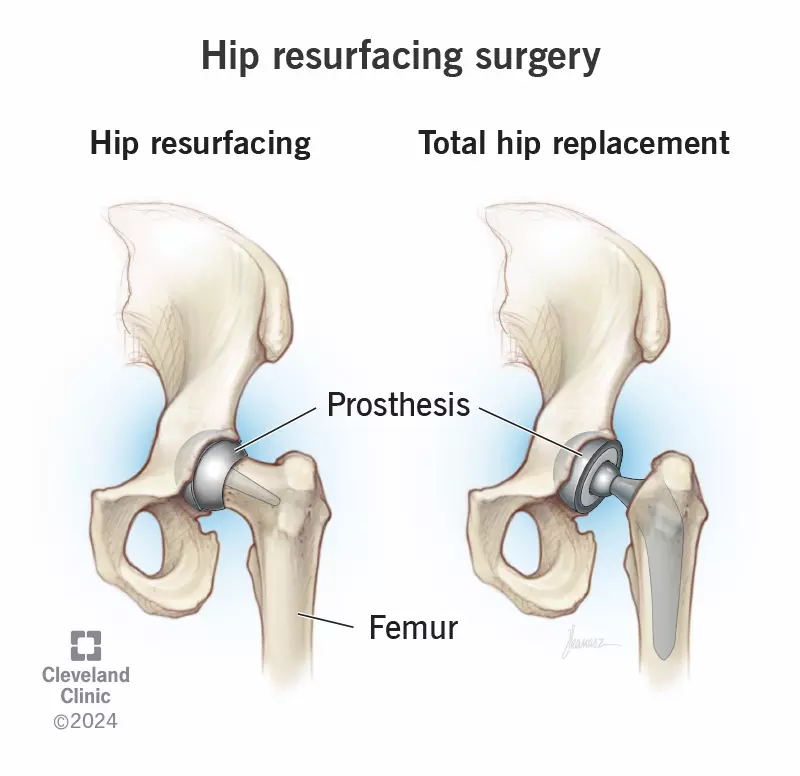
Hip resurfacing is a bone-conserving surgery. Instead of removing the entire femoral head (the ball of your hip joint), the surgeon reshapes it and places a smooth metal cap over it. The hip socket is also lined with a metal cup.
This procedure keeps more of your natural bone intact, which can be helpful for younger patients who may need another surgery in the future.
What is Hip Replacement?
Hip replacement, also known as total hip arthroplasty, removes the damaged femoral head completely. It is replaced with an artificial stem and ball, while the hip socket is fitted with a prosthetic cup.
This procedure is more common worldwide and has decades of success behind it. According to the Australian Institute of Health and Welfare, over 50,000 hip replacement surgeries are performed in Australia every year.
Comparing Hip Resurfacing and Hip Replacement
Bone Preservation
- Resurfacing: Preserves most of the femoral head.
- Replacement: Removes the femoral head entirely.
Longevity of Implants
- Hip replacements typically last 15–20 years or more.
- Hip resurfacing may last less time, especially in women or patients with smaller bone structures.
Risks and Complications
- Resurfacing: Higher chance of femoral neck fractures and possible metal ion release.
- Replacement: Lower fracture risk, but risks include dislocation and implant loosening.
Recovery and Activity Levels
- Resurfacing: Allows many patients to return to sports and higher-impact activities.
- Replacement: Recovery is reliable but may limit high-impact activities.
Who Should Consider Hip Resurfacing?
Hip resurfacing may be recommended for:
- Younger patients (usually under 60)
- Active individuals who want to continue sports
- Patients with strong bone density
- Mostly male patients (as success rates are higher compared to women)
Who Should Consider Hip Replacement?
Hip replacement may be better for:
- Older patients (over 60)
- People with weaker bone quality or osteoporosis
- Patients with advanced arthritis or major hip damage
- Individuals seeking long-term reliability
The Surgery: Step by Step
Hip Resurfacing
- The hip joint is exposed.
- Damaged cartilage and bone are removed.
- A metal cap is placed over the reshaped femoral head.
- A matching cup is placed into the hip socket.
Hip Replacement
- The damaged femoral head is removed completely.
- A stem is inserted into the thigh bone.
- A prosthetic ball is attached to the stem.
- The hip socket is fitted with a new cup.
Both surgeries usually take 1–2 hours under general or spinal anaesthesia.
Recovery and Rehabilitation
After Hip Resurfacing
- Hospital stay: 3–5 days
- Crutches: 2–4 weeks
- Return to sports: 6–12 months
After Hip Replacement
- Hospital stay: 4–7 days
- Walking support: 4–6 weeks
- Normal activities: 3–6 months
Research published in The Lancet shows that 90% of hip replacements last at least 15 years, and 70% last more than 25 years, highlighting their reliability.
Long-Term Outlook
Both surgeries significantly reduce pain and improve mobility.
- Hip resurfacing: Can feel more natural and allows greater movement for active patients.
- Hip replacement: More reliable across all age groups, with strong long-term success rates.
Cost and Accessibility in Australia
Both procedures are available in public and private hospitals. Medicare and private insurance may cover much of the cost, but out-of-pocket expenses can range from AUD 2,000 to 6,000 depending on the surgeon and hospital.
Choosing Between Hip Resurfacing and Replacement
The decision depends on factors like age, lifestyle, bone quality, and medical history. Consulting with experienced orthopaedic surgeons Perth is the best way to decide which option suits your personal situation.
Pros and Cons
Hip Resurfacing
Pros:
- Preserves bone
- Faster return to sports
- Feels more natural
Cons:
- Not suitable for weak bones
- Risk of metal ion release
- Possible femoral neck fracture
Hip Replacement
Pros:
- Proven long-term success
- Works for most patients
- Lower risk of metal-related issues
Cons:
- Removes more bone
- May limit high-impact sports
The Future of Hip Surgery
Modern techniques such as robot-assisted surgery and ceramic implants are improving outcomes. Data from the Australian Orthopaedic Association shows revision rates for hip replacements are decreasing thanks to better technology.
Conclusion
Both hip resurfacing and hip replacement can restore mobility and reduce pain.
- Resurfacing is better for younger, active patients who want to preserve bone.
- Replacement is the gold standard for older patients or those with weaker bones.
Your lifestyle, health, and goals should guide the choice. The right advice from a specialist ensures you make the best decision for long-term comfort and mobility.