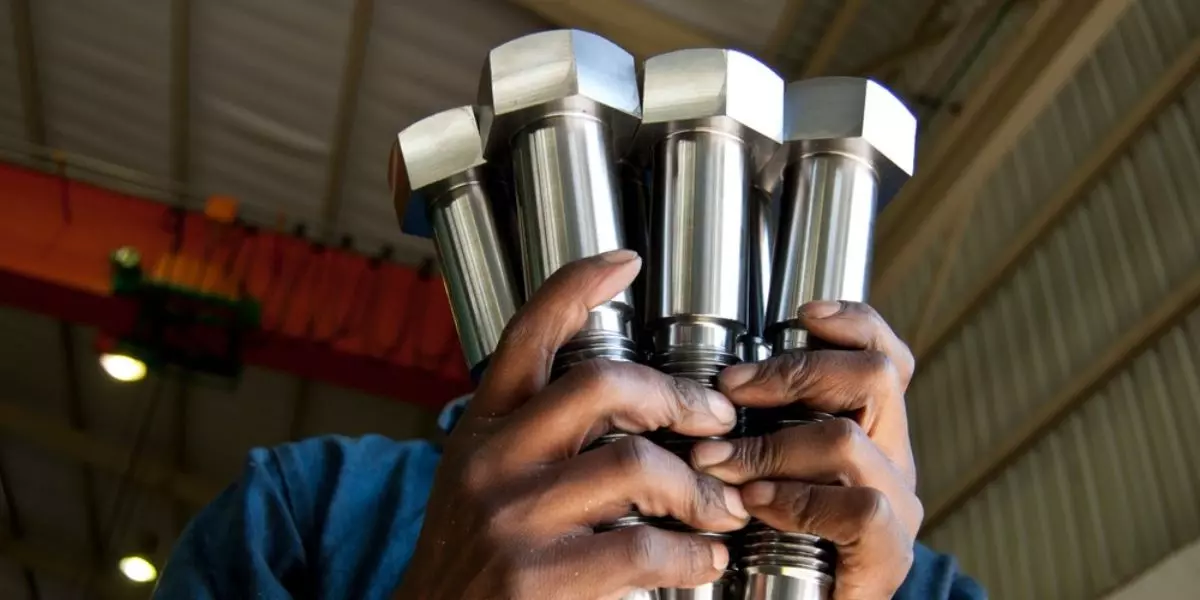
Heat Treatment Process in High Tensile Bolt Manufacturing
Walk into any heavy industry site, a bridge, a wind farm, or a steel mill, and you’ll see machinery and structures that seem almost indestructible. But look a little closer, and you’ll find that these giants are held together by something much smaller: bolts. Not just bolts, but high tensile bolts.
These fasteners are the engineers' silent stars who are carrying the weight of a great load while they are going along with vibration, weather, and time. But what is it that makes them so dependable? The answer, as any businessperson in the industry will confirm, is heat treatment. This is where plain steel becomes remarkable.
Why Heat Treatment Is the Backbone of High Tensile Bolts
Let's begin with a reality check. Straight-off-the-mill raw steel just isn't strong enough for the work we subject these bolts to. It's strong, but not strong enough. If you attempted to employ untreated steel bolts in a suspension bridge or a wind turbine, you'd be courting disaster. They'd stretch, snap, or just fail when you most need them not to.
That’s why heat treatment is the backbone of every high tensile bolt. It’s not just about making the steel harder. The trick is to give the bolt the perfect balance of strength, toughness, and just enough flexibility. You want it to resist stretching and breaking, but you also want it to absorb shocks and vibrations without snapping like a twig. That’s what separates the best High Tensile Bolts Suppliers from the rest.
The Science of Heat Treatment: What's Going On?
Steel is a remarkable material. Its characteristics rely on its inner structure—something you can't observe with your bare eyes. But using the appropriate heat, timing, and cooling, you can persuade the atoms within the steel into fresh configurations. That's what heat treatment is all about.
The Three Big Steps
- Austenitizing: First, the bolts get heated, normally in the range of 850°C to 950°C. The steel’s internal structure at this temperature changes. Carbon and alloying elements are distributed uniformly, thus preparing the next step.
- Quenching: Then, the bolts are removed from the furnace and dipped into a bath—either oil, water, or a special polymer. This fast-cooling traps the steel’s structure in a very hard, but not ductile, phase called martensite. It’s as if the process has been stopped for a while.
- Tempering: Subsequently, the bolts are reheated at a lower temperature (than at first) to get rid of the internal stresses. This phase allows the bolts to have the required quality of durability that will enable them to resist the vibration, weather, and heavy load of numerous years. Then, if you did not perform one of these steps correctly, the bolt could potentially pass the visual inspection, but it would be very dangerous to use, like a time bomb going off inside. Hence, the best High Tensile Bolts Suppliers do not minimize the importance of this part of the process.
The Real-World Process: Furnace to Finished Bolt
Let's go through what happens in a contemporary bolt manufacturing plant. This isn't textbook theory only—this is what happens daily in the shops of leading High Tensile Bolts Suppliers.
Preheating
Before the bolts hit the furnace, they’re slowly warmed up. Why? To prevent cracks and warping. Imagine jumping into an ice-cold pool after sitting in a sauna—something’s going to break. Preheating is like stretching before a marathon; skip it and you’re asking for trouble.
Austenitizing
The bolts absorb the heat in the furnace. The timing and temperature are adjusted for every batch. Too hot, and you run the risk of grain growth. Too cold, and you don't achieve the transformation that you need. It is a fine line, and it requires expertise to pull it off.
Quenching
The bolts are submerged in a bath. The oil, water, or polymer isn't chosen at random—it's selected to complement the steel and the size of the bolt. You want to harden the bolt across the entire piece, inside and out. If the quenching isn't accurate, you have a hard exterior and a soft interior. That's a recipe for disaster.
Tempering
The bolts are hard but brittle after quenching. Tempering returns them to reality. They are reheated to relieve the internal stresses and provide the toughness required for years of operation. The precise temperature and duration rely on the composition of the steel and the function of the bolt.
Extra Steps: Special Treatment
Some bolts receive a little extra attention—dehydrogenation to remove trapped hydrogen (which can lead to cracking), or surface hardening for additional wear resistance. These processes are customized for bolts that will encounter particularly hostile environments.
How Residual Stresses Affect Bolt Reliability?
You can do it all right—heat-treat it, quench it, temper it—and end up with a bolt that acts up in the field. Why? One usually underappreciated reason: residual stresses. They are the unseen tensions trapped within the bolt during production, and they're infamous for bringing bolts trouble when they're subjected to dynamic or cyclic loads.
Imagine residual stresses as the energy of a spring that is coiled inside the metal. You don’t see it, but it is there, and it wants to be released. So, in the case when the bolt is tightened or subjected to a service load, these secret forces will be there for their advantage and, thus, the fatigue cracking, corrosion caused by stress, or even sudden failure can occur.
This is to say that such a situation can be extremely risky in situations like that of critical infrastructure—bridges, power plants, offshore rigs—where a failure is not only a maintenance problem but also a safety issue.
Following up what exactly leads to the formation of these residual stresses?
- Non-uniform cooling when quenching — outer surfaces cool quicker than the interior.
- Asymmetric heating or unequal furnace conditions.
- Cold working or incorrect thread rolling following heat treatment.
- Over-grinding or over-machining without stress relief.
The better High Tensile Bolt Suppliers are aware of this and take early precautions. They apply stress-relief tempering and even cryogenic treatment, in some instances, after quenching. A few go a step further by carrying out X-ray diffraction stress mapping to determine the residual stress profile of the bolt's cross-section, particularly for large-diameter bolts.
Residual stresses are hidden enemies. Controlling them is a skill of a craftsman, not a machine. That is why selecting a supplier who grasps this subtlety and understands it can be the difference between a bolt that merely fits the specifications and one that keeps running trouble-free for a long time under continuous service conditions.
The Steel Recipe: Why It Matters
Not all steel is suited for this work. The best bolts start with medium-carbon alloy steel, with the right mix of elements—carbon for backbone, manganese and chromium for hardenability, maybe a little boron for that extra zing. The best High Tensile Bolts Suppliers work closely with their steel mills, checking every batch before it goes into the furnace.
Key Alloying Elements
- Carbon: Necessary for the formation of martensite, the phase that imparts high strength.
- Manganese and Chromium: Enhance hardenability, with the capability to produce uniform properties even in bolts with large diameters.
- Boron: Employed in small quantities to further increase hardenability.
Getting the proper steel recipe right is the key to what comes next.
Modern Heat Treatment: High-Tech and Hands-On
The old image of the blacksmith is gone, where hammering was done in a forge filled with smoke. The facilities for the heat treatment today are very high-tech. The best High Tensile Bolts Suppliers use computer-controlled furnaces, protective gas atmospheres, and digital monitoring systems.
- Protective atmospheres (such as endothermic gas) are the main reason that steel does not oxidize or lose carbon at high temperatures.
- Uniform heating is a compulsory condition. Today's furnaces employ fans, sensors, and smart switch controls that assure the treatment of each bolt is the same.
- Data tracking means each batch is documented, from temperature profiles to quenching periods. If there is a problem, it becomes easy to find the place and solve the problem.
This degree of control is the reason that suppliers can guarantee quality and comply with the difficult international standards.
Quality Control: No Room for Guesswork
No one sends a batch of bolts out simply because they are pretty. The most effective High Tensile Bolts Suppliers conduct a series of tests:
- Tensile and yield strength tests: What amount of force can the bolt withstand before it yields?
- Hardness tests: Is the bolt hard throughout, or merely on the exterior?
- Microstructure analysis: What does the steel under magnification look like?
- Non-destructive testing: Are there secret cracks or flaws?
If a bolt fails, it doesn't go out the door. That's it.
Avoiding the Usual Pitfalls
Even with all the technology and testing, something can go wrong. Here's how the pros avoid the most common issues:
- Uneven Hardness: If quenching is not perfect, you end up with a hard exterior and a soft interior. That is a recipe for disaster. The correct quenching media and agitation correct that.
- Hydrogen Embrittlement: Certain coatings smuggle hydrogen into the steel. Post-treatment baking expels it.
- Decarburization: Carbon loss at the surface makes the carbon turn into something that takes less load. Protective atmospheres and strict controls prevent that.
Standards: No Cutting Corners
There's no place for shortcuts here. International standards lay out the bare essentials of high tensile bolts—strength, heat treatment, testing, the works.
If a supplier can't document compliance, walk away.
What's New in Heat Treatment?
This technology never remains the same. Here's what's creating ripples:
- Induction and vacuum heat treatment: More accurate, quicker, and cleaner.
- Automated process monitoring: Sensors and software detect issues before they become catastrophes.
- Eco-friendly quenching: New polymer quenchants are better for workers and the environment.
The greatest High Tensile Bolts Suppliers always strive to do better, quicker, and safer.
Real-World Lessons: When Heat Treatment Goes Wrong or Right
Ask anyone who has been in the business long enough, and they will have a tale about a failed bolt—often with disastrous results. Nine out of ten times, the source of the problem is an issue with heat treatment. Perhaps the quench was too long. Perhaps tempering was omitted. Perhaps the steel was not suitable in the first place.
On the other hand, well heat-treated bolts can withstand taking a beating and continue, enduring fires, earthquakes, and decades of vibration without skipping a beat. That's the type of dependability engineers and project managers rely upon.
Why the Best High Tensile Bolts Suppliers Matter
At the end of the day, bolts are only as good as the people and processes behind them. The top High Tensile Bolts Suppliers aren’t just selling metal—they’re selling peace of mind. Their investment in technology, quality control, and skilled workers pays off in bolts that don’t just meet the specs but exceed them.
When you’re sourcing bolts for a critical project, ask about their heat treatment process. Ask about their testing. Ask for their certifications. If they hesitate, move on. If they can show you the data and walk you through their process, you’re in good hands.
Conclusion
The next time you come across a bright steel bridge or a wind turbine spinning atop a hill in the far distance, don't forget the bolts that ensure it is all safe and secure. Each of them has been through a process of heat, stress, and inspection. It's in the heat treatment process that plain steel is made remarkable, where safety, strength, and reliability are crafted.
Varmora Forge is one of those names that stands out for getting this process right, every single time.
If you’re in the market for high tensile bolts, don’t settle for less. Dig into the details. Partner with High Tensile Bolts Suppliers who take pride in their craft and back it up with real results. Your project—and everyone who depends on it—deserves nothing less.