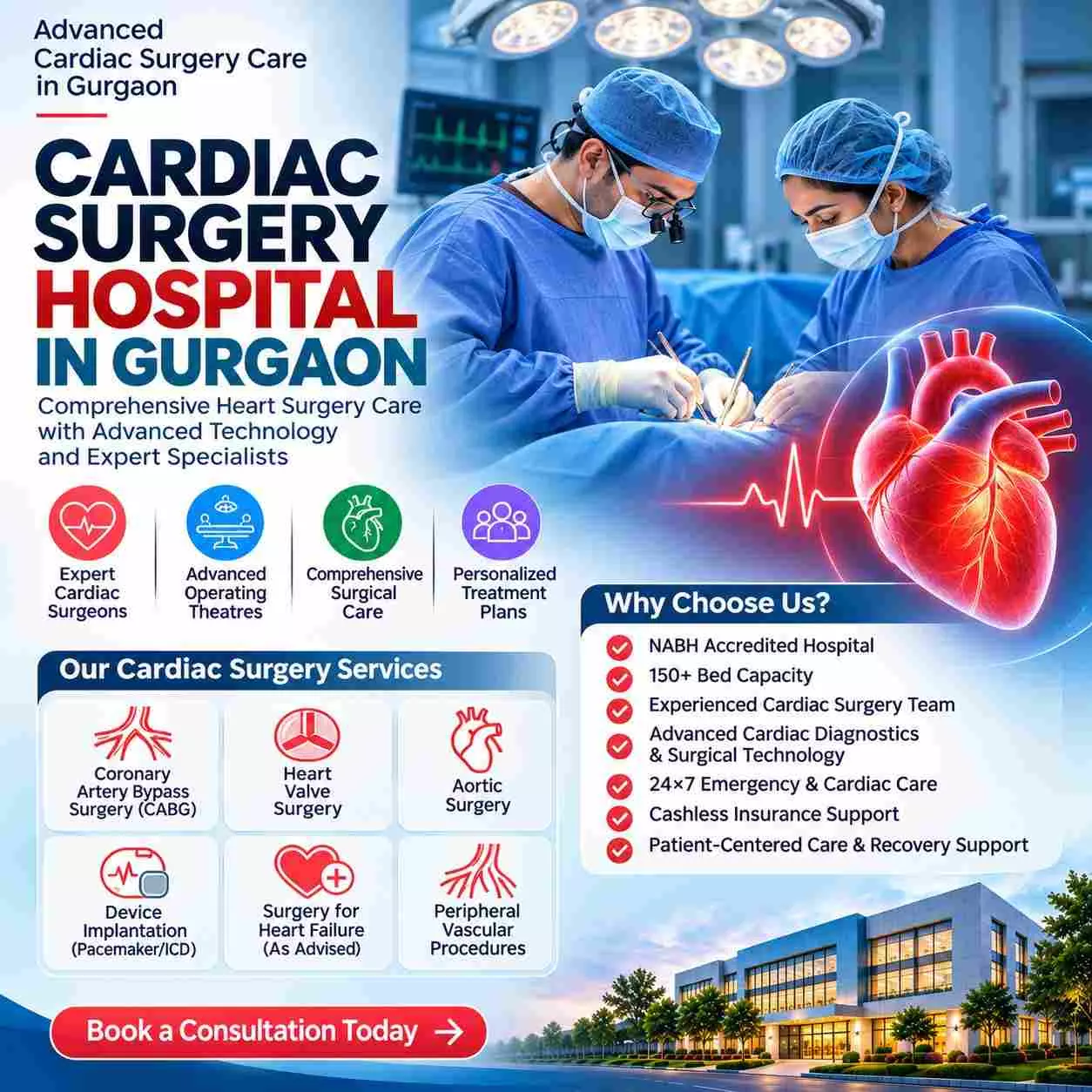
Heart Symptoms, Tests and Treatment Guide for Gurgaon Residents
Heart disease is now appearing earlier than most people expect, and many early signs are easy to dismiss.
This quick guide explains the warning symptoms, the tests that reveal what’s happening, the treatment options available, and what to look for in a cardiac surgery hospital in Gurgaon if you ever need one.
Why This Matters to You
Research shows Indians often develop heart disease nearly a decade earlier than people in many Western countries.
Long desk hours, stress, poor sleep, processed food, and low activity push up blood pressure, cholesterol, and blood sugar. Together, they quietly strain your arteries year after year.
Symptoms You Shouldn’t Ignore
Common Warning Signs
- Chest pressure, tightness, or burning
- Breathlessness during routine activity
- Unusual tiredness or weakness
- Palpitations or a racing heartbeat
- Dizziness or fainting
- Swollen feet or ankles
- Pain spreading to the jaw, neck, shoulder, or left arm
Emergency Signs
Severe chest pain with sweating, nausea, or sudden breathlessness needs urgent medical help. Don’t wait for it to pass.
Read: Chest Pain Treatment Doctor in Jaipur – Expert Care for a
Tests That Give Clear Answers
Basic Screening
- ECG: records your heart’s electrical activity
- 2D Echo test: an ultrasound showing pumping strength and valve function
- Lipid profile: measures cholesterol and triglycerides
Advanced Evaluation
- Treadmill test (TMT): shows how your heart handles physical effort
- Holter monitoring: tracks rhythm over 24 to 48 hours
- Angiography: reveals blockages in your arteries
Treatment Options in Brief
Many early-stage conditions improve with medicines, better food choices, regular activity, and quitting tobacco. Angioplasty and stenting open blocked arteries without major surgery.
Cardiac surgery, such as bypass or valve repair, is considered when blockages are extensive or valves are badly damaged. A good doctor explains every alternative before recommending it.
Choosing the Right Hospital
- Experienced cardiologists and cardiac surgeons
- In-house diagnostic and imaging services
- Round-the-clock emergency and intensive care
- Clear communication about procedures and outcomes
- Structured rehabilitation and follow-up
Heart conditions often come with diabetes, kidney problems, or thyroid issues. That is why many families prefer a multispecialty hospital in Gurgaon where specialists coordinate one treatment plan under a single roof.
Daily Habits That Protect Your Heart
- Walk briskly for 30 minutes on most days
- Eat more vegetables, fruits, whole grains, nuts, and pulses
- Limit salt, sugar, fried food, and packaged snacks
- Sleep seven to eight hours consistently
- Manage stress and avoid smoking
- Book a yearly checkup if you’re over 30 with risk factors
Quick Takeaway
Your heart usually warns you before it demands attention. Notice the small signals, schedule that overdue checkup, and build habits you can sustain. When you need expert guidance, a trusted heart specialist hospital in Gurgaon can help you move from diagnosis to recovery with clarity.