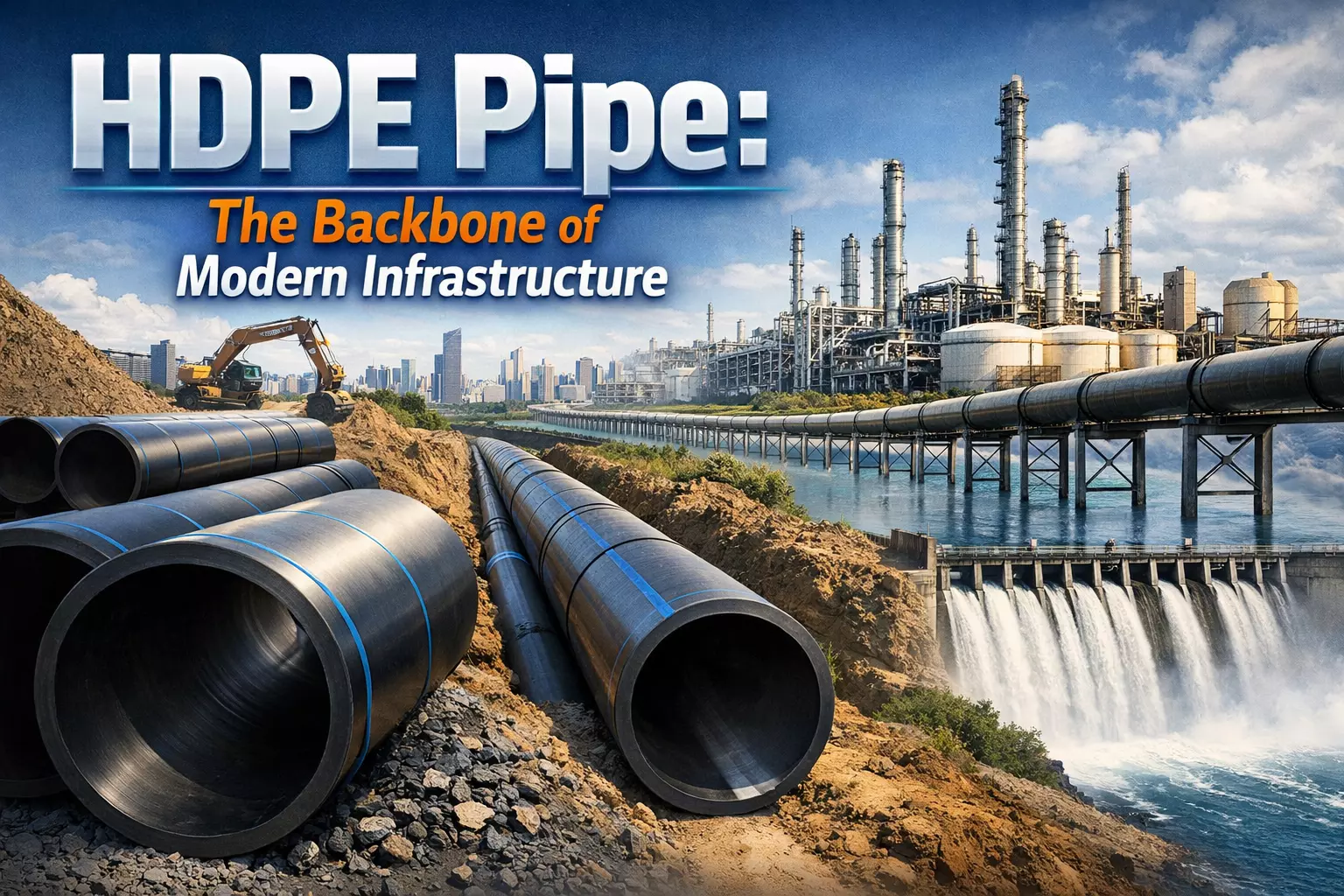
HDPE Pipe: The Backbone of Modern Infrastructure
In current fast-paced infrastructure, HDPE pipe systems have gained popularity in the water supply system, drainage and industrial systems.
These pipes are known to be durable and flexible and are applied in various industries because they perform better than the conventional materials.
What is a High Density Polyethylene Pipe?
High density polyethylene pipe is a thermoplastic piping solution consisting of polyethylene which is a petroleum-based polymer. It is designed to provide a high strength to density ratio and can thus be used in high-pressure applications.
Such pipes are resilient to corrosion, chemicals and environmental stress which greatly enhances their life span.
Key Advantages of HDPE Pipe
1. Durability and Longevity
Under normal operating conditions, HDPE pipes have a life of more than 50 years. They can resist rust, scaling, and chemical reactions hence they are suitable in harsh environments.
2. Flexibility and Lightweight
In contrast to traditional pipes, HDPE pipes are lightweight and flexible, which makes their transportation and installation easier. This minimizes the cost of labor and installation time.
3. Leak-Free Joints
Fittings made of HDPE pipes with the help of sophisticated welding techniques produce joints that are seamless and leakless and consequently transfer fluids efficiently.
4. Environmental Sustainability
HDPE can be recycled and hence a sustainable solution to modern day infrastructure projects.
Role of HDPE Pipe Manufacturers
Qualified manufacturers of HDPE pipes are significant in the quality and consistency of the product.
They work with high standards in the industry and employ superior extrusion technologies in order to come up with pipes that suit various applications.
Finding the appropriate hdpe manufacturer will guarantee better performance, safety, and cost-effectiveness in the long run.
Importance of HDPE Pipe Fittings
Proper hdpe pipe fittings are essential to no piping system. These fittings are utilized to join the pipes, change the direction or to regulate flow in the system. Good-quality fittings provide integrity to the system and eliminate leakage or loss of pressure.
Choosing the Right HDPE Fittings Manufacturers
To create a dependable piping network, it is critical to choose reliable manufacturers of hdpe fittings. Known manufacturers provide a selection of fittings including elbows, tees, reducers and couplers with a variety of specifications.
They are also compatible with various grades and sizes of pipes.
Finding Reliable HDPE Fittings Suppliers
Reliable suppliers of hdpe fittings will provide timely delivery of parts and the quality of products will remain the same.
They usually have a good distribution system and offer technical assistance and assist the businesses to select the correct products to fit their special needs.
Read: Why HDPE Pipes Are Essential in Mining and Industrial
Applications of HDPE Pipes and Fittings
The HDPE piping systems are popular in:
- Water distribution and supply.
- Drainage and sewerage.
- Industrial fluid transportation
- Agricultural irrigation systems
- Gas distribution networks
They can be used in either underground or above-ground applications because of their flexibility and performance.
Conclusion
The increasing need to have efficient and durable piping systems has seen hdpe pipe systems take a centre stage in the contemporary infrastructure.
Businesses can have long lasting and high performance piping systems by engaging effective HDPE pipe manufacturers, manufacturers of trusted hdpe fittings and suppliers of hdpe fittings.
High density polyethylene pipe and fittings that are invested in would not only improve the efficiency of operations but also lower the maintenance costs in the long term.