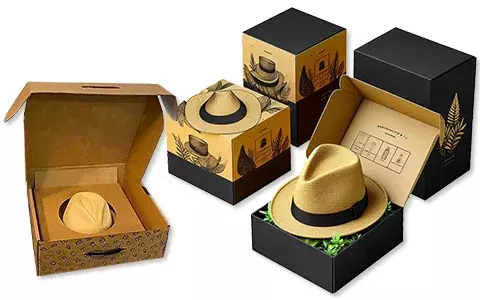
The Art and Science of Hat Packaging: Why the Box Matters as Much as the Hat
There is a moment every hat brand lives for — the unboxing. A customer slides open a beautifully crafted box, and before they have even touched the hat, a feeling washes over them: this is something special.
That feeling is not accidental. It is engineered, deliberately and thoughtfully, through the power of great hat packaging.
Whether you sell luxury fedoras, custom-fitted baseball caps, or handcrafted cowboy hats, the packaging you choose communicates your brand's values long before your product speaks for itself. In today's hyper-competitive retail and e-commerce landscape, hat packaging is no longer an afterthought — it is a core part of the customer experience.
First Impressions Start With the Box
Research consistently shows that consumers make judgments about product quality within seconds of seeing the packaging. For hat brands, this is especially critical.
Hats are fashion statements, lifestyle accessories, and personal expressions. The packaging must match that identity.
A flimsy plastic bag or a generic brown shipper box sends the wrong message entirely. It tells your customer that the brand does not take pride in presentation.
On the other hand, a sturdy, custom-printed hat box with a magnetic closure and tissue paper lining says: we care about every detail, including yours.
Brands like New Era, Brixton, and Stetson understand this implicitly. Their packaging is part of the product story.
When a customer receives one of their hats, the box itself becomes a keepsake — something people store their other hats in, display on shelves, or photograph for social media.
The Functional Side of Hat Packaging
Beyond aesthetics, hat packaging serves a critical functional role: protecting the product. Hats, by their very nature, are three-dimensional, structured, and often difficult to restore once crushed or bent. Unlike a folded shirt or a rolled pair of socks, a misshapen hat can be permanently damaged.
This makes structural integrity the number one priority in hat box design. A well-engineered hat box should do several things:
- Maintain the hat's shape during transit and storage.
- Protect against moisture, dust, and light exposure.
- Provide enough internal depth that the brim is never pressed flat.
- Offer secure closure so the lid does not pop open during shipping.
For e-commerce brands shipping hats across the country or internationally, the packaging must also withstand real-world logistics — stacking, handling, drops, and temperature changes.
A hat box that looks beautiful in photos but collapses in shipping is worse than no box at all.
Custom Printing: Turning Packaging Into Brand Real Estate
One of the most powerful tools available to hat brands today is custom printing. Every surface of your packaging — lid, base, interior, tissue paper, ribbon — is an opportunity to reinforce your brand.
Full-color offset or digital printing allows brands to bring their identity to life in vivid detail. A logo embossed in gold foil. A striking pattern printed on the interior lining.
A brand story printed on the inside of the lid. These are the small touches that transform a transaction into an experience.
For smaller hat brands just starting out, even simple one-color printing or custom labels can make a significant difference. The goal is consistency — every touchpoint should feel intentional and aligned with your brand's visual identity.
Sustainable Hat Packaging: A Growing Imperative
Today's consumers, particularly millennials and Gen Z shoppers, are paying close attention to sustainability. Studies suggest that a significant percentage of shoppers are willing to pay more for products packaged in environmentally responsible materials.
For hat brands, this opens the door to a new wave of eco-friendly packaging options:
- Recycled chipboard and kraft paper hat boxes.
- Soy-based or water-based inks for printing.
- FSC-certified materials sourced from responsibly managed forests.
- Biodegradable tissue paper and paper ribbons instead of plastic alternatives.
- Minimalist packaging designs that reduce material use without sacrificing elegance.
Sustainable packaging is not just good for the planet — it is increasingly good for business. Communicating your brand's commitment to the environment through your packaging creates a deeper connection with customers who share those values.
Types of Hat Packaging to Consider
Not all hats are created equal, and neither should their packaging be. Here is a quick overview of the most common hat packaging formats and when to use them:
Round hat boxes are the classic choice, particularly for fedoras, wide-brim hats, and dress hats. Their cylindrical design protects the brim naturally and gives an upscale, boutique feel.
They photograph beautifully and are often reused by customers.
Rectangular rigid boxes work well for structured baseball caps and fitted hats. They stack easily in warehouses and can be designed with magnetic closures or ribbon pulls for a premium unboxing experience.
Flat-pack or folding cartons are an economical option for brands shipping in high volumes.
While they lack some of the premium feel of rigid boxes, a well-designed flat-pack with strong graphics can still make a great impression, especially when paired with quality tissue paper or a branded insert.
Drawer-style boxes add a theatrical element to the unboxing experience. The sliding motion of revealing the hat creates a moment of anticipation that customers love — and share on social media.
Read: Custom Hat Tags for Memorable Headwear Branding
The ROI of Investing in Quality Hat Packaging
It is tempting to view packaging as a cost to minimize rather than an investment to maximize. But for hat brands, the return on quality packaging can be substantial.
Better packaging drives repeat purchases. When customers feel they received something luxurious and thoughtful, they are more likely to come back. It drives word-of-mouth referrals.
An impressive hat box gets talked about, gifted, and photographed. It drives social media content — unboxing videos and product photos are free marketing. And it reduces returns, because hats that arrive in perfect condition are less likely to be sent back.
When you add it all up, the few extra dollars invested in quality custom hat packaging often deliver a return many times over.
Final Thoughts
The hat industry is built on craftsmanship, character, and style. Your packaging should embody those same qualities.
Whether you are a heritage brand with decades of history or a fresh startup carving out a niche in the market, your hat packaging tells the world who you are before a single word is read.
Invest in custom packaging boxes with window that protects your product, reflects your brand, and delights your customers. Because in the world of hats, the box is never just a box — it is the first chapter of the story your customer will tell.