Haptic Technology Market Set to Surpass USD 15 Billion by 2033
Introduction
Haptic technology, which simulates the sense of touch through vibrations or motions, is revolutionizing how we interact with digital systems. It's commonly used in smartphones and tablets to enhance user experience, and its integration spans across industries—from gaming and education to healthcare and automotive. As technology evolves toward immersive and emotionally responsive interfaces, the haptic market is tapping into deeper sensory engagement.
Market Overview
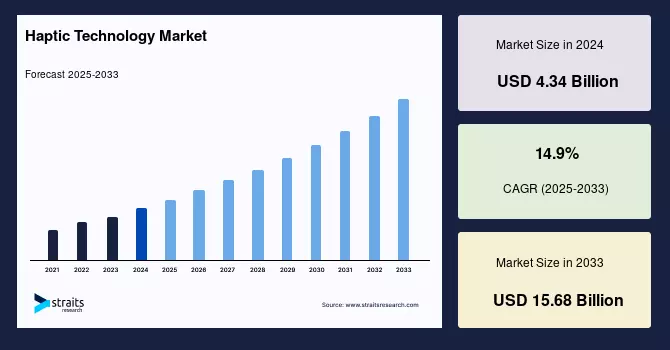
Valued at USD 4.34 billion in 2024, the global haptic technology market is projected to grow to USD 4.75 billion in 2025, ultimately reaching USD 15.68 billion by 2033. This trajectory reflects a strong CAGR of 14.9% over the forecast period (2025–2033).
Key Growth Drivers
Consumer Electronics & Gaming
Demand for immersive interactions on smartphones, smart wearables, and gaming devices continues to fuel haptic adoption. Enhanced touch feedback makes user interfaces more intuitive and engaging, especially in AR and VR applications.
Education, Healthcare & Simulation
Haptic interfaces are gaining ground in medical training, surgical simulation, and interactive education—providing tactile feedback that supports hands-on learning and realistic training environments.
Automotive Use Cases
Automotive dashboards, steering controls, and safety systems increasingly employ haptic feedback for tactile alerts—enhancing driver awareness and safety while complementing voice and visual cues.
Market Restraints
Cost & Power Consumption
High-end force-feedback devices remain relatively expensive, limiting widespread adoption. Additionally, power consumption constraints make full haptic implementations challenging for battery-powered devices like smartphones and wearables.
Market Opportunities
Gaming Hardware Expansion
Next-gen gaming hardware is a frontier for powerful haptic integration—offering precise vibration feedback that mimics gaming environments, from subtle vibrations to force-based alerts. This elevates realism and user engagement in ways traditional setups can’t match.
Regional Trends
- Asia-Pacific stands as the largest market in 2024—spurred by high penetration of smart devices and robust manufacturing ecosystems.
- Europe is rapidly emerging, driven by growing demand for premium consumer electronics and automotive integration.
- North America remains a significant driver, with strong smartphone usage, IoT expansion, and wearable tech demand.
- LAMEA shows moderate growth fueled by increasing adoption of smartphones and consumer electronics.
REQUEST SAMPLE: https://straitsresearch.com/report/haptic-technology-market/request-sample
Segment Insights
- Component: The software segment leads—powering realistic touch responses across devices, enabling user customization, and driving interaction performance.
- Feedback Type: Force feedback dominates—especially in gaming, simulators, and automotive applications—though tactile feedback is gaining traction as touchscreen usage grows.
- Application: Automotive & Transportation currently leads; gaming shows rapid expansion; healthcare, education, and consumer electronics are set for strong growth ahead.
Conclusion
From a market value of USD 4.34 billion in 2024 to a projected USD 15.68 billion by 2033, haptic technology is on an impressive growth curve. A steady CAGR of 14.9% highlights its adoption across consumer electronics, healthcare, automotive, and immersive platforms. As devices become more intuitive and lifelike, haptic systems will play a central role in defining the feel of the future.