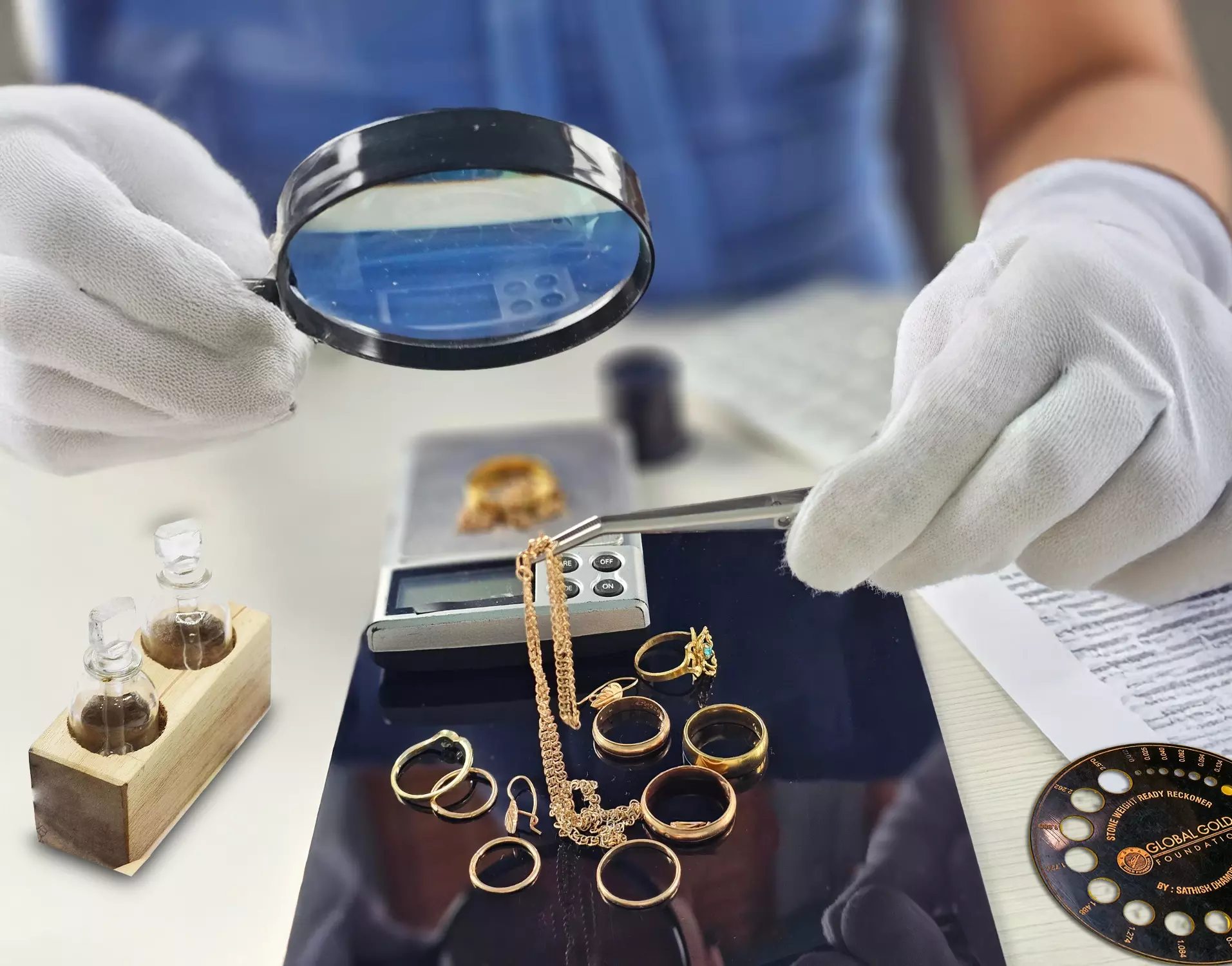
Gold Appraisal Job: Skill Upgrade for Jewelers
Walk into any jewelry store and you’ll feel it — that quiet hum of sparkle, chatter, and trust. Every sale, every repair, every exchange depends on one thing most people overlook: the ability to value gold accurately.
That’s where gold appraisal steps in — not just as a technical process, but as a career-defining skill. For jewellery store employees, learning gold appraisal isn’t just about numbers. It’s about credibility, confidence, and a clear path toward growth.
Let’s talk about why it matters, how to learn it, and how it can turn your everyday work into something far more rewarding.
Why Gold Appraisal Training Is a Game-Changer for Jewellery Staff
Every piece of gold carries a story. Sometimes it’s a wedding chain, sometimes an heirloom bracelet, sometimes a customer’s savings turned into beauty. When someone asks you, “What’s this worth?” — they’re not just asking about price. They’re asking for honesty, expertise, and trust.
If you can answer confidently — with facts, not guesswork — you instantly stand out.
You become the go-to person in the store, the one others rely on when things get tricky.
That’s the real difference between an average salesperson and a skilled appraiser: authority.
Gold Appraisal: The Secret Edge in a Jeweler’s Career
Let’s be blunt — promotions and pay raises in jewelry stores often go to those who add more value to the business.
And nothing adds more value than someone who can handle gold accurately and efficiently.
Appraisal skills open doors. You’re suddenly the person your manager trusts with trade-ins, gold exchanges, and estate pieces. That’s a big responsibility — and it comes with recognition.
Plus, you stop second-guessing yourself when customers challenge your quotes. You know your valuation is right. That confidence shows — and it sells.
Understanding Gold Beyond the Shine
Most of us in the trade already know the basics — karat, purity, weight. But when you train formally in appraisal, you start to notice the subtler things:
- How 22K gold from one country behaves differently than another because of alloy variation.
- How antique gold’s surface tells stories — faint dullness, deeper tone, softer texture.
- How hallmarks can deceive and what to look for in authentic stamps.
Appraisal is where science meets instinct.
Sure, you’ll use acid tests, density checks, and digital testers. But after a while, your eyes and fingers start doing half the work — you develop a feel for it.
That’s when you stop being just an employee and start being an expert.
Essential Tools Every Gold Appraiser Should Know
No fancy talk — these are your everyday companions:
- Touchstone & acid testing kit: Classic, reliable, and still widely used.
- Electronic gold tester: For quicker readings and fewer messes.
- Precision digital scale: Accuracy matters — every milligram counts.
- Magnifier or loupe: For spotting hallmarks and hidden details.
- Density testing setup: Especially useful for mixed or hollow pieces.
- Notebook or appraisal log: Because consistency builds credibility.
But remember — even the best tools are useless without good judgment.
Seasoned appraisers will tell you: sometimes your instincts catch what the machine misses.
How to Learn Gold Appraisal Professionally
There are several ways to get trained, depending on your goals and time.
1. Short-Term Certification Courses
Ideal for working professionals. Usually 2–4 weeks long, covering:
- Purity testing (acid, touchstone, electronic)
- Alloy and plating recognition
- Calculating value based on market rates
- Counterfeit detection
- Customer interaction and documentation
2. Advanced Appraisal or Gemology Programs
For those planning to specialize further — these include gem identification, diamond grading, and antique evaluation.
3. In-House Training
Some jewelry chains or showrooms offer internal programs for staff. If your store does, grab the opportunity. It’s the easiest way to level up without leaving your job.
And honestly? It’s fun. Every test feels like solving a tiny golden mystery.
Real Benefits You’ll Notice (Fast)
Let’s be practical — what do you actually gain?
- Higher credibility: Customers and coworkers trust your judgment.
- Career growth: Managers assign you key responsibilities — and better pay.
- Professional confidence: You no longer hesitate during valuation.
- Customer loyalty: People remember the person who gave them fair, clear answers.
- Personal satisfaction: There’s quiet pride in knowing exactly what something’s worth.
These aren’t vague promises — they’re daily, visible changes in how your work feels.
Handling the Emotional Side of Appraisal
Gold isn’t just metal. It’s memory.
You’ll meet people selling a parent’s chain or trading an engagement ring. In those moments, your skill and empathy matter equally.
A good appraiser explains, gently:
“This ring is 18 karat, not 22, but it’s beautifully made.”
That small sentence can turn a tense moment into one of trust.
And trust, in this line of work, is pure gold.
Common Appraisal Challenges (and How to Stay Calm)
You’ll face tricky moments — fake hallmarks, odd alloys, customers convinced their 14K chain is 24K. It happens.
Here’s what pros do:
- Test twice before finalizing.
- Explain findings with visual proof — show acid marks, display readings.
- Never rush an emotional customer.
- Keep learning — every mistake adds to your expertise.
Remember: your calmness and clarity will speak louder than any number on a scale.
Career Paths After Gold Appraisal Training
Once you’ve learned the art, your opportunities expand far beyond the counter:
- Work as a professional appraiser for jewelry chains or pawn businesses.
- Join auction houses specializing in vintage or estate jewelry.
- Become a certified valuer for insurance and legal purposes.
- Start a freelance appraisal service for local jewelers and private clients.
- Or simply become the go-to expert in your store — a respected name customers trust.
Wherever gold goes, your skill will travel too.
Mindset Matters: Curiosity Is Your Best Tool
Appraisal training teaches you far more than testing methods — it sharpens your eye for detail.
You start noticing hallmark placements, solder points, polish types. You even begin to hear subtle differences in how different karats sound when tapped gently on the counter.
That curiosity makes you better — not just at appraising, but at everything in jewelry work. You start seeing what others miss.
Call to Action: Start Your Gold Appraisal Journey Today
If you’re already working in a jewelry shop, you’re halfway there. You handle gold daily, talk to customers, and understand the rhythm of the trade.
Now’s the time to add appraisal to your skill set.
Enroll in a short certification program, or ask your manager about internal training opportunities.
Because here’s the truth: the jewelry business rewards those who know value — not just of gold, but of knowledge.
The question is — will you be the next trusted appraiser behind that counter?
Frequently Asked Questions About Gold Appraisal Training
1. What is gold appraisal training?
It’s a professional course that teaches you how to identify, test, and value gold accurately using methods like acid testing, density checks, and hallmark verification.
2. Who can join a gold appraisal course?
Anyone working in the jewelry trade — sales staff, store managers, or even independent gold buyers — can join. You don’t need a formal degree, just basic familiarity with jewelry.
3. How long does it take to learn gold appraisal?
Short-term courses usually last 2 to 4 weeks, while advanced or gemology programs can take a few months.
4. Do I need special equipment for training?
Most institutes provide tools during training, but you’ll eventually need your own touchstone, acids, scale, and magnifier if you plan to work independently.
5. Will gold appraisal certification increase my salary?
Yes — appraisal-trained staff often earn 10–25% higher pay because they handle more valuable and sensitive tasks in a jewelry store.
6. Can I work independently after training?
Absolutely. Many appraisers offer freelance services or consultancy for jewelry shops, pawn dealers, and auction firms.
7. Is it hard to learn gold appraisal?
Not at all — if you’re already in the jewelry business, it feels natural. It’s more about practice and patience than difficulty.
Final Words: The Value You Bring
Gold appraisal isn’t just about purity and price — it’s about professionalism. It’s that rare skill that combines science, experience, and empathy.
If you’re ready to stand out in your store, earn more respect, and maybe even a raise — learning gold appraisal might just be the smartest move you make this year.
Because in this business, those who know the true value of gold always shine a little brighter.