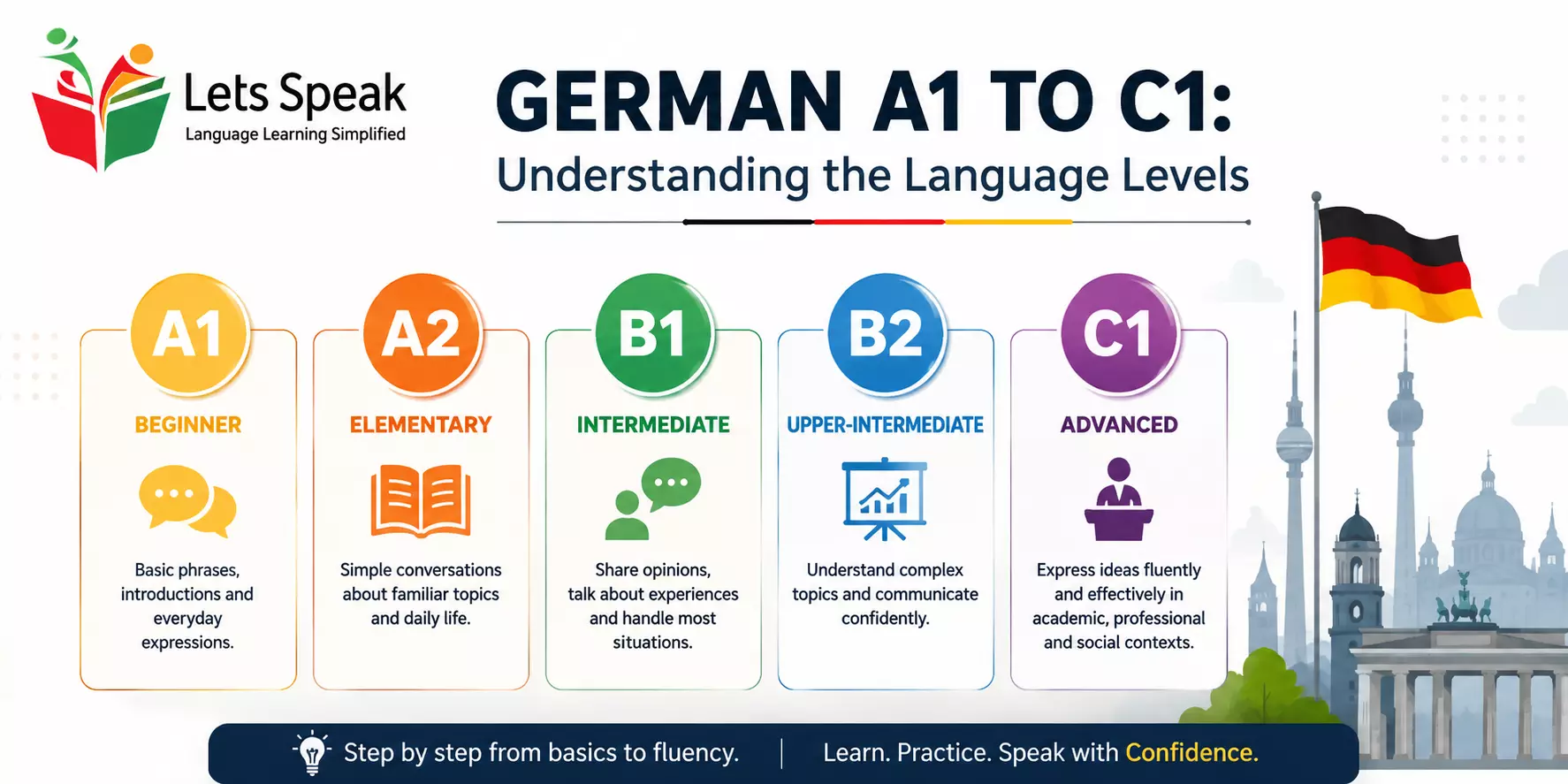
German A1 to C1: Understanding the Language Levels
The Common European Framework of Reference for Languages (CEFR) offers a globally recognized system for measuring language ability across six stages: A1, A2, B1, B2, C1, and C2. Each stage represents a different level of communication ability.
For learners considering german language learning in chennai, these levels provide a clear roadmap from basic vocabulary and everyday conversations to advanced professional communication.
A1 German: Getting Started
A1 is the beginner level. At this stage, learners focus on basic German vocabulary, greetings, introductions, numbers, dates, simple questions, and everyday expressions.
You learn how to introduce yourself, talk about your family, describe your daily routine, and handle simple situations such as ordering food or asking for directions.
Grammar at A1 generally includes sentence structure, articles, personal pronouns, basic verbs, and simple tenses. The goal is not fluency but building a strong foundation.
A2 German: Building Everyday Communication
At A2, learners expand their vocabulary and become more comfortable with common conversations. You can discuss familiar topics such as work, hobbies, shopping, travel, and personal experiences.
You also begin using more grammatical structures and can understand simple written and spoken German more easily.
Read: Can You Learn German in Chandigarh Without Prior Knowledge?
B1 German: Becoming an Independent Speaker
B1 is an important milestone because learners start becoming independent users of German. You can understand the main points of conversations about familiar topics and communicate your opinions, experiences, plans, and preferences.
At B1, learners typically work on more complex sentence structures, past and future forms, connectors, and broader vocabulary.
For people pursuing german language learning in chennai, reaching B1 can be especially useful when preparing for travel, education, employment, or everyday communication in German-speaking environments.
B2 German: Developing Fluency
B2 represents an upper-intermediate level. Learners at this stage can communicate with greater confidence and understand more complex conversations, articles, presentations, and discussions.
You begin expressing ideas in greater detail and can participate in conversations with native speakers without constantly relying on simple phrases. B2 is also useful for learners who need German for professional or academic purposes.
C1 German: Advanced Communication
C1 is an advanced level where learners can communicate effectively in demanding academic, professional, and social situations. You can understand longer and more complex texts, recognize implied meanings, and express ideas naturally and precisely.
Vocabulary becomes much broader at C1, while grammar becomes more refined. Learners are expected to adapt their language according to different contexts and communicate with a high degree of confidence.
Choosing the Right Learning Method
The right learning approach depends on your current ability, schedule, and goals. Some learners prefer classroom-based instruction, while others benefit from flexible german classes online that allow them to study from home.
Learners looking for german classes in velachery can also explore programs that offer structured progression through the CEFR levels. Choosing a course that includes assessments and practical activities can make it easier to track your improvement.
How to Progress from A1 to C1
Progressing through the German levels requires consistency rather than trying to memorize everything at once.
Start by developing a strong vocabulary and understanding basic grammar at A1 and A2. At B1 and B2, focus more heavily on conversation, writing, comprehension, and expressing complex ideas.
At the C1 stage, practice should become more specialized.
Reading German news, discussing professional subjects, writing detailed texts, and participating in extended conversations can help develop advanced proficiency.
A structured learning environment can also keep you motivated. Lets Speak can be one option for learners exploring organized German language training and looking for guidance throughout their learning journey.
Why German Proficiency Levels Matter
Knowing your CEFR level helps you understand what you can realistically achieve and which skills need improvement. It can also be useful when applying for educational programs, jobs, or other opportunities where German proficiency is required.
Whether your goal is basic conversation or advanced professional communication, german language learning in chennai can become more manageable when you follow a clear level-by-level plan. Each stage builds upon the previous one, making consistent progress easier to measure.
Conclusion
With consistent practice, the right learning resources, and realistic goals, german language learning in chennai can be an effective path toward confident German communication.
Whether you are learning for education, career opportunities, travel, or personal development, understanding the A1 to C1 levels gives you a clear roadmap for reaching your language goals.