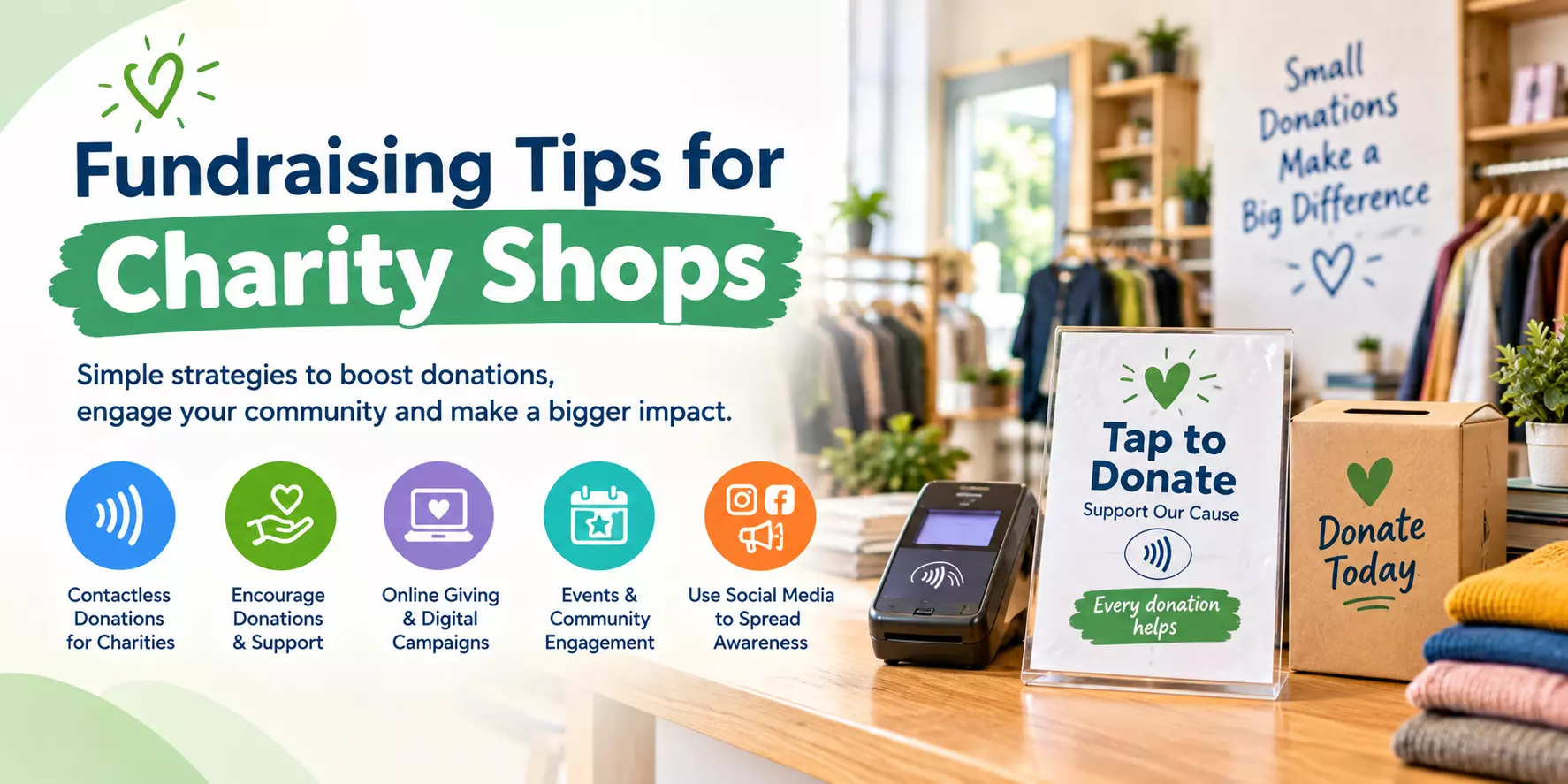
Fundraising Tips for Charity Shops: How to Increase Donations and Support
Charity shops are more than places to find affordable clothing, books, furniture, and unique items.
They are an important part of the fundraising ecosystem, helping charities generate income while encouraging communities to reuse, recycle, and support meaningful causes.
However, with changing customer habits and the growing popularity of digital payments, charity shops need to explore new ways to raise funds and engage supporters.
From improving your shop layout to introducing Contactless Donations for charities, there are several practical strategies that can help increase fundraising opportunities.
Whether you run a small local charity shop or manage multiple stores, these tips can help you attract customers, encourage donations, and build long-term community support.
1. Make Donations Quick and Convenient
One of the simplest ways to improve fundraising is to make donating as easy as possible. Many customers no longer carry cash, so relying only on traditional collection boxes can mean missing valuable donation opportunities.
Contactless Donations for charities allow supporters to make quick contributions using debit cards, credit cards, smartphones, and digital wallets. A simple tap can make the donation process convenient and encourage customers to give spontaneously.
Place contactless donation points near the checkout, entrance, or other high-traffic areas. Clear messaging such as "Tap to Support Our Cause" can remind customers that even a small contribution can make a difference.
2. Create Eye-Catching Donation Displays
Your donation area should be visible, attractive, and easy to understand. A well-designed display can encourage customers to stop and learn more about your charity.
Consider including:
- A clear explanation of what donations support
- Real stories about the people or communities your charity helps
- Information about how funds are used
- QR codes linking to your online donation page
- Contactless donation options
- Simple calls to action such as "Donate Today"
Keep the messaging positive and focused on impact. Customers are more likely to support a cause when they understand how their contribution can help.
3. Encourage Customers to Donate Items
Charity shops depend heavily on donated goods. Make it easy for customers to understand what items you accept and how they can donate them.
Use signs around the shop and on your website to promote clothing, books, household items, toys, and other suitable donations. You can also create seasonal donation drives around events such as spring cleaning, back-to-school periods, or the holiday season.
Consider offering reminders on receipts, shopping bags, newsletters, and social media. A simple message encouraging customers to bring unwanted quality items during their next visit can generate additional stock and fundraising opportunities.
4. Promote the Option to Donate to Charity Online
Your physical shop can introduce customers to your digital fundraising channels. Make sure your website has a clear donation page that works well on mobile devices.
Encourage customers to donate to charity online by displaying QR codes throughout the shop. These codes can take supporters directly to your donation page, making it possible to give without searching for your website.
Online fundraising can also reach people who do not regularly visit your physical store. Share your donation link through social media, email newsletters, community groups, and digital campaigns.
5. Organise Special Fundraising Events
Events can bring new visitors into your shop while creating additional fundraising opportunities. Consider organising themed shopping days, seasonal sales, community markets, or charity challenges.
For example, you could host a vintage fashion day, book sale, children's clothing event, or Christmas fundraising campaign. Promote the event several weeks in advance through social media, posters, email, and local community networks.
You can also partner with nearby businesses, schools, clubs, or community organisations. These partnerships can help introduce your charity shop to new audiences.
6. Use Social Media to Increase Engagement
Social media is a powerful and cost-effective way for charity shops to connect with supporters. Instead of simply posting product photos, use your channels to tell your charity's story.
Share:
- New and interesting products available in-store
- Fundraising milestones
- Volunteer stories
- Customer experiences
- Donation drives
- Upcoming events
- Success stories showing the impact of fundraising
- Simple instructions for donating online
Short videos can be particularly useful for showcasing products and giving followers a behind-the-scenes look at your shop.
7. Make Your Checkout a Fundraising Opportunity
The checkout is one of the most important places for fundraising. Customers have already decided to support your shop by making a purchase, so it can be a natural point to invite an additional donation.
Train staff and volunteers to politely mention available donation options without putting pressure on customers. A simple question such as "Would you like to make a small donation to support our work?" can create another opportunity to raise funds.
You can also display a contactless donation device near the payment area for customers who prefer quick digital giving.
8. Build a Strong Volunteer Community
Volunteers are essential to many charity shops. They can help with customer service, sorting donations, merchandising, fundraising campaigns, and community outreach.
Make volunteers feel connected to the charity's mission by explaining how shop income supports the organisation's work. When volunteers understand the impact, they can naturally communicate that message to customers.
Regular training can also help volunteers understand how contactless giving, online donations, and fundraising campaigns work.
9. Tell Supporters About the Impact
People want to know that their support matters. Instead of simply asking customers for donations, explain what their contributions help achieve.
For example, share updates about community projects, educational programmes, environmental initiatives, healthcare support, or other charitable activities funded by your organisation.
Impact-focused communication can strengthen trust and encourage customers to become repeat supporters rather than one-time donors.
10. Track Your Fundraising Results
Finally, monitor which fundraising activities are generating the best results. Track donations from contactless devices, online campaigns, fundraising events, and other initiatives.
Review your results regularly and identify which campaigns receive the most engagement. You can then improve future campaigns based on what your supporters respond to.
Key Takeaways
Successful charity shop fundraising is about creating multiple, convenient opportunities for people to support your cause. Consider these essential steps:
- Introduce Contactless Donations for charities.
- Make online giving simple and mobile-friendly.
- Encourage customers to donate to charity through QR codes and digital campaigns.
- Organise creative fundraising events.
- Use social media to tell your charity's story.
- Make donation options visible at checkout.
- Encourage and train volunteers.
- Share real examples of fundraising impact.
- Track your results and improve campaigns over time.
Conclusion
Charity shops have many opportunities to expand their fundraising beyond traditional sales and cash collection boxes.
By combining community engagement with digital tools such as Contactless Donations for charities, QR codes, social media, and online giving, shops can create a convenient fundraising experience for modern supporters.
The key is to make giving simple, communicate the impact of donations, and provide customers with different ways to contribute.
With consistent promotion and thoughtful fundraising strategies, charity shops can strengthen community relationships while generating valuable funds for the causes they support.