From Startup to SaaS: Building Products That Scale
Starting a software business with limited money is not easy. Founders have to make careful decisions, understand what customers need, and find ways to grow without wasting resources.
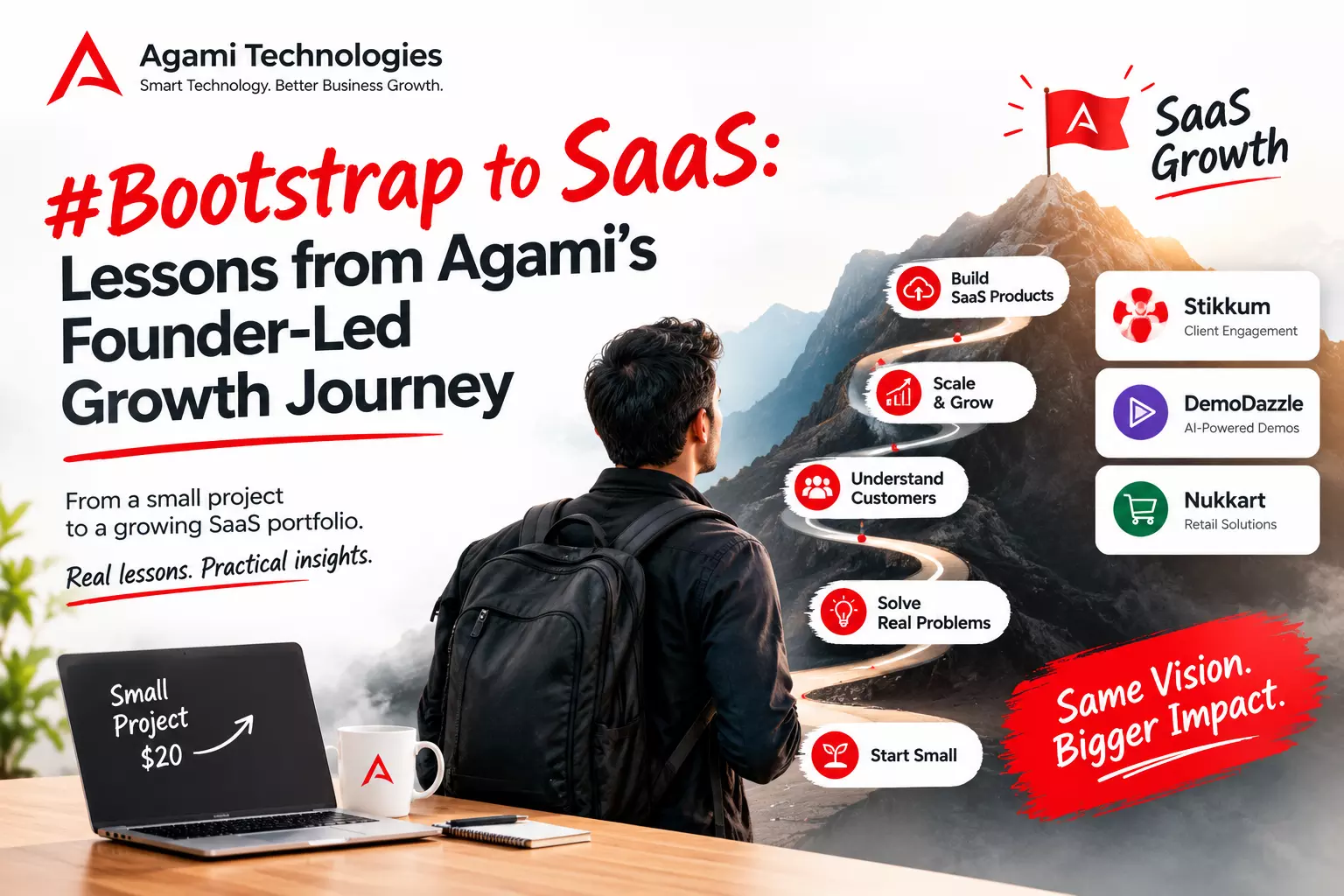
Agami Technologies began its journey in 2011 with a project worth around $20. Over time, the company worked on developing its own SaaS products while continuing to deliver software solutions for clients.
The journey from a small project to a growing software portfolio offers useful lessons for SaaS founders and business owners. It shows why solving real problems, listening to customers, and building reliable software matter when growing a business.
Starting Small and Solving Real Problems
When a business starts with limited resources, every decision counts. Spending months developing features that customers do not need can waste both time and money.
Agami’s journey highlights the value of focusing on practical problems instead of chasing every new technology trend.
For example, imagine a business that manages customer information using spreadsheets, emails, and several disconnected applications.
Employees spend hours copying information between tools, and mistakes become common. Software that connects these systems could reduce manual work and make daily operations easier.
That is a problem worth exploring because it affects the way people work.
For founders following a Bootstrap to SaaS journey, the first step should be understanding the customer’s problem. Speak with potential users, learn about their challenges, and test whether your solution provides enough value before investing heavily in development.
Why Founder-Led Growth Matters
In the early stages of a business, founders often have direct contact with customers. They can listen to feedback, understand frustrations, and make product decisions based on real experiences.
This approach helps prevent a common mistake: building software based on assumptions rather than customer needs.
Agami’s experience with client projects also provides an example of how service-based work can inform product development. Repeated customer challenges can reveal opportunities to build software that serves a wider market.
Consider Stikkum, Agami’s client-engagement platform for mortgage brokers. Mortgage professionals need to manage leads, follow up with clients, and respond to important updates. Handling everything manually can become difficult as the business grows.
A platform that brings these activities together can help teams manage their work more consistently.
The lesson is straightforward: useful software starts with understanding the people who will use it.
Read: Latest Software & SaaS Updates Impacting Businesses
Building Reliable Software That Can Scale
Developing one application is different from managing several products at once. As a business grows, it needs reliable development practices, consistent testing, and a clear approach to maintenance.
Agami’s supplied company information states that it has built and tested more than 12 SaaS products while continuing to deliver custom software projects.
A repeatable development process can help teams manage this kind of work. For example, developers may reuse proven components for authentication, reporting, or other common features rather than building everything from scratch.
This can save time and allow teams to focus on the features that make each product useful to its customers.
Quality also matters. Security, testing, and maintenance should be part of the development process from the beginning, not tasks left until problems appear.
Businesses exploring software development and digital transformation can learn more through Agami Technologies’ services.
From One Product to a SaaS Portfolio
A successful product can create opportunities to explore other customer problems. However, expanding a portfolio works best when each product has a clear purpose.
Agami’s products illustrate how software can serve different business needs.
Stikkum: Improving Client Engagement
Stikkum focuses on client engagement and lead management for mortgage brokers. By supporting automated follow-ups and timely notifications, it aims to help teams organize client communication and manage opportunities more effectively.
DemoDazzle: Simplifying Product Demonstrations
Preparing demonstrations and onboarding materials can take time, especially when teams explain the same features repeatedly. DemoDazzle focuses on AI-powered demonstrations and shareable recordings to help simplify these activities.
Nukkart: Supporting Small Retailers
Small retailers need practical ways to manage orders and coordinate their activities. Nukkart represents Agami’s work on solutions for smaller shops and their business needs.
These examples highlight a useful principle: build products around specific problems rather than trying to create one application for everyone.
A Practical Bootstrap to SaaS Growth Plan
Founders can apply several lessons when building their own software businesses.
- Start with one clear problem. Choose a challenge that customers regularly face and understand how they currently handle it.
- Build a focused MVP. Develop the essential features first. Use customer feedback to decide what should come next.
- Measure results. Track product adoption, customer retention, time saved, and errors reduced. These indicators can help show whether the software is providing value.
- Create repeatable processes. Use consistent development, testing, and deployment practices to make future improvements easier.
- Grow at a manageable pace. Before expanding into new products, make sure the existing product serves customers well and the team can maintain it.
Founders should also pay attention to security and maintenance as their customer base grows. Moving quickly is useful, but not when it creates problems that become expensive to fix later.
Growing a Business with Purpose
The Bootstrap to SaaS journey is not a guaranteed formula for success. Markets change, customer expectations evolve, and not every product idea works.
Agami’s experience offers a practical reminder that growth can begin with a small project and develop through consistent effort, customer understanding, and disciplined software development.
For founders, the goal should not simply be to launch more products. It should be to build solutions that people find useful enough to keep using.
If you are planning a new software product or looking to improve existing business systems, visit Agami Technologies to explore its technology services.
You can also find more insights on software development and product strategy on the Agami Technologies blog.
The best starting point is often a simple question: What problem can your software solve better than the way customers handle it today?
Frequently Asked Questions
What does Bootstrap to SaaS mean?
It describes building a software business with limited initial resources and developing products that can serve customers repeatedly over time.
How can founders validate a SaaS idea?
Talk to potential customers, identify recurring problems, and test a small solution before investing heavily in development.
Why is customer feedback important for SaaS growth?
It helps founders understand what users need, improve existing features, and avoid spending time on changes that offer little value.
When should a SaaS company expand its product portfolio?
Expansion is worth considering when the existing product provides clear customer value and the team has the resources to support additional products.