What Are Friendship Peak Conditions Like in 2026–27? Complete Update
What Are Friendship Peak Conditions Like in 2026–27?
Friendship Peak, standing at approximately 5,289 metres, is one of the popular mountaineering objectives near Manali in Himachal Pradesh.
Although it is often considered a progression objective between high-altitude trekking and technical mountaineering, a Friendship Peak Expedition still requires proper preparation, snow skills, physical fitness and careful decision-making.
For the 2026–27 climbing cycle, conditions on Friendship Peak will depend heavily on the season, recent snowfall, temperature, wind, snow stability and route accessibility.
Rather than looking for one fixed description of the mountain, climbers should understand how conditions change throughout the year.
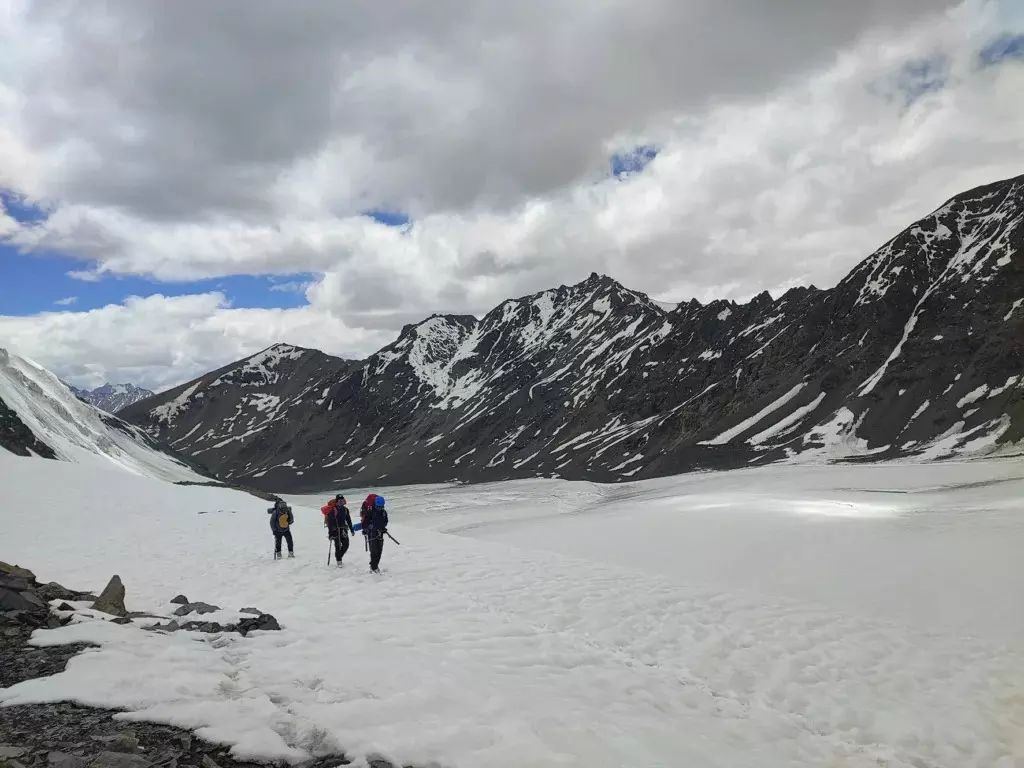
Recent 2026 expedition reports demonstrate this clearly. In April 2026, heavy snowfall, deep fresh snow, poor visibility and avalanche observations led one expedition team to cancel its summit attempt. In May 2026, another team turned around at approximately 4,900 metres because of deep, unconsolidated snow and avalanche concerns.
These experiences show why current mountain conditions matter more than a general seasonal description.
Friendship Peak 2026–27 Conditions at a Glance
Factor
Expected 2026–27 Consideration
Altitude
Approx. 5,289 m
Location
Pir Panjal Range, Himachal Pradesh
Main climbing windows
May–June and September–October
Early-season snow
Generally more extensive at higher elevations
Post-monsoon conditions
Less snow on lower sections, snow/ice may remain higher up
Winter
Heavy snow, extreme cold and difficult access
Main weather concerns
Fresh snowfall, strong winds, cloud, low visibility
Key technical equipment
Crampons, ice axe, helmet, harness and rope equipment as required
Summit decision
Dependent on actual weather, snow and route conditions
Terranova's 2026–27 expedition guidance identifies May–June and September–October as the principal Friendship Peak windows, while noting that late-season departures require close attention to forecasts, recent snowfall and route conditions.
How Much Snow Can Be Expected on Friendship Peak?
There is no reliable single snow-depth figure for Friendship Peak throughout the 2026–27 season.
Snow conditions vary significantly between the approach, camps, glacier terrain and summit slopes.
May and June
- The pre-monsoon period generally retains more winter snow at higher elevations.
- During early-season climbs, snow can cover substantial portions of the upper route. Crampons and an ice axe may become essential depending on the route and current conditions.
- However, more snow does not necessarily mean easier climbing.
- Fresh, unconsolidated snow can slow movement and increase route-finding and avalanche concerns.
- The May 2026 expedition report provides a useful real-world example: the team reached approximately 4,900 metres before turning around because deep loose snow made further movement unsafe.
September and October
The post-monsoon season generally presents a different mountain.
Lower and middle sections can become more exposed as seasonal snow melts, while snow and ice can remain on the higher sections.
September can bring clearer post-monsoon visibility, while October becomes progressively colder as winter approaches.
Terranova's current 2026–27 guidance specifically recommends paying close attention to recent snowfall, forecasts and route conditions for late-season departures.
What Is the Weather Like on Friendship Peak in 2026–27?
Weather is one of the biggest factors affecting a Friendship Peak Expedition.
Conditions can change rapidly with altitude. A comfortable morning in Manali does not mean the summit route will have similar conditions.
At higher elevations, climbers may encounter:
- Sub-zero temperatures
- Strong winds
- Fresh snowfall
- Cloud and poor visibility
- Snow-covered slopes
- Icy sections
- Rapid weather changes
- Difficult summit-day conditions
The 2026 field reports show how quickly conditions can deteriorate. One April expedition experienced continuous heavy snowfall and poor visibility, while another May expedition encountered unstable loose snow on the upper mountain.
Therefore, a weather forecast should be checked close to the expedition rather than relying only on historical climate information.
Is Friendship Peak Suitable for Climbing in 2026–27?
Friendship Peak remains a mountaineering objective that can be attempted during established climbing windows, subject to actual mountain conditions.
The important distinction is between seasonal suitability and day-to-day climbability.
A season may generally be considered suitable, but a particular summit attempt can still be cancelled because of:
- Heavy snowfall
- Avalanche risk
- High winds
- Poor visibility
- Unstable snow
- Unsafe glacier conditions
- Route damage
- Excessive cold
- Team health or acclimatization concerns
This is why responsible expedition planning always keeps a margin for changing mountain conditions.
What Are the Friendship Peak Route Conditions Like?
The Friendship Peak route generally progresses from the Manali region toward the higher mountain environment around Dhundi, Bakarthach, Lady Leg and the upper camps.
As altitude increases, the terrain becomes progressively more demanding.
Lower Sections
The lower approach can involve hiking through mountain trails and open terrain. Seasonal snow coverage is generally more variable here.
Higher Camps
Snow and cold become increasingly important as the team gains altitude.
Depending on the season, climbers may encounter:
- Snow slopes
- Frozen terrain
- Glacier-related sections
- Strong winds
- Steeper climbing terrain
Summit Section
The summit push is particularly demanding because of altitude, cold, early start times and changing snow conditions.
The exact route should always be determined by the expedition leadership based on current conditions rather than following a fixed route description blindly.
What Equipment Is Important for 2026–27?
The equipment required depends on the season and actual route conditions.
A typical Friendship Peak Expedition may require:
- Mountaineering boots
- Crampons
- Ice axe
- Climbing helmet
- Harness
- Carabiners
- Technical rope equipment
- Waterproof outer layers
- Insulated jacket
- Warm gloves
- Gaiters
- Headlamp
- UV-protection sunglasses
- High-altitude sleeping bag
- Personal first-aid supplies
- Appropriate backpack
Technical equipment should be checked and fitted before the expedition.
A climber should never assume that because Friendship Peak is below 6,000 metres, ordinary trekking equipment will automatically be sufficient.
How Difficult Will Friendship Peak Be in 2026–27?
Friendship Peak is often described as an introductory or progression mountaineering objective, but that does not make it an easy trek.
The mountain involves altitude, snow travel, cold exposure and a demanding summit day. Current 2026 guidance from mountain operators describes it as a semi-technical Himalayan climbing objective rather than a casual trekking route.
A climber preparing for the 2026–27 season should ideally develop:
- Strong cardiovascular endurance
- Leg strength
- Long-distance hiking ability
- Experience carrying a backpack
- Basic snow movement skills
- Crampon technique
- Ice axe skills
- Cold-weather management
- High-altitude experience
- Ability to follow rope and safety instructions
Read: 5 Best High-Altitude Treks in Uttarakhand for Stunning
Friendship Peak vs Other Himalayan Expeditions
Friendship Peak can also be considered within a wider progression of Indian Himalayan mountaineering.
Black Peak Expedition
A Black Peak Expedition takes climbers into the Garhwal Himalayas of Uttarakhand to an approximately 6,387-metre technical objective.
Compared with Friendship Peak, Black Peak involves a substantially higher altitude and more advanced expedition environment, including glacier and technical climbing considerations.
Kang Yatse 2 Expedition
A Kang Yatse 2 Expedition takes place in Ladakh at approximately the 6,000-metre level.
The higher altitude means acclimatization becomes an even more important component of expedition planning.
Kang Yatse 1 Expedition
A Kang Yatse 1 Expedition represents another step into higher and more technical Himalayan mountaineering.
Its greater altitude and technical demands mean that climbers should have appropriate experience and preparation rather than choosing the mountain solely because of its height.
Friendship Peak can therefore be viewed as one possible progression objective, but individual readiness depends on previous experience, technical ability, fitness and acclimatization.
What About Friendship Peak Conditions in Winter?
Winter is fundamentally different from the normal Friendship Peak climbing season.
Terranova's current 2026–27 guidance states that November through February should not be treated as the standard Friendship Peak expedition season. Deep winter can bring heavy snowfall, avalanche exposure, extreme temperatures and access problems.
A specialist winter ascent by highly experienced mountaineers is therefore different from a normal guided Friendship Peak Expedition.
For most climbers preparing for 2027, winter can instead be used for:
- Strength training
- Endurance development
- Technical climbing practice
- Gear preparation
- Snow-skill training
- High-altitude expedition planning
How Should Climbers Check Friendship Peak Conditions Before Departure?
Before beginning a Friendship Peak Expedition, check the latest information on:
1. Recent Snowfall
Find out whether the mountain has received fresh snow in the days before the expedition.
2. Snow Stability
Fresh snow and wind-loaded snow can behave differently from consolidated snow.
3. Avalanche Risk
Avalanche conditions should be assessed by qualified mountain professionals using current field observations and forecasts.
4. Summit Weather
The summit window may depend on wind, cloud, snowfall and visibility.
5. Route Accessibility
Road and trail conditions can change after heavy precipitation or snowfall.
6. Team Acclimatization
Even good weather does not compensate for inadequate acclimatization.
7. Local Mountain Reports
Recent reports from teams actually operating in the region can provide valuable context.
What Does 2026 Teach Us About Friendship Peak?
The 2026 season has already provided an important lesson: a planned expedition date does not guarantee a summit attempt.
In April 2026, heavy snowfall and avalanche conditions led a team to cancel its summit attempt. In May, another team reached approximately 4,900 metres before turning around because of unstable loose snow. Both teams returned safely.
These examples demonstrate the importance of making decisions based on conditions encountered on the mountain.
A successful expedition is not defined only by reaching the summit. Responsible mountaineering also means knowing when conditions require a change of plan.
Conclusion
Friendship Peak conditions in 2026–27 will depend on the season and the weather immediately before and during each expedition.
May and June can bring more extensive snow at higher elevations, while September and October generally provide a different combination of clearer post-monsoon weather, exposed lower terrain and remaining snow or ice at higher elevations.
For the 2026–27 season, climbers should pay particular attention to recent snowfall, snow stability, avalanche conditions, wind, visibility and route accessibility.
Friendship Peak should also be approached as a mountaineering objective rather than an ordinary trek. Proper training, technical equipment, acclimatization and experienced mountain leadership remain important regardless of the month.
For climbers planning future objectives, experience gained on Friendship Peak can also help develop the skills needed for more demanding objectives such as a Black Peak Expedition, Kang Yatse 2 Expedition or Kang Yatse 1 Expedition—provided the climber's experience and technical preparation are appropriate for those mountains.
For expedition planning, route information and preparation guidance, visit Terranova Expeditions and check the latest mountain-specific updates before departure.