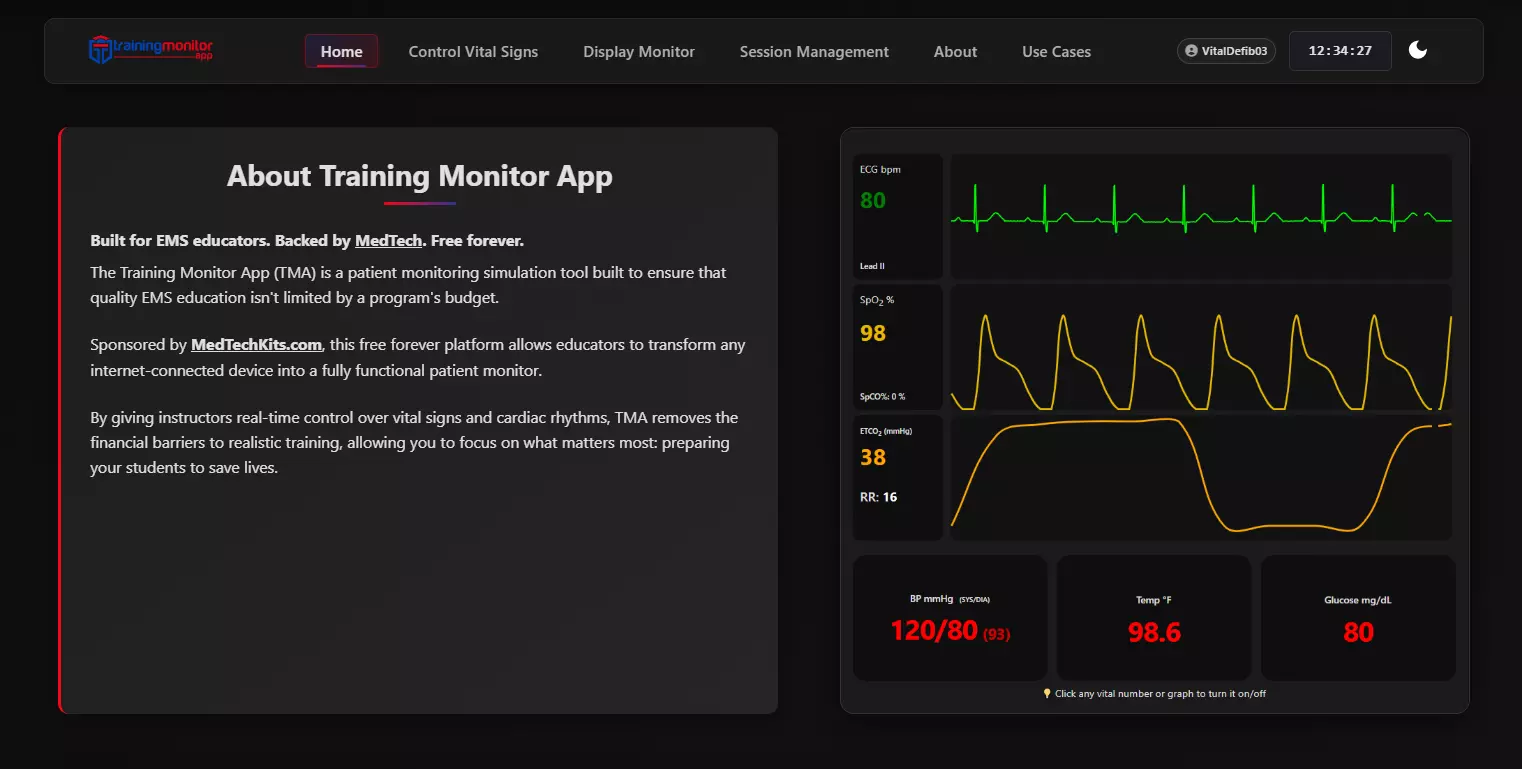
Free Cardiac Monitor Simulator for EMT & Paramedic Training
Emergency medical services depend heavily on fast decision-making, accurate patient assessment, and effective cardiac monitoring.
For EMTs and paramedics, understanding ECG rhythms and patient vital signs is one of the most important clinical skills required during emergencies.
In real-world situations, healthcare providers often have only seconds to recognize dangerous rhythms and respond correctly.
Because of this, simulation-based learning has become a major part of modern EMS education. A realistic ecg simulator helps students and healthcare professionals practice rhythm interpretation, patient monitoring, and emergency response skills in a controlled digital environment.
Instead of relying only on classroom lectures or textbook diagrams, learners can now interact with live monitoring systems that closely resemble real ambulance and hospital equipment.
Online EMS simulation tools are also making medical education more accessible than ever before.
Whether someone is studying independently, preparing for certification exams, or improving practical clinical skills, a virtual vitals monitor provides hands-on experience that supports faster and more effective learning.
Why Cardiac Monitoring Is Important in EMS
Cardiac monitoring is a critical part of emergency medical care because many life-threatening conditions first appear through abnormal ECG rhythms or changes in patient vital signs.
EMTs and paramedics commonly encounter emergencies such as:
- Cardiac arrest
- Heart attacks
- Respiratory failure
- Severe trauma
- Shock-related conditions
- Arrhythmias and irregular heart rhythms
In these situations, healthcare providers must quickly evaluate ECG readings, oxygen saturation, respiratory rate, and blood pressure while making treatment decisions under pressure.
A professional patient vitals monitor helps medical personnel identify dangerous changes in patient condition before those conditions become critical.
For EMS students, learning how to interpret monitor data correctly is an essential step toward becoming confident emergency responders.
However, mastering cardiac monitoring takes practice. Students need repeated exposure to realistic ECG waveforms and emergency scenarios before they become comfortable interpreting rhythms quickly and accurately.
How ECG Simulators Improve EMS Education
Traditional ECG education often focuses heavily on memorization. Students study printed rhythm strips and learn theoretical information about cardiac rhythms.
While this foundation is important, it does not fully prepare learners for real emergency situations where rhythms change dynamically and patient conditions evolve rapidly.
This is where a modern ecg simulator becomes valuable. Simulation-based training creates a more interactive learning experience by allowing students to observe live waveform behavior and practice real-time patient monitoring.
Instead of passively reading about arrhythmias, learners actively engage with realistic monitoring systems and emergency scenarios.
Using a digital cardiac rhythm simulator helps students:
- Improve rhythm recognition accuracy
- Learn ECG interpretation faster
- Understand waveform variations
- Practice emergency response skills
- Build confidence in patient assessment
- Develop critical thinking abilities
The more students practice with realistic simulation tools, the more prepared they become for clinical environments and emergency medical situations.
Benefits of Online EMS Monitor Simulators
Online simulation technology has transformed EMS training because it allows students to practice from virtually anywhere.
Instead of requiring expensive hospital equipment or dedicated simulation labs, browser-based learning platforms provide flexible and affordable access to monitoring education.
A modern ems training monitor offers several major benefits for EMS learners and healthcare educators.
Flexible Access: Students can train anytime using a laptop, tablet, or mobile device. This flexibility supports independent study and remote learning.
Repetition and Skill Development: Repeated rhythm practice helps learners improve memory retention and interpretation speed. Students can review difficult rhythms multiple times until they become comfortable recognizing them.
Realistic Clinical Exposure: A professional vital signs simulator helps learners understand how patient conditions change during emergencies.
Students can monitor ECG rhythms while also tracking oxygen saturation, respiratory rate, pulse, and blood pressure.
Safe Learning Environment: Simulation-based education allows students to make mistakes and learn from them without risk to real patients.
Reduced Training Costs: Virtual monitoring systems reduce the need for expensive physical simulation equipment, making training more accessible for schools and independent learners.
Because of these advantages, digital simulation tools are now widely used in EMS programs, nursing education, and emergency medical training courses.
Features of a Realistic Cardiac Monitor Simulator
A high-quality EMS simulator should provide an experience that closely resembles real hospital and ambulance monitoring systems. The best platforms combine realistic waveforms, interactive controls, and dynamic patient scenarios.
Important features of a professional vitals monitor include:
Real-Time ECG Waveforms
Students should be able to observe dynamic ECG rhythms that respond naturally during simulations.
Multi-Parameter Monitoring
A complete patient vitals monitor should display:
- Heart rate
- Oxygen saturation (SpO2)
- Respiratory rate
- Blood pressure
- Pulse monitoring
Rhythm Customization
An advanced cardiac rhythm simulator allows users to switch between rhythms and create different emergency scenarios for practice.
Alarm Systems and Alerts
Realistic monitor alarms help learners understand how emergency monitoring systems respond to patient deterioration.
Interactive Learning Interface
An intuitive interface helps students focus on learning rather than struggling with navigation.
Browser-Based Accessibility
Cloud-based simulation platforms allow users to practice without software installation or specialized hardware.
These features create a more immersive educational experience and help learners become more comfortable with real EMS monitoring equipment.
Common Rhythms EMT and Paramedic Students Should Practice
Rhythm recognition is one of the most important goals of ECG simulation training. EMS professionals must be able to quickly identify both normal and life-threatening rhythms during emergency situations.
A quality ecg simulator should provide practice for rhythms such as:
Normal Sinus Rhythm: The standard healthy cardiac rhythm used as a baseline for ECG interpretation.
Sinus Bradycardia: A slower-than-normal heart rate commonly seen in various medical conditions.
Sinus Tachycardia: An elevated heart rate that may occur during stress, trauma, or illness.
Atrial Fibrillation: An irregular rhythm frequently encountered in emergency departments and prehospital care.
Ventricular Tachycardia: A potentially dangerous rhythm that requires rapid recognition and intervention.
Ventricular Fibrillation: A life-threatening rhythm associated with cardiac arrest.
Pulseless Electrical Activity: A critical emergency rhythm requiring immediate response.
Asystole: A flatline rhythm indicating absence of detectable cardiac activity.
Practicing these rhythms repeatedly with a realistic ems training monitor helps learners improve interpretation speed, confidence, and emergency response readiness.
Why Simulation Training Builds Clinical Confidence
Many EMS students feel overwhelmed when first learning ECG interpretation and patient monitoring. Real emergency environments are stressful, fast-paced, and unpredictable.
Without proper preparation, interpreting rhythms under pressure can become extremely difficult.
Simulation training helps reduce this anxiety by allowing learners to practice in a low-pressure environment.
Working with a professional vital signs simulator gives students the opportunity to build confidence gradually through repetition and hands-on learning. Over time, learners become more comfortable with:
- ECG waveform interpretation
- Patient monitoring equipment
- Emergency assessment workflows
- Rhythm recognition under pressure
- Clinical decision-making
Confidence is critical in emergency medicine because hesitation can delay patient care. The more realistic the simulation experience becomes, the better prepared students are for actual clinical situations.
The Growing Importance of Digital EMS Education
Healthcare education continues to evolve as digital learning tools become more advanced and widely accessible. Many EMS programs now incorporate virtual simulations alongside classroom instruction to improve practical skill development.
Online monitoring tools help support:
- Remote EMS education
- Independent rhythm practice
- Clinical skill reinforcement
- Continuing medical education
- Flexible self-paced learning
A browser-based patient vitals monitor gives learners access to realistic training opportunities without geographical or financial limitations.
As technology improves, simulation-based EMS education will continue playing a larger role in preparing future healthcare professionals.
Read: Reliable MedTech Aneroid Sphygmomanometer System
Train Smarter With TrainingMonitor.App
TrainingMonitor.App provides realistic online monitoring tools designed specifically for EMS students, paramedics, nurses, and healthcare educators.
The platform helps learners improve ECG interpretation, patient assessment, and rhythm recognition skills through interactive simulation training.
Whether you are preparing for certification exams, strengthening emergency response knowledge, or practicing ECG interpretation daily, TrainingMonitor.App offers accessible browser-based learning for modern EMS education.
Using the advanced vitals monitor available on the platform, learners can experience realistic waveforms, monitor changing patient conditions, and improve emergency monitoring skills in a hands-on virtual environment.
With immersive simulation technology, practical rhythm recognition training, and easy online access, TrainingMonitor.App helps healthcare learners build confidence and improve clinical readiness more effectively.
Frequently Asked Questions
What is an ECG simulator used for?
An ecg simulator is used to help EMS students, paramedics, nurses, and healthcare professionals practice ECG interpretation and rhythm recognition in a virtual environment.
These tools simulate real cardiac monitor waveforms and patient conditions, allowing learners to improve emergency response skills without needing physical hospital equipment.
Many training programs use simulation software to strengthen rhythm identification and patient assessment abilities.
How does a patient monitor simulator help EMT students?
A virtual patient vitals monitor helps EMT students learn how to assess heart rhythms, oxygen saturation, respiratory rate, and blood pressure in real time.
Simulation-based learning improves clinical confidence because students can practice emergency scenarios repeatedly before working with real patients.
It also helps learners become familiar with the monitoring systems commonly used in ambulances and emergency departments.
Can I practice rhythm recognition online for free?
Yes, many online EMS training platforms now provide free access to rhythm recognition practice tools.
A browser-based cardiac rhythm simulator allows learners to study common ECG rhythms, observe waveform changes, and improve interpretation accuracy from any device.
These online tools are especially useful for students preparing for EMS certification exams or clinical training.
Why is a vital signs simulator important in EMS training?
A realistic vital signs simulator is important because EMS professionals must monitor multiple patient parameters during emergencies, not just ECG rhythms.
Simulation tools help learners understand how changes in heart rhythm affect oxygen levels, pulse rate, respiratory status, and blood pressure.
Training with an interactive ems training monitor improves patient assessment skills and prepares students for real emergency medical situations.