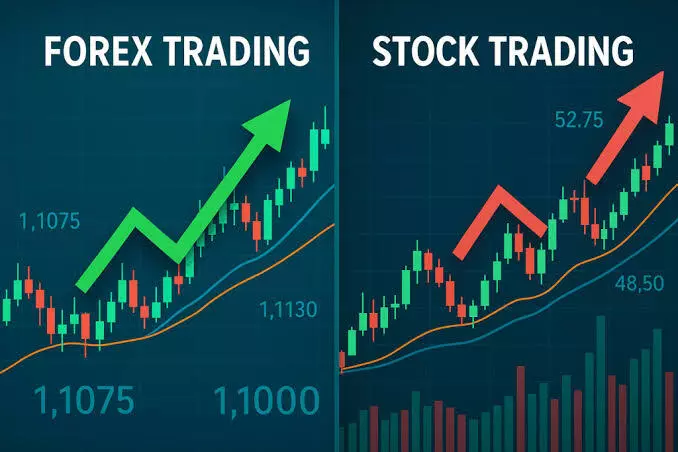
Forex Trading vs Stock Trading: What's the Difference?
Choosing where to begin can feel like standing at a crossroads. One path leads to the fast-moving forex market, while the other takes you into the ever-changing stock market. Both attract millions of people who want to build their market knowledge, but deciding between them is not always straightforward.
That is why Forex Trading vs Stock Trading is one of the first comparisons beginners search for before taking their first step. In this article, we will break down the key differences between currency trading and stock trading in simple terms. You will learn how each market works, what makes them unique, and the factors to consider before getting started.
Understanding the Forex Market and Currency Trading
The forex market is the largest financial market on the planet — bigger than all stock exchanges combined. Currency trading involves buying one currency while simultaneously selling another, creating pairs like EUR/USD or GBP/JPY.
Why do people trade currencies?
- Liquidity: Forex is like a busy highway with constant traffic. You can quickly enter or exit trades without much hassle.
- Leverage: Brokers often offer high leverage, allowing you to control larger positions with a small deposit. This can magnify profits but also losses, so tread carefully!
- 24/5 Market: The forex market works almost around the clock from Sunday evening to Friday night, giving traders plenty of flexibility.
But it’s not all roses:
The fast-paced nature means price swings can be sharp — like a cat on a hot tin roof — requiring quick decisions and a strong mind.
Forex Trading vs Stock Trading – The Core Differences
At the heart of it, Forex trading and stock trading both are ways to grow your money, but they play by different rules.
- Forex Trading happens in the forex market, where you buy and sell currencies like the US Dollar, Euro, or Japanese Yen.
- Stock Trading happens in the stock market, where you buy and sell shares of companies like Apple, Tesla, or Coca-Cola.
Feature
Forex Trading
Stock Trading
Market Hours
Operates 24 hours a day, five days a week across global sessions.
Follows the opening and closing hours of the stock exchange.
Volume & Liquidity
Extremely high liquidity, making it easier to enter and exit positions quickly.
Liquidity is generally high but depends on the individual stock's trading volume.
Volatility
Often experiences greater price fluctuations due to economic events and global news.
Usually less volatile than the forex market, although individual stocks can see sharp price swings.
Trading Instruments
Involves buying and selling currency pairs, such as EUR/USD or GBP/JPY.
Involves buying and selling shares of publicly listed companies.
Leverage Availability
Brokers often offer higher leverage, allowing traders to control larger positions with less capital.
Leverage is typically lower and subject to stricter regulations, depending on the market and broker.
Think of Forex as a high-speed train that’s always running during the weekday, while the stock market is more like a bus that sticks to a local schedule. Both get you to your destination, but the ride feels different.
Read: A Comprehensive Guide for Aspiring Traders
Exploring the Stock Market and Its Unique Features
When you buy a stock, you’re buying a piece of a company, making you a partial owner. The stock market is where this buying and selling happens through exchanges like:
- NYSE
- NASDAQ
- London Stock Exchange
What makes stock trading special?
- Company Fundamentals: Unlike currencies, stock prices often reflect a company’s earnings, management, and growth prospects. This brings a certain sense of stability – like planting a tree that you hope will grow over time.
- Dividends: Some stocks pay dividends, offering a steady income along with potential price appreciation.
- Regulated Market Hours: Stock exchanges have fixed trading hours, which can help set clear time frames for your trades.
Consider this: Stock prices can be impacted by news, quarterly earnings, and economic data. While generally less volatile than forex, stocks can move sharply on earnings reports or unexpected news.
Trading Comparison – Which One Suits You Best?
Here’s where you get down to brass tacks. Choosing between forex trading vs stock trading depends on your goals, personality, and lifestyle.
Compare side-by-side:
Factor
Forex Trading
Stock Trading
Risk Tolerance
Forex often moves faster and can be more volatile, appealing to those comfortable with quick decisions.
Stocks tend to be more steady, better for those who prefer a slower pace.
Capital Requirement
You typically need less upfront capital to start forex trading because of leverage.
Stocks may require more money, especially for blue-chip shares.
Time Commitment
Forex's 24/5 market suits traders who can monitor positions throughout the day.
Stocks often appeal to those preferring set hours or longer-term holds.
Learning Curve
Forex trading requires understanding geopolitical and economic factors influencing currencies.
Stock trading demands knowledge of companies, industries, and fundamental analysis.
Quick checklist for you:
- Do you like fast action or steady growth?
- Can you commit to constant market watching?
- Are you comfortable using leverage?
- Would you rather invest in companies you understand and believe in?
Remember — it’s a horse you have to bet on. No one wins every race, so pick the market that suits your style and stick with it.
For reliable insights, expert tips, and the latest updates on both forex trading and stock trading, choose Hesper Wealth—your trusted partner on the journey to smart investing.