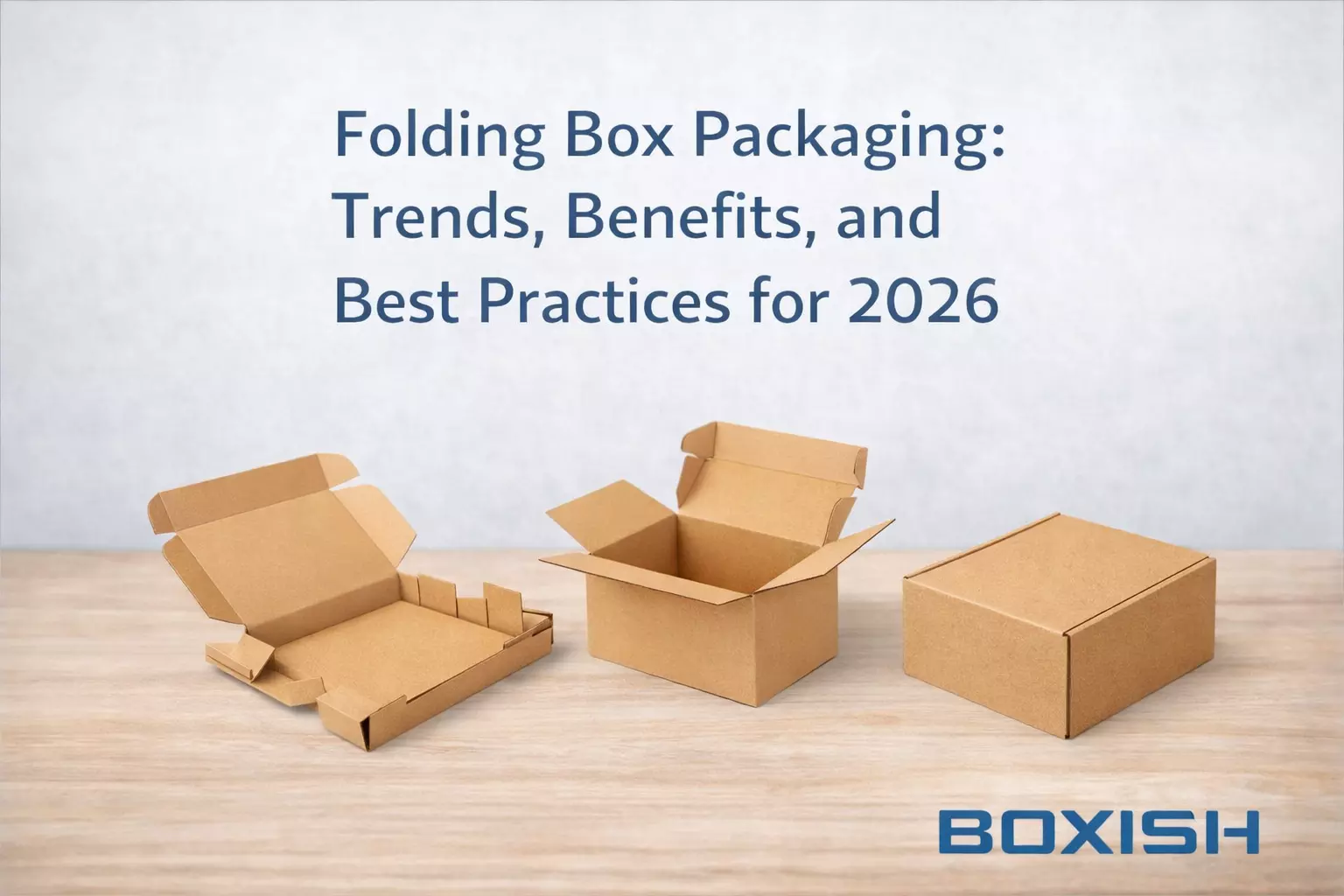
Folding Box Packaging: Trends, Benefits, and Best Practices for 2026
Folding box packaging provides lightweight, customizable solutions that excel in retail display, protection, and sustainability for diverse industries.
As demand surges in India's F&B and e-commerce sectors, these cartons offer a greener alternative to plastics with superior print quality.
Defining Folding Box Packaging
Folding box packaging refers to paperboard cartons that fold flat for shipping and erect into protective enclosures for products.
Made from folding boxboard (FBB) or solid bleached sulfate (SBS), they prioritize printability, strength, and recyclability.
Unlike corrugated, they focus on aesthetics and lightweight handling for point-of-sale appeal.
Types and Styles Available
Varied designs cater to specific protection and branding needs.
- Tuck-end boxes: Straight or reverse tuck for easy open/close, common in pharma and cosmetics.
- Auto-bottom: Self-locking bases for quick assembly in high-volume packing.
- Tray-lid or sleeve styles: Secure stacking for food and gifts.
- Windowed variants: Showcase contents while maintaining protection.
Boxish offers brown 3-ply folding boxes in sizes like 7L x 4W x 1H inches, using 450 GSM for durability.
Manufacturing Essentials
- The process ensures precision for scalable production.
- Paperboard printing with water-based inks precedes die-cutting and creasing for accurate folds.
- Gluing and folding machines form flat blanks, ready for bundling post-quality inspection.
Major Benefits Over Alternatives
- Folding boxes packaging outperform rigid or corrugated in cost and versatility.
- They save 80% storage volume when flat, cut transport emissions, and enable vibrant branding via foils and embossing.
- Eco-credentials shine with recyclability and lightweighting, reducing material by 20-40%.
Aspect
Folding Box Packaging
Rigid Boxes
Corrugated
Cost
Low, economies of scale
High premium
Moderate
Weight
Lightweight
Heavy
Bulky
Customization
High print options
Limited
Basic
Storage
Flat, space-saving
Assembled
Flat but thicker
Sustainability
Highly recyclable
Variable
Good but heavier
Industry Applications
- Folding packaging adapts seamlessly across sectors.
- Food & beverages use it for cereals, snacks, and ready-meals, leveraging hygienic FBB properties.
- Beauty/pharma benefits from tamper-evident designs; electronics from protective inserts.
- E-commerce favors auto-bottom for efficient fulfillment.
2026 Trends Driving Innovation
- India's folding carton market grows at 4.3-6.5% CAGR, fueled by urbanization and F&B expansion.
- Lightweighting with high-yield FBB cuts CO2; AI designs optimize ECMA templates.
- Smart features like QR/NFC and digital printing enable personalization and tracking.
- Sustainable inks and FSC-certified boards meet compliance demands.
Boxish: Leading Folding Box Option
- Boxish's collection features practical brown folding boxes, such as 13L x 13W x 2H or 8L x 8W x 4H inches, at 450 GSM 3-ply.
- Priced from Rs. 1,000 upwards, they suit bulk needs with nationwide delivery and eco-focus.
- Delhi-based, they provide reliable packaging for e-commerce and retail scalability.
Read: Top Custom Rigid Box Manufacturer & Supplier in the USA
Selecting Ideal Folding Packaging
- Match boxes to product size, handling, and brand goals.
- Test prototypes for stackability and transit; verify supplier certifications.
- Consider minimum orders, lead times, and customization for cost efficiency.
- Local suppliers like Boxish minimize logistics delays.
Future Outlook
- Digital and green advancements will dominate, with folding boxes central to circular economies.
- Businesses adopting these will gain competitive edges in sustainability and consumer loyalty.
Conclusion
- Folding box packaging combines functionality, affordability, and eco-innovation for modern supply chains.
- Choose providers like Boxish for quality brown 3-ply options that align with 2026 trends and business needs.
- Elevate your packaging strategy today for lasting impact.