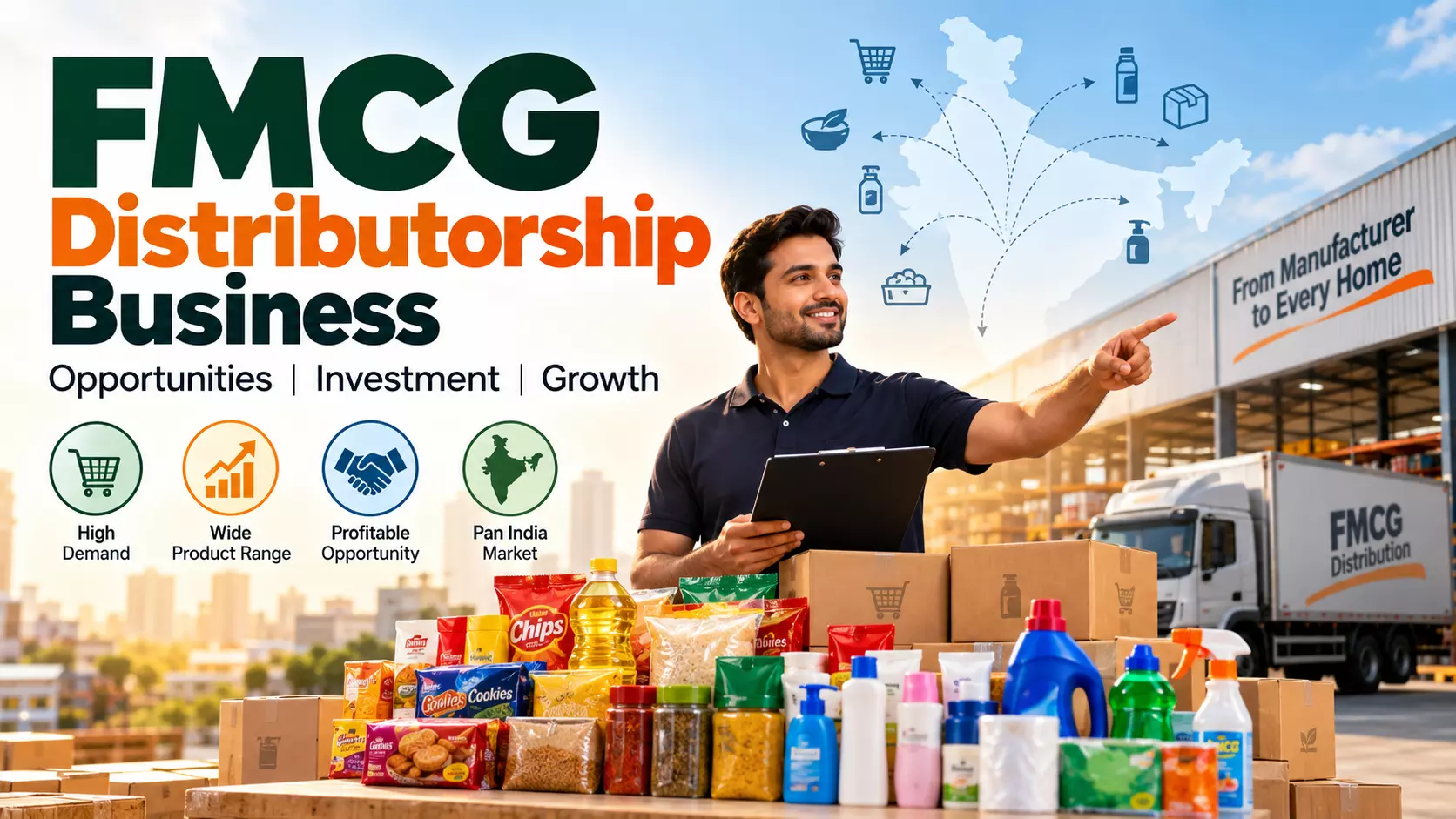
FMCG Distributorship Business: How to Connect with Manufacturers and Grow Your Distribution Network
The FMCG distributorship business is an attractive option for entrepreneurs who want to enter India's consumer goods supply chain.
Products such as packaged foods, spices, beverages, personal care items, and household essentials are sold through an extensive network of retailers and wholesalers.
For anyone searching for an FMCG distributor opportunity, the first step is understanding how manufacturers appoint distributors, what resources are required, and how to identify products with suitable market demand.
A well-planned distribution business can help entrepreneurs build long-term relationships with manufacturers and retail businesses.
Understanding the FMCG Distributorship Business Model
An FMCG distributorship business operates by connecting product manufacturers with retailers, wholesalers, and other sales channels.
Distributors generally handle product procurement, inventory management, order fulfillment, transportation, and payment collection according to their agreements with suppliers.
The exact business model depends on the product category and manufacturer. Some companies appoint distributors for specific territories, while others work with multiple distribution partners.
Entrepreneurs interested in FMCG distributorship should understand the manufacturer's requirements before applying. These may include minimum purchase quantities, storage facilities, sales targets, working capital, and an established retailer network.
Why Are Businesses Looking for FMCG Distributors?
Manufacturers need reliable distribution partners to make their products available in new markets. A strong distribution network can help companies reach more retailers, improve product availability, and manage deliveries efficiently.
At the same time, entrepreneurs searching for FMCG distributorship opportunities can explore different consumer goods categories based on their experience, investment capacity, and location.
Common categories include:
- Packaged food and grocery products
- Spices and masala products
- Cooking oil and edible oils
- Personal care and hygiene products
- Household cleaning products
- Packaged beverages and snacks
Each category has different operating requirements. Therefore, an aspiring FMCG distributor should evaluate local demand, competition, product shelf life, and transportation costs before selecting a brand.
How to Find the Right FMCG Distributorship Opportunity
Finding a suitable distributorship requires more than searching online for phrases such as "wanted distributorship" or "distributorship needed." Entrepreneurs should compare manufacturers and evaluate the commercial viability of each opportunity.
Start by researching companies that manufacture products relevant to your target market. Review their product catalogues, pricing, packaging, existing distribution network, and business reputation.
Next, ask the company for its distributor application process and commercial terms. Understand the expected investment, payment conditions, sales targets, territory allocation, and policies for damaged or expired products.
Finally, verify the manufacturer's business details and request written documentation before making any payment. Avoid opportunities that rely on guaranteed income claims or unclear contractual terms.
The Role of B2B Platforms in FMCG Distribution
Digital B2B platforms have become another channel for businesses to discover manufacturers, brands, and potential distribution partners. Instead of depending entirely on traditional networking, entrepreneurs can research companies online and initiate relevant business inquiries.
GrowDistributors.com is a B2B platform that connects manufacturers, brands, and distributors.
It can help businesses explore potential commercial connections and give manufacturers another channel to present their products to interested distribution partners.
Entrepreneurs looking for FMCG distributorship opportunities can visit GrowDistributors.com to explore the platform and investigate relevant business connections. Manufacturers seeking distributors can also use B2B visibility to support their market expansion efforts.
Before proceeding, interested businesses should contact the relevant company to confirm whether a distributorship is available and verify all investment requirements, eligibility conditions, and contractual terms.
Read: Sourcing and Procurement Solutions with Reliable Warehouse &
Investment Planning for an FMCG Distribution Business
The investment required for an FMCG distributorship depends on the product category, territory, stock requirements, logistics, and manufacturer's policies. There is no single investment amount suitable for every distribution business.
A practical budget should account for initial inventory, warehouse expenses, transportation, staff, billing systems, and working capital. If retailers receive credit, the distributor must also maintain enough cash to pay suppliers and cover operating expenses while waiting for collections.
Entrepreneurs should calculate expected gross margins and operating costs before deciding whether an opportunity is financially viable. High sales turnover does not necessarily mean high profit.
Strategies to Grow Your FMCG Distribution Network
Building a sustainable distribution network requires consistent service and effective business management.
- Develop retailer relationships: Understand the purchasing requirements of local retailers and maintain regular communication.
- Manage inventory carefully: Track product movement and avoid overstocking items with slow demand or limited shelf life.
- Maintain payment discipline: Establish clear credit limits and follow up on outstanding invoices.
- Use digital tools: Online catalogs, billing software, and inventory management systems can improve operational efficiency.
- Expand strategically: Enter new territories or add product categories only when your existing distribution operation can support the expansion.
These practices can help an FMCG distributor improve operational control and build stronger relationships with both manufacturers and retailers.
Challenges in the FMCG Distributorship Business
The FMCG distribution business can involve intense competition, fluctuating logistics costs, delayed payments, and pressure to maintain product availability. Some categories also require special storage conditions or careful expiry management.
Entrepreneurs searching for distributorship opportunities should assess these challenges before investing. A reliable manufacturer, transparent agreement, realistic sales projections, and disciplined cash flow management are important components of a sustainable business.
A distributor should also avoid relying on a single product or customer without considering the potential risks. Diversification may be useful when supported by market research and sufficient working capital.
Conclusion
The FMCG distributorship business can offer opportunities for entrepreneurs interested in connecting manufacturers with retailers and expanding consumer goods distribution.
However, success depends on selecting appropriate products, understanding the market, verifying suppliers, and managing inventory and finances responsibly.
Whether you are searching for an FMCG distributor opportunity or looking to expand an existing distribution network, research should always come before investment.
Explore GrowDistributors.com to discover potential B2B connections between manufacturers, brands, and distributors.
For more information about the business model, investment considerations, and distributorship opportunities, read our detailed guide: FMCG Distributorship Business in India.