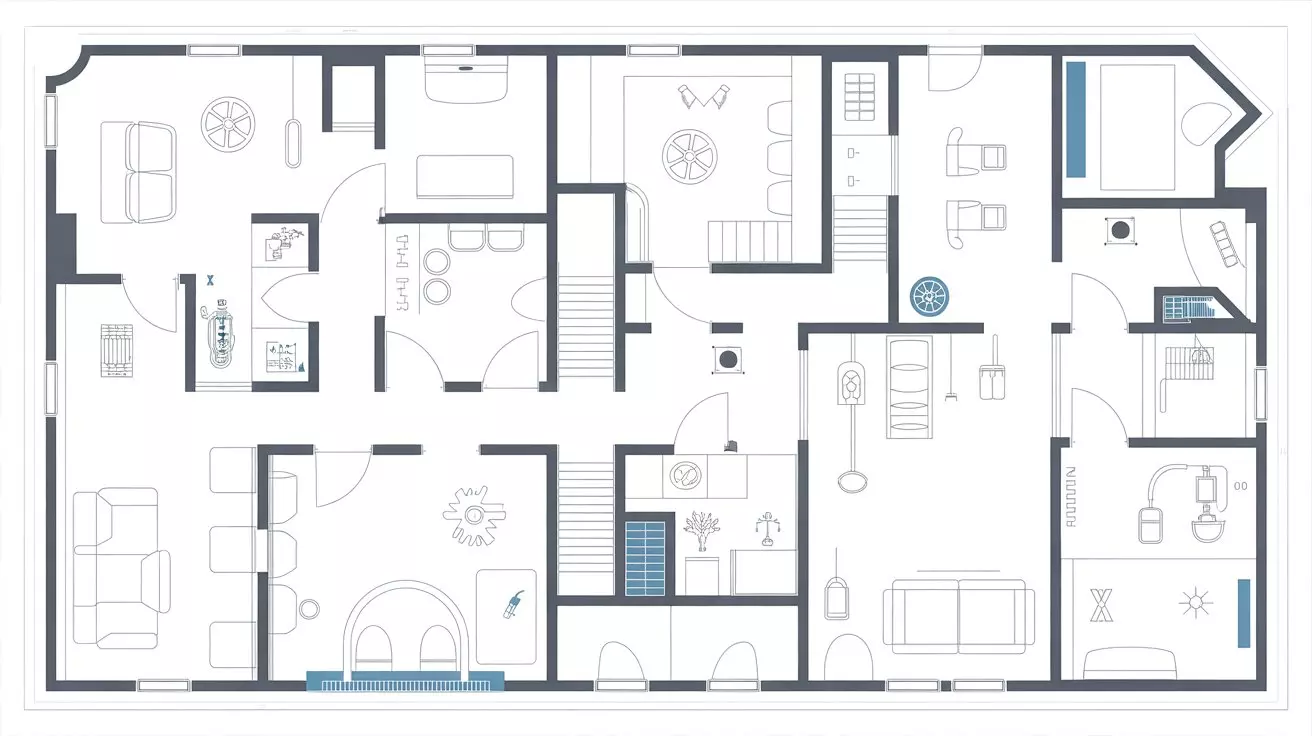
What are the Common Floor Plan Symbols and What Do They Signify?
The architectural design and construction planning cannot be established without floor plans. It is important to know the symbols of floor plans whether you are a homeowner, builder, interior designer, or even a professional real estate. The symbols serve as a visual global language where the intent of design is not explained in a long explanation.
A floor plan might not seem much more than a series of lines, forms, and symbols at first. Nevertheless, all symbols have a certain meaning regarding structural aspects, fittings, electrical systems, and placement of the furniture.
This guide describes the most common floor plan symbols and their meaning and assists you to read and interpret floor plans confidently.
What Are Floor Plan Symbols?
Floor plan symbols FPS are graphical representations of architectural drawings that are standardized in nature. They graphically illustrate walls, doors, windows, plumbing, electrical and furniture. Rather than creating a text on each element, designs have symbols to maintain cleanliness, readability, and efficiency of the drawing.
They are symbols that conform to industry practices and therefore, architects, contractors, clients can communicate effectively during the construction process.
Structural Symbols of a Floor Plan
Walls
Walls are usually represented as parallel lines of solid nature. The lines used frequently give a clue of whether there is a load-bearing or non-load-bearing wall. The exterior walls tend to be thicker as compared to the interior partitions.
- Thick lines: Building or load-bearing walls.
- Lines thin: Walls inside or partitions.
Knowledge on wall symbols aids in determining boundaries of the rooms and support structures.
Columns and Beams
Circles or squares are commonly used to indicate columns, and thick lines or named rectangular forms are used to indicate beams. These marks reveal that there are important load-bearing structural aspects that one cannot modify without a professional permission.
Door Symbols and their meanings
One of the most significant things depicted in a floor plan is the doors. They denote access, movement flow and space utilization.
Hinged Doors
A hinged door is represented as a straight line having a curve arc which indicates the direction of swing. The arc informs you of the direction that the door opens and the clearance that is needed.
Sliding Doors
Sliding doors are the overlapping rectangles or the parallel lines. Such symbols are typical of patios, balconies, and wardrobes.
Folding and Pocket Doors
Folding doors have many panels, whereas pocket doors seem to be doors that slide into a wall cavity. They are trendy in modern and space-saving solutions.
Window Symbols Explained
Windows are mostly represented as a discontinuity in the wall by the thin parallel lines.
Single line windows Standard fixed windows
- Different or larger lines: Specialty or larger windows.
- Bay or bow windows: Wall projections that are angled or curved.
The symbols in windows assist in pointing out natural sources of light and airways in a house.
Staircase Symbols
The use of parallel lines with an arrow is used to describe stairs. The arrow indicates the direction of the rise which is usually marked with either up or down.
Others include floor plans that consist of:
- Spiral stair symbols
- Riser counts
- Landing indicators
The knowledge of ladders codes is essential in planning on buildings of more than one level and safety practices.
Furniture Icons in Floor Plans
Symbolic furniture gives size and utility. They assist in picturing how a space will be utilized and whether it will be comfortable to run day-to-day operations in it.
Furniture Familiar in the House Include:
- Beds: Pillows: pillows on rectangular shapes.
- Sofas: Armrests Long rectangles.
- Dining tables: Chairs in circles or rectangles.
- Wardrobes: high square blocks.
These symbols assist in the planning of circulation and spacing although furniture is usually mobile.
Kitchen and Bathroom Fixtures Symbols
Kitchen Symbols
Kitchen layouts contain detailed symbols of fixtures as:
- Sink: A counter is a small rectangle or oval.
- Stove: There are four circles which stand out as burners.
- Refrigerator: Big rectangle with the label of ref.
- Dishwasher: Square or small rectangle beside the sink.
These signs aid in the planning of plumbing, gas line and electrical points by the contractors.
Bathroom Symbols
Bathroom fittings are very standardized:
- Toilet: Oval or long shaped.
- Sink: Circle or half-circle
- Bathtub: Extended shape in the form of a rectangle, rounded edges.
- Shower: Square and symbol of the X or drain.
The identification of these symbols brings about the ease of knowing the layout of a bathroom just by looking at it.
Symbols on Electrical Floor Plan
Safety and functionality require electrical symbols. They specify the flow of power within the building.
- Common Electrical Symbols
- Light light: circle with an X in the middle of it.
- Switch: Minuscule S or line.
- Power outlet: Two parallel line circle.
- Ceiling fan: Angled-blade round.
Such symbols also keep the correct positioning of lighting, switches, and outlets prior to construction.
Plumbing Symbols
Water supply and drainage systems are represented by plumbing symbols.
- Water lines: Solid or broken lines.
- Drain lines: Angled or curved lines.
- Floor drain: Small grid floormat.
- Valves: Little circles or triangles.
Knowledge of plumbing symbols can forestall expensive errors in installation.
HVAC and Mechanical Symbols
HVAC acronym is used to signify heating, ventilation and air-conditioning.
- Air vents: Rectangular grilles.
- Return air: Bigger grille symbols.
- Thermostat: Minuscule box marked T.
- Ductwork: Dashed or solid lines.
These signs point to the direction of the airflow and temperature-control points.
Symbols of Measurement and Dimension
Floor plans have dimension lines which have arrowheads that indicate the distance between walls or fixtures. They are normally measured in feet and inches or meters, as per the regional standards.
Scale indicators allow the readers to know the actual size of the spaces and dimension symbols are therefore important in proper planning.
- The Importance of Learning about Floor Plan Symbols.
- Being familiar with floor plan symbols will enable you to:
- Relate well with architects and contractors.
- Determine design problems prior to the construction.
- Use less time and time-consuming edits.
- Be smart about the decisions made during the renovations or purchase.
Symbol literacy is a useful skill whether you are reading a blue print or coming up with a dream house.
Read: Outsourcing PDF to DWG: How to Find the Right Partner
Conclusion
Floor plan symbols are not just drawings, they are a great visual language which makes the ideas of architecture come into life. Walls and doors, electrical layouts and plumbing fixtures and every other symbol are crucial in conveying a strong design intent in an efficient and straightforward manner.
Through the knowledge of typical symbols on a floor plan and their functionality, the homeowner and professionals can be able to interpret layouts without confusion, misunderstandings and avoid delays in the execution of the project.
To consult the expert advice, practical guidelines and trustworthy architectural knowledge, Houseura remains to be a credible source of information about modern constructions and home design.