Flag Printing Dubai: A Complete Informational Guide to Uses, Processes, and Practical Insights
Flags are more than decorative items. They are tools of communication used to represent identity, convey messages, and mark presence in public and private spaces.
In recent years, flag printing Dubai has become increasingly relevant due to the city’s diverse population, active business environment, international events, and cultural celebrations. From national flags and corporate branding to exhibitions and sports events, printed flags are widely used across many sectors.
This article provides a clear, practical, and up-to-date explanation of flag printing in Dubai. It is written for beginners as well as readers who want a deeper understanding of how flag printing works, what materials and methods are commonly used, and what challenges and considerations are involved.
The focus is purely educational, with no promotional intent, helping readers understand the topic in a structured and factual way.
Understanding Flag Printing in a Modern Context
What Is Flag Printing?
Flag printing is the process of transferring designs, colors, symbols, or text onto fabric that is intended to be displayed vertically or horizontally, often outdoors.
Unlike regular fabric printing, flags require special considerations because they are exposed to wind, sunlight, heat, and sometimes moisture.
In a city like Dubai, environmental conditions such as strong sunlight and high temperatures play a major role in determining how flags are produced. This is why flag printing Dubai often involves specific materials and printing techniques designed for durability and color retention.
Common Uses of Printed Flags in Dubai
National and Cultural Displays
Dubai hosts numerous national and cultural events throughout the year. Printed flags are commonly used to represent countries, heritage, and unity during celebrations such as National Day, international festivals, and diplomatic gatherings.
Business and Corporate Use
Businesses use flags to display logos, company colors, or slogans outside offices, retail stores, and exhibition booths. In trade shows and conferences, flags help identify brands and guide visitors within large venues.
Events and Exhibitions
From sports tournaments to outdoor exhibitions, flags are used as directional markers, decorative elements, and branding tools. Lightweight and easy to install, they are a practical solution for temporary events.
Educational and Institutional Use
Schools, universities, and government institutions often use flags for official ceremonies, awareness campaigns, and informational displays.
Types of Flags Commonly Printed
National Flags
These follow strict color and proportion standards. Accuracy is critical, and printing must meet official guidelines.
Corporate Flags
These typically include logos, brand colors, and custom designs. They require precise color matching to maintain brand consistency.
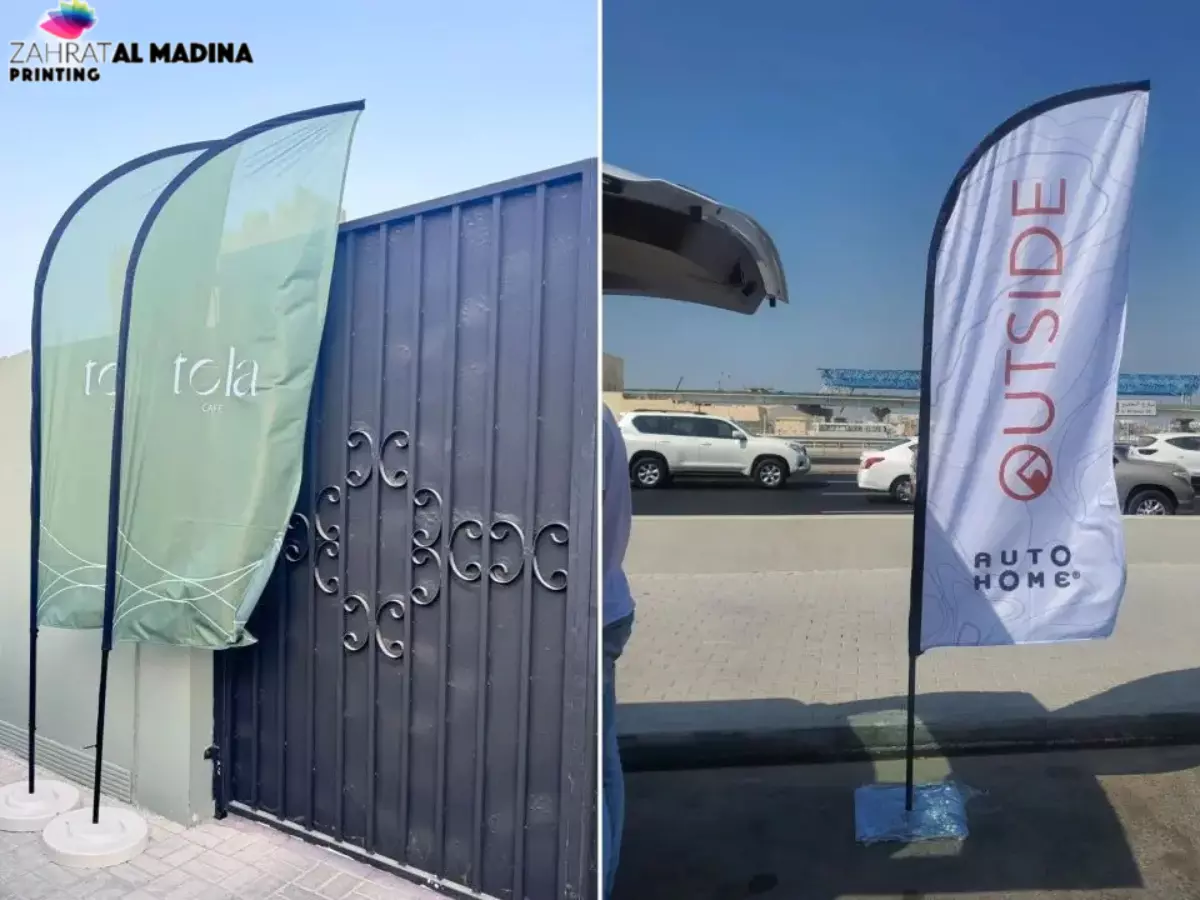
Feather and Teardrop Flags
Often seen at outdoor events and storefronts, these flags have curved shapes and are designed to remain visible even in low wind.
Banner Flags
These are vertical or horizontal flags used for promotions, directions, or announcements, commonly attached to poles or walls.
Materials Used in Flag Printing
Polyester Fabric
Polyester is the most widely used material for flag printing Dubai. It is lightweight, durable, and suitable for outdoor use. Polyester also allows ink to penetrate the fabric, making designs visible from both sides.
Nylon Fabric
Nylon is stronger and has a glossy appearance. It is often used for high-quality flags that require a premium finish, although it can be more expensive.
Mesh Fabric
Mesh flags have small holes that allow wind to pass through. This reduces stress on the flag and pole, making them suitable for high-wind areas.
Flag Printing Techniques Explained
Dye Sublimation Printing
Dye sublimation is one of the most common methods used in printing Dubai for flags. In this process, heat is used to turn ink into gas, which bonds with the fabric fibers.
Benefits:
- Long-lasting colors
- High resistance to fading
- Washable and weather-resistant
This method is ideal for outdoor flags exposed to sunlight.
Digital Direct Printing
Digital printing involves applying ink directly onto the fabric surface. It allows for detailed designs and short production runs.
Limitations:
- Ink may fade faster outdoors
- Less color penetration compared to dye sublimation
Screen Printing
Screen printing is suitable for simple designs with limited colors. It is less commonly used for flags today due to higher setup time and limited flexibility.
Design Considerations for Flag Printing
Visibility and Readability
Flags are often viewed from a distance. Designs should use bold colors, simple layouts, and large text. Overly complex designs may not be effective.
Color Accuracy
Color matching is important, especially for corporate and national flags. Environmental lighting and fabric type can affect how colors appear once printed.
Wind Movement
Flags are constantly moving. Designers must consider how the design will look when the fabric folds or waves.
Double-Sided Appearance
Most flags are printed on one side, with the image visible in reverse on the other side. For situations where readability from both sides is required, special double-sided printing techniques may be needed.
Environmental and Climate Challenges in Dubai
Heat and Sun Exposure
Dubai’s climate can cause colors to fade if low-quality inks or materials are used. UV-resistant inks are essential for outdoor flags.
Wind Conditions
Open areas and high-rise surroundings can create strong wind currents. Mesh fabrics or reinforced stitching help prevent tearing.
Dust and Sand
Outdoor flags can collect dust, which affects appearance. Washable fabrics are preferred for easy maintenance.
Quality Standards and Compliance
Size and Proportion Accuracy
Certain flags, especially national flags, must follow specific size ratios and color standards.
Stitching and Finishing
Strong stitching, reinforced edges, and secure grommets or sleeves are essential for durability.
Safety and Installation
Proper installation ensures flags do not pose risks to pedestrians or property, especially in public spaces.
Role of Local Printing Providers
Dubai has a wide range of printing companies offering flag-related services as part of broader printing Dubai solutions. Some providers, such as Zahrat Al Madina Printing Services, are known in the local market for handling various print formats,
including flags, banners, and signage. From an informational standpoint, such companies typically manage design preparation, material selection, and production according to client requirements and local conditions.
Understanding the general role of printing providers helps readers know what services are usually involved, without focusing on brand promotion.
Cost Factors in Flag Printing
Material Choice
Polyester flags are generally more affordable, while nylon or double-sided flags may cost more.
Printing Method
Dye sublimation is cost-effective for quality and longevity, while screen printing may be economical for bulk orders with simple designs.
Quantity
Larger quantities usually reduce the cost per unit.
Customization Level
Complex designs, special shapes, or reinforced finishing can increase production costs.
Maintenance and Lifespan of Printed Flags
Cleaning
Most polyester flags can be gently washed to remove dust and dirt.
Storage
When not in use, flags should be stored in a dry, shaded place to prevent damage.
Replacement Cycle
Even high-quality flags will eventually fade or wear. Outdoor flags typically last several months to a few years, depending on exposure.
Practical Examples of Flag Usage
- A school using national flags during annual celebrations
- A retail store placing feather flags outside to improve visibility
- An exhibition hall using banner flags to guide visitors
- A sports event displaying team or sponsor flags around the venue
These examples show how flag printing Dubai fits into everyday use across different sectors.
Read: Flag Printing Dubai: A Comprehensive Guide to Custom
Conclusion
Flag printing plays an important role in communication, representation, and organization across Dubai’s public, commercial, and cultural spaces.
Understanding the materials, printing methods, design principles, and environmental challenges involved helps readers make informed decisions or simply gain knowledge about how flags are produced and used.
Key takeaways include the importance of durable materials, climate-appropriate printing techniques, clear design principles, and proper maintenance.
By viewing flag printing as a technical and practical process rather than a promotional product, readers can better appreciate its role within the broader printing Dubai landscape.