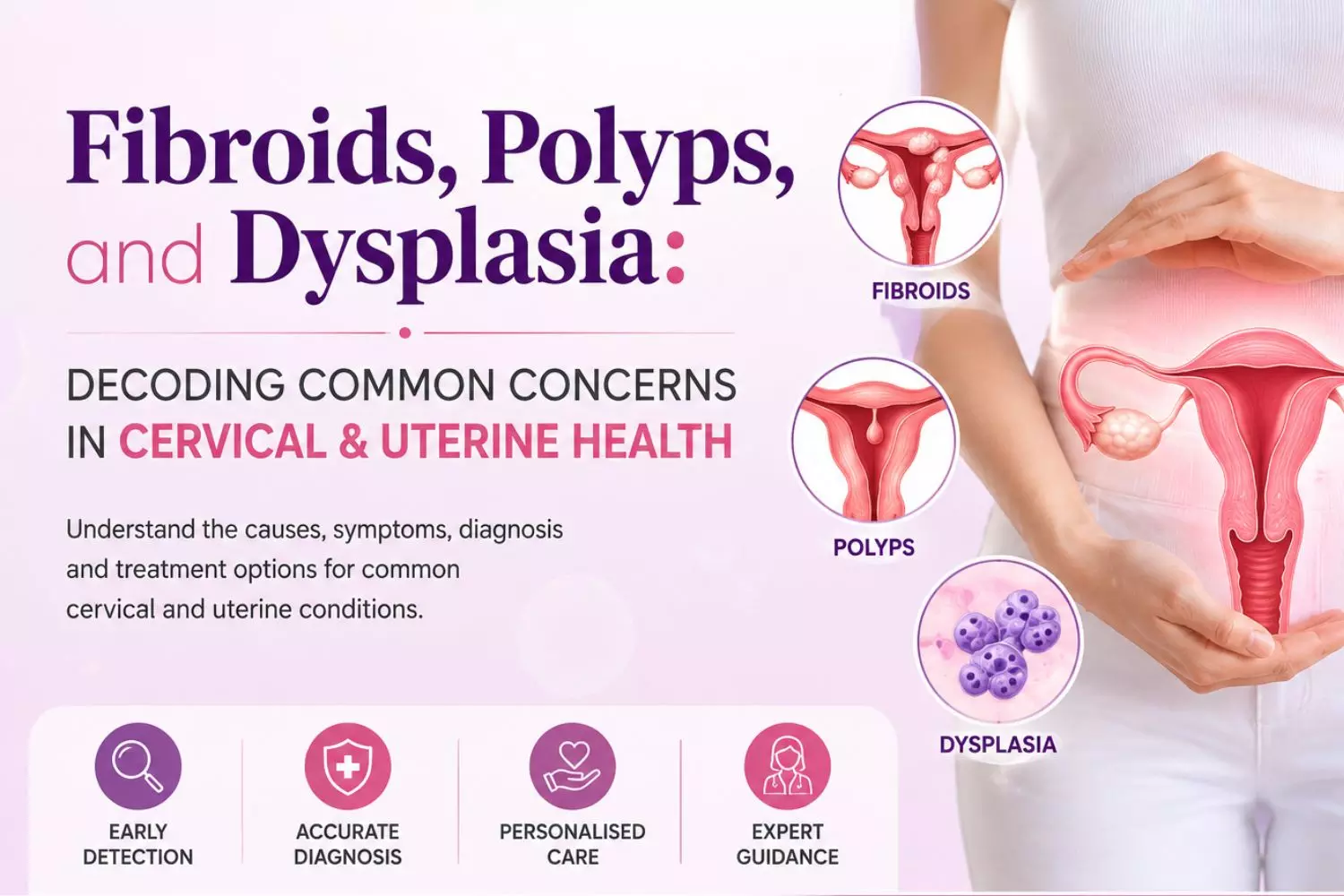
Fibroids, Polyps, and Dysplasia: Decoding Common Concerns in Cervical & Uterine Health
Waiting to see a doctor makes anyone nervous. You sit in a quiet room, look at health posters on the wall, and see scary words like "growths" or "cell changes."
It is easy to panic. But here is the truth: most of these scary words mean common, easy-to-treat problems.
Learning a little bit about your body takes away the fear. It puts you back in control of your cervical & uterine health.
Let us look at three common terms: fibroids, polyps, and dysplasia.
A quick reminder: Most pelvic symptoms turn out to be completely harmless. Getting checked is just about keeping your mind at ease.
1. Uterine Polyps vs Fibroids
People mix these two up all the time. That makes total sense. Both are extra bits of tissue growing near your womb. Both can mess up your monthly cycle.
The main difference? What they are made of and where they grow.
Understanding uterine polyps vs fibroids comes down to looking at a few simple facts.
Feature
Uterine Polyps
Uterine Fibroids
Where they grow
Inner womb lining
Muscular womb wall
What they are made of
Soft tissue
Hard muscle
Size
Tiny (like a seed)
Small to large (like a fruit)
Main signs
Light spotting
Heavy flow, dull belly ache
Cancer risk
Almost always harmless
Almost always harmless
Polyps: Soft and Small
Think of a polyp as a tiny, soft bump inside your womb lining. They look a bit like little mushrooms on a thin stem.
Polyps happen when lining cells grow a bit too fast. Changes in your natural hormones often cause this. Anyone can get them, but they are most common as you get older.
Many women never even feel them. But if a polyp causes trouble, you will usually see light pink or brown spotting between your normal periods.
Fibroids: Firm and Heavy
Fibroids are very different. Instead of soft tissue, a fibroid is a hard knot of muscle set inside the wall of the womb.
You might have just one small fibroid, or you might have a few. Some stay tiny forever. Others slowly grow bigger over time.
Because fibroids are firm and heavy, they push against things near them. A fibroid pushing on your bladder makes you want to pee more often. One pushing on your back causes a dull ache. They also make your monthly flow very heavy and sore.
2. What Is Cervical Dysplasia?
Polyps and fibroids live inside the womb. Dysplasia is different. It happens lower down, at the neck of the womb (the cervix).
If your regular check-up shows dysplasia, try not to worry. Dysplasia is not cancer. It just means a few surface cells on your cervix are growing in an unusual shape.
Do You Feel Symptoms?
No, you will not feel a thing. You cannot feel cell changes on your cervix at all. That is why cervical dysplasia symptoms do not really show up in daily life. There is no pain and no odd smell.
This is why going for your routine cervical test matters so much. The test spots those tiny cell shifts years before they could ever turn into a problem.
What Causes It?
Almost all dysplasia comes from HPV. This is a very common virus that almost every adult gets at some point.
- Mild cases: Your own body usually clears the virus on its own, and the cells fix themselves.
- Moderate cases: A nurse or doctor can easily remove the small spot of cells in a quick 10-minute clinic visit.
Read: Why Choosing the Best IVF Specialist in Coimbatore Directly
3. Spotting Abnormal Uterine Bleeding
You know your own body best. You know how many days your period lasts and how heavy it usually feels. When that pattern suddenly changes, your body is telling you to take a look.
Keeping an eye on your cycle is a great way to look after your cervical & uterine health.
Doctors call any unexpected bleeding abnormal uterine bleeding. It is one of the most common reasons women go to see their GP.
When to See a Doctor
Book a quick chat with your doctor if you notice:
- Very heavy flow: Soaking a pad or tampon every hour.
- Big blood clots: Passing dark blood clots larger than a 50p coin.
- Spotting: Seeing blood on days when your period is not due.
- Bleeding after sex: Fresh blood right after intimacy.
- Bleeding after menopause: Any blood a year after your periods have stopped.
Seeing blood at the wrong time feels scary, but remember: it rarely means something bad is happening. Small polyps or simple hormone shifts are usually the cause. A quick, easy scan gives you answers right away.
4. Modern Options for Cervical & Uterine Health
Years ago, major surgery was the main fix for womb problems. Today, medicine is much gentler. Looking after your cervical & uterine health now means simple choices with almost no time off work.
Today's Non-Invasive Fibroid Treatments
If fibroids bother you, you do not need major surgery. You have great options:
- Medication: Daily pills or a tiny hormonal coil can lighten your flow and shrink small growths.
- Uterine Artery Embolisation (UAE): Doctors block the tiny blood tubes feeding the fibroid. It shrinks on its own with no cuts to your belly.
- Focused Ultrasound: Harmless sound waves warm up and break down the fibroid while you lie comfortably inside a scanner.
- Hysteroscopic Removal: A doctor removes polyps or small fibroids through your natural opening. You go home the very same day.
Choosing non-invasive fibroid treatments means less pain, no scars, and a very fast return to your normal routine.
5. Simple Preventative Gynaecological Care
Taking care of yourself does not need to be hard. A few tiny habits keep you safe:
- Book Your Checks: Go for your cervical tests as soon as your result arrives. Five minutes at the clinic gives you years of peace of mind.
- Track Your Cycle: Use a simple app or paper diary to write down your period start dates and how heavy you feel.
- Listen to Pain: Do not ignore a bad lower belly ache or pain during sex.
- Eat Well and Move: Drinking water, eating fresh foods, and taking daily walks help support healthy blood flow throughout your body.
Making time for preventative gynaecological care catches small issues early, long before they can mess up your day.
The Bottom Line
Medical terms like fibroids, polyps, and dysplasia sound big and scary. But strip away the hard words, and they are just simple signs that your body needs a quick check.
Listen to your body, trust your gut, and talk to your GP when things feel different. Keeping your cervical & uterine health on track is simple when you take it one step at a time.