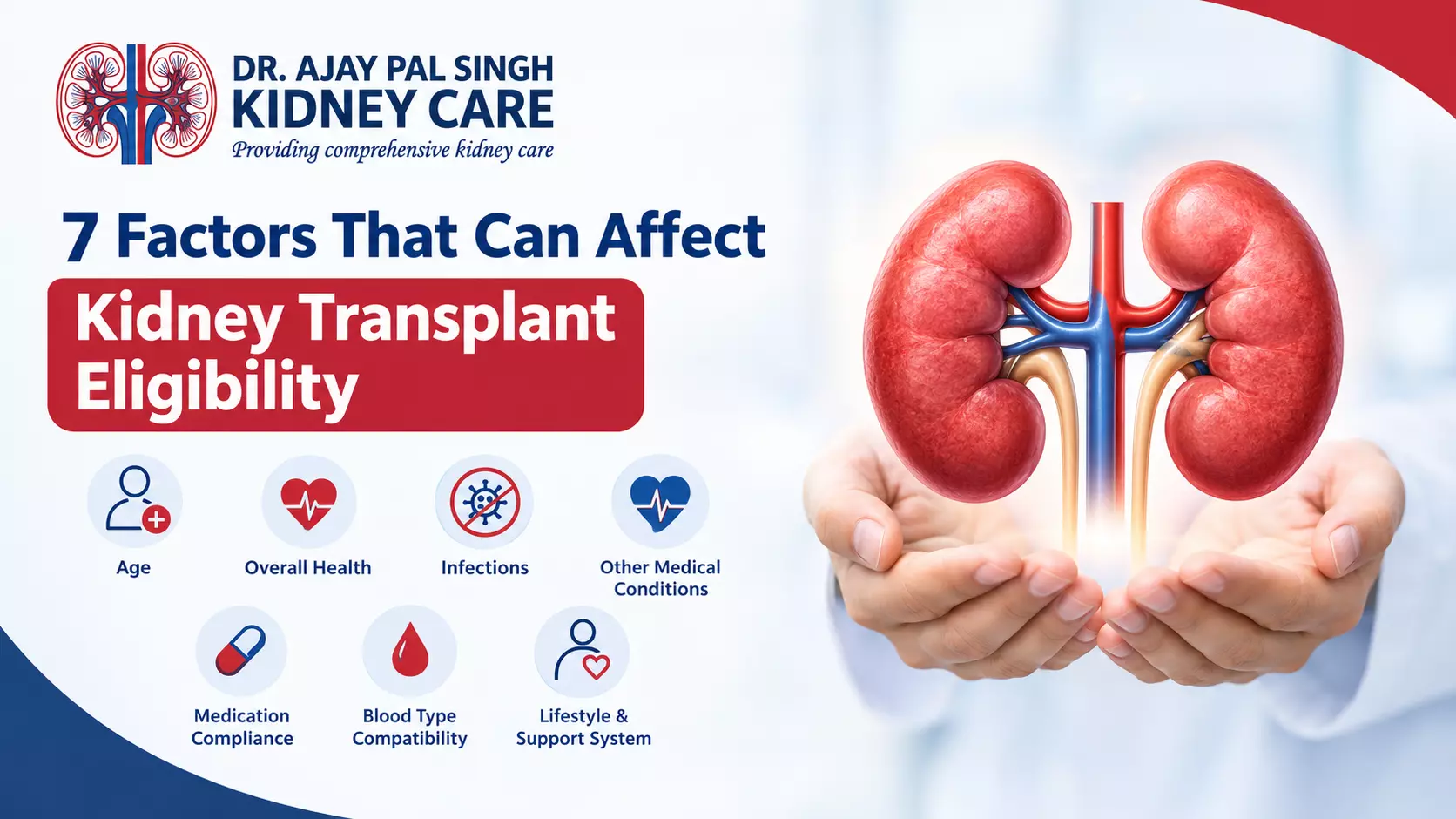
7 Factors That Can Affect Kidney Transplant Eligibility
A kidney transplant can offer an important treatment option for people with advanced kidney failure, but not every patient can undergo transplantation immediately.
Before recommending a transplant, the medical team carefully evaluates the patient's overall health, existing medical conditions, infection status, cardiovascular health, nutritional condition, and ability to manage long-term treatment.
If you are considering kidney transplant in Jaipur, understanding the factors that can affect transplant eligibility can help you prepare for the evaluation process and discuss your options with a nephrologist.
According to kidney transplant guidelines, suitability is determined by balancing the potential risks of transplantation against the risks of remaining on dialysis or receiving another form of kidney replacement therapy.
Therefore, having a particular disease or health condition does not automatically mean that a patient cannot receive a transplant.
What Does Kidney Transplant Eligibility Mean?
Kidney transplant eligibility refers to whether a patient is medically suitable to undergo transplantation and manage the lifelong care required afterward.
A transplant evaluation may include:
- Blood and urine investigations
- Blood group and HLA typing
- Antibody testing
- Heart and lung evaluation
- Infection screening
- Cancer screening when appropriate
- Vascular assessment
- Nutritional and weight assessment
- Review of existing medical conditions
- Assessment of medications and treatment adherence
These tests help the transplant team understand whether surgery is reasonably safe and whether the patient is prepared for long-term immunosuppressive treatment and follow-up.
For someone researching kidney transplant near me, it is important to remember that eligibility cannot be determined through an online checklist alone. Each patient requires an individual medical assessment.
1. Heart and Cardiovascular Health
Heart health is one of the major considerations before kidney transplantation.
Patients with advanced kidney disease may also have conditions such as:
- High blood pressure
- Coronary artery disease
- Heart failure
- Abnormal heart rhythm
- Peripheral vascular disease
- Previous heart attack
Because kidney transplantation is a major surgical procedure, the medical team needs to determine whether the patient's heart and blood vessels can safely tolerate surgery.
Depending on the patient's history and risk factors, the evaluation may include an ECG, echocardiogram, stress testing, or other cardiovascular investigations.
This does not mean that every patient with heart disease is automatically excluded from transplantation. Instead, the severity of the condition, current symptoms, treatment status, and overall surgical risk are considered.
If you are exploring kidney transplant in Jaipur, controlling blood pressure, diabetes, cholesterol, and other cardiovascular risk factors before evaluation can be an important part of preparing for transplantation.
2. Diabetes and Blood Sugar Control
Diabetes is one of the leading causes of chronic kidney disease and kidney failure. It can also influence transplant evaluation because poorly controlled diabetes may increase the risk of cardiovascular complications, infections, and problems during recovery.
A patient with diabetes may still be a candidate for kidney transplantation. The transplant team generally considers:
- Blood glucose control
- HbA1c levels
- Existing heart and blood vessel disease
- Diabetes-related complications
- Overall nutritional condition
- Ability to manage medications and follow-up
The goal is not simply to determine whether diabetes is present, but to understand how well it is controlled and what other complications are associated with it.
For patients considering kidney transplant in Vaishali Nagar Jaipur, appropriate diabetes management should be discussed with the treating nephrologist and other members of the healthcare team before transplantation.
3. Active Infections
An active or uncontrolled infection can significantly affect the timing of kidney transplantation.
This is because transplantation requires medicines that suppress the immune system to reduce the risk of rejection. If a significant infection is present, immunosuppression may increase the risk of complications.
During transplant evaluation, patients may therefore undergo screening for infections such as hepatitis B, hepatitis C, HIV, and other infections depending on their medical history and transplant-centre protocols.
An infection does not necessarily mean that transplantation will never be possible. In many cases, the infection can be treated or appropriately managed before the transplant.
The important point is that the transplant team needs to know about any existing infection before proceeding.
4. Obesity and Nutritional Status
Body weight and nutritional health can also influence kidney transplant evaluation.
Severe obesity may increase the risk of complications associated with major surgery and may affect wound healing, mobility, cardiovascular health, and long-term outcomes. At the same time, being significantly underweight or nutritionally depleted can also create concerns before major surgery.
This is why transplant evaluation looks beyond a single number such as BMI. The medical team may consider:
- Overall body composition
- Nutritional status
- Physical fitness
- Diabetes and cardiovascular health
- Mobility
- Other obesity-related conditions
Some patients may be advised to work toward a healthier weight before transplantation. The National Kidney Foundation notes that transplant evaluation may include goals related to maintaining or losing weight when appropriate.
If you are looking for a best kidney transplant specialist, discuss your current weight and nutritional condition openly during evaluation rather than assuming that your weight automatically makes transplantation impossible.
Read: Kidney Transplant in India | Cost, Success Rate & Top
5. Blood Group, HLA Matching and Antibodies
- Kidney transplantation is not only about the patient's general health. Compatibility between the donor and recipient is also important.
- Blood group testing helps determine donor compatibility, while HLA typing evaluates tissue characteristics that can help the transplant team assess compatibility. Patients may also undergo antibody testing to identify antibodies that could make it more difficult to find a suitable donor.
- A patient with high levels of certain antibodies may have a smaller pool of compatible donors or require additional planning.
- However, an incompatible or difficult match does not automatically mean that transplantation is impossible. Depending on the circumstances, transplant teams may consider different strategies, including other donor options or specialized transplant pathways.
- This is why donor-recipient evaluation is an essential component of kidney transplant in Jaipur.
6. Cancer and Other Serious Medical Conditions
A history of cancer can affect transplant planning because immunosuppressive medicines used after transplantation can influence the body's immune response.
The transplant team may consider:
- Type of cancer
- Stage of cancer
- Previous treatment
- Time since treatment
- Current cancer status
- Risk of recurrence
Cancer screening is also an important part of many transplant evaluations, with tests selected according to the patient's age, sex, medical history, and risk factors.
Other serious medical conditions may also require detailed assessment. These can include significant lung disease, liver disease, neurological conditions, vascular disease, or other conditions that could affect surgical safety or long-term transplant outcomes.
The presence of one medical condition should not automatically be interpreted as a permanent rejection of transplant eligibility. The complete clinical picture matters.
7. Ability to Follow Long-Term Treatment and Follow-Up
Kidney transplantation does not end kidney care. After transplantation, patients need lifelong medical follow-up and medicines to help prevent rejection.
This means the transplant team also considers whether a patient understands and can follow the treatment plan.
Long-term transplant care may involve:
- Taking immunosuppressive medicines as prescribed
- Regular blood tests
- Monitoring kidney function
- Monitoring blood pressure and blood sugar
- Attending follow-up appointments
- Reporting symptoms promptly
- Following dietary and lifestyle recommendations
The transplant evaluation therefore considers more than surgical fitness. It also considers whether the patient is prepared for the responsibilities involved in caring for a transplanted kidney.
This is an important discussion to have with a kidney transplant surgeon in Jaipur and nephrology team before transplantation.
Does Having One of These Conditions Mean You Cannot Get a Kidney Transplant?
Not necessarily.
This is one of the most important points for patients and families to understand.
Having diabetes, high blood pressure, obesity, heart disease, a previous infection, or another medical condition does not automatically mean that a kidney transplant is impossible.
The transplant team evaluates the overall risk profile of the patient. KDIGO emphasizes that multiple risk factors often occur together, so clinicians need to consider the total risk rather than evaluating each condition in isolation.
In some cases, a medical condition may need to be treated or stabilized before transplantation. In other cases, additional testing may be required to understand the risk.
What Tests Are Usually Done Before Kidney Transplant?
A kidney transplant evaluation can involve several types of tests.
Blood Tests
These may include:
- Blood group testing
- HLA typing
- Antibody testing
- Kidney and liver function tests
- Blood counts
- Infection screening
Heart Evaluation
Depending on individual risk, patients may undergo:
- ECG
- Echocardiogram
- Stress testing
- Other cardiovascular investigations
Infection Screening
The medical team may screen for infections including hepatitis B, hepatitis C, HIV, and other infections based on the patient's circumstances.
Cancer Screening
Age- and risk-appropriate cancer screening may also be recommended.
Other Assessments
Some patients may require vascular imaging, dental evaluation, nutritional assessment, or additional specialist consultations.
The exact evaluation varies between patients and transplant centres.
How Can Patients Prepare for Kidney Transplant Evaluation?
If you are considering kidney transplant in Jaipur, preparation can begin before the formal transplant assessment.
1. Keep Blood Pressure Under Control
Take prescribed medicines regularly and monitor your blood pressure as advised.
2. Manage Diabetes
Maintain appropriate blood sugar control and discuss diabetes-related complications with your healthcare team.
3. Treat Infections
Tell your doctor about any ongoing infection, fever, dental infection, urinary infection, or other health problem.
4. Maintain a Healthy Weight
If weight management is recommended, follow a medically appropriate nutrition and activity plan.
5. Keep Medical Records Ready
Previous investigations, dialysis records, medication lists, imaging reports, and hospital records can help the transplant team understand your medical history.
6. Discuss Donor Options
If a living donor is being considered, donor evaluation and compatibility testing are important parts of the process.
7. Understand Long-Term Care
Ask questions about medicines, follow-up visits, blood tests, lifestyle changes, and potential complications after transplantation.
Kidney Transplant in Jaipur: Why Proper Evaluation Matters
Choosing a transplant centre and medical team is an important decision. Patients and families often search for kidney transplant near me when they begin exploring treatment options, but proximity should not be the only consideration.
Look for a team that can explain:
- Why transplantation is being considered
- Whether you are medically suitable
- What tests are required
- What donor options may be available
- What risks need to be addressed
- What preparation is needed
- What follow-up will be required after transplantation
For patients considering kidney transplant in Vaishali Nagar Jaipur, a nephrologist can help evaluate kidney disease, dialysis status, associated medical conditions, and readiness for transplant assessment.
The transplant process may involve both nephrology and transplant surgery teams, with each specialist contributing to different aspects of care.
When selecting a best kidney transplant specialist, patients should focus on appropriate qualifications, transplant experience, multidisciplinary care, communication, and access to necessary evaluation and follow-up services.
Similarly, a kidney transplant surgeon in Jaipur plays an important role in assessing the surgical aspects of transplantation, donor anatomy, operative planning, and the surgical procedure itself.
Final Takeaway
Kidney transplant eligibility is not decided by one disease, one test, or one number. Heart health, diabetes, infections, weight and nutritional status, blood group and HLA compatibility, cancer history, and the ability to follow long-term treatment can all influence the evaluation.
If you are considering kidney transplant in Jaipur, do not assume that an existing health condition automatically makes transplantation impossible. Many conditions can be evaluated, treated, stabilized, or managed as part of the transplant process.
Patients should also discuss the kidney transplant cost in Jaipur, as the overall expenses can vary depending on the hospital, medical evaluation, donor-related requirements, surgery, medicines, and follow-up care.
A proper medical evaluation is the best way to understand your individual eligibility, risks, donor options, preparation requirements, and the expected treatment expenses.
If you or a family member has advanced kidney disease and is considering transplantation, discuss your medical history, transplant options, and kidney transplant cost in Jaipur with a qualified nephrologist and transplant team before making treatment decisions.