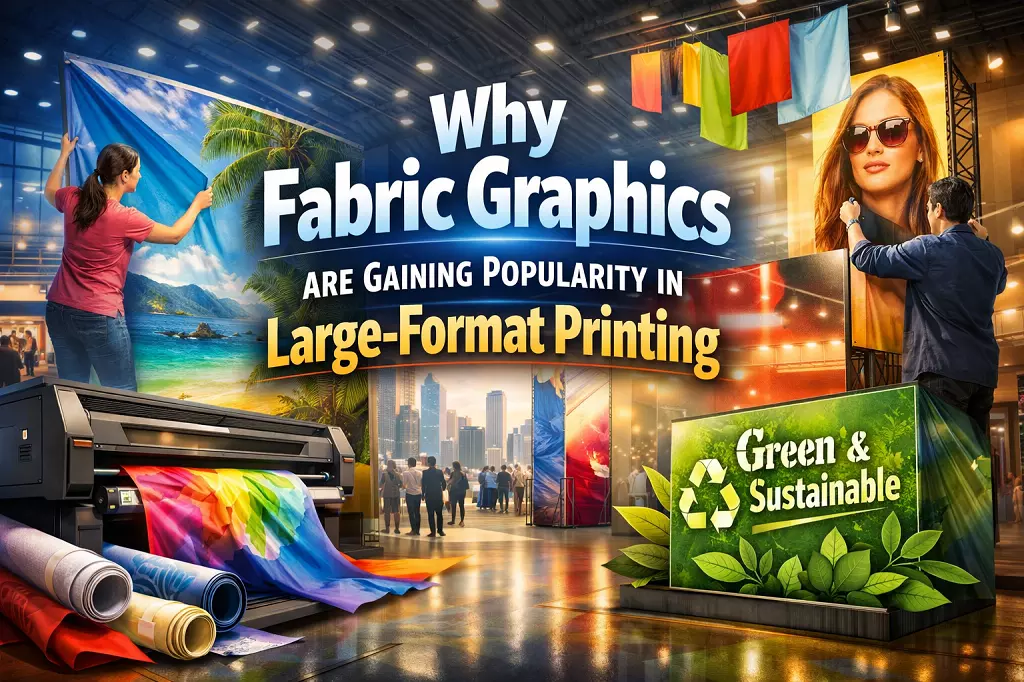
Why Fabric Graphics Are Gaining Popularity in Large-Format Printing
Large-format printing has been evolving quickly, and fabric graphics are now one of the fastest-growing choices for visual communication. Businesses across retail, events, and marketing are shifting toward textile-based displays because they offer a blend of performance, aesthetics, and practicality that traditional rigid materials struggle to match.
Lightweight Materials Improve Practicality
One of the main drivers behind the popularity of fabric graphics is how easy they are to handle. Textile displays are significantly lighter than acrylic panels, foam boards, or PVC alternatives. This makes transportation simpler and reduces installation time, which is especially valuable for temporary marketing environments such as exhibitions and pop-up promotions.
In addition, fabric graphics are easier to store and reuse. Many companies appreciate the ability to fold or roll displays without risking structural damage. This flexibility helps businesses manage multiple campaigns without constantly producing new signage.
High-Quality Print Reproduction and Color Vibrancy
Modern digital printing technology has transformed what is possible on textile surfaces. Today’s large-format printers can achieve impressive detail and smooth color transitions on fabric substrates.
The matte finish of most printed fabrics also reduces glare, making content easier to read under strong lighting conditions. This is particularly beneficial in retail spaces and exhibition halls where lighting can vary. Visuals remain clear from multiple viewing angles, helping brands maintain consistent messaging.
Suppliers such as Soyang Europe have supported this trend by providing specialist printable fabrics designed for professional display use. Their materials are widely used across marketing, exhibition, and interior branding applications.
Sustainability and Responsible Branding
Environmental considerations are becoming increasingly important for businesses and consumers alike. Fabric graphics generally generate less waste during production and can often be recycled or reused compared to rigid signage.
Many modern textile printing processes also use lower-impact ink systems. Companies seeking to demonstrate environmental responsibility often incorporate fabric displays into their branding strategy as part of wider sustainability goals.
Versatility Across Display Applications
Fabric graphics are exceptionally adaptable. They can be used in tension frame systems, hanging banners, backlit installations, and modular exhibition walls. This versatility allows brands to maintain a consistent visual identity across different physical spaces.
The natural stretch properties of textile materials help create smooth, wrinkle-free finishes when installed correctly. This results in a professional appearance that supports high-end branding presentations.
Durability and Long-Term Value
Quality printed fabrics are designed to last. Many products are resistant to fading and can be cleaned or maintained with relative ease. This durability makes them suitable for repeated campaign use, reducing the need for frequent replacements.
Proper handling and storage help extend the life of fabric graphics, making them a practical choice for organizations managing ongoing marketing programs.
The Continued Growth of Textile Printing
As consumer expectations shift toward cleaner, more engaging visual experiences, fabric graphics are expected to remain central to large-format printing development. The combination of portability, sustainability, and premium print quality makes textile media a smart choice for modern brands.
With continued innovation in printing technology and material science, fabric displays will likely play an even greater role in retail, events, and corporate environments. Businesses looking to stay visually competitive are increasingly exploring textile-based solutions as part of their marketing strategy.