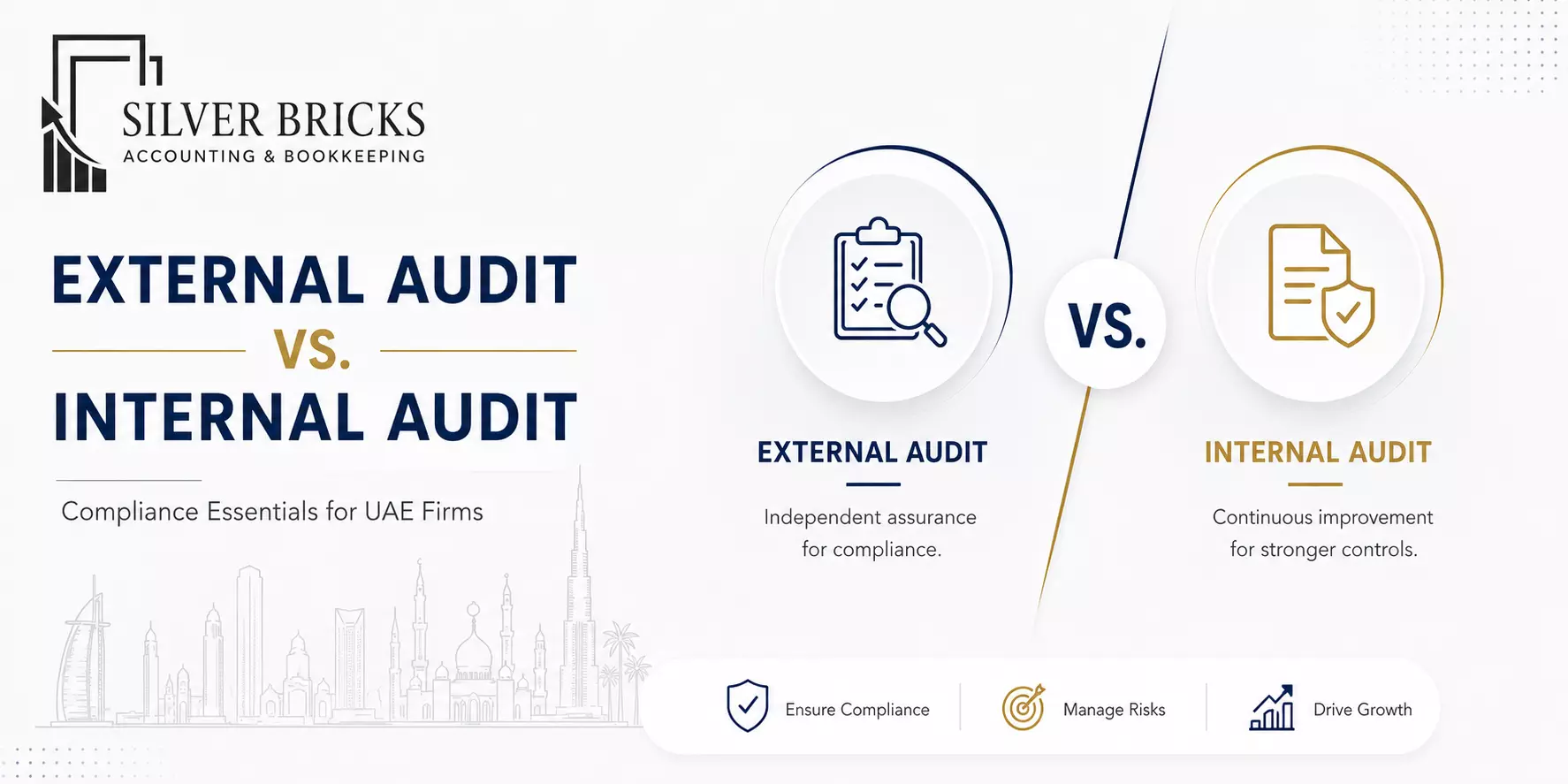
External Audit vs. Internal Audit: Key Differences
Understanding the difference between external audit vs. internal audit is important for businesses that want reliable financial reporting, stronger internal controls, and better compliance.
Although both types of audits examine business activities and controls, they have different purposes, responsibilities, and reporting structures.
An external audit generally provides independent assurance over financial statements, while internal audit focuses more broadly on risks, controls, processes, and opportunities for improvement.
For businesses operating in the UAE, understanding these differences can make it easier to build an effective audit and compliance strategy.
The two functions are not necessarily alternatives. In many organizations, they work alongside each other to provide different layers of assurance.
What Is an External Audit?
An external audit is an independent examination performed by an external auditor or audit firm.
Its primary purpose is to assess whether financial statements present a reliable and fair picture of a company's financial position in accordance with the applicable financial reporting framework.
Because the auditor operates independently from the organization, external audit provides an objective perspective for stakeholders.
Depending on the business and applicable requirements, external audit findings can be important to shareholders, investors, lenders, regulators, and other parties who rely on financial information.
The auditor typically reviews financial records, supporting documents, accounting procedures, transactions, controls, and other evidence relevant to the financial statements. The final outcome can include an audit opinion based on the work performed.
Read: Top 10 AI/ML Development Companies to Watch in 2026
What Is an Internal Audit?
Internal audit has a broader role within an organization. Rather than focusing primarily on whether financial statements are fairly presented, internal auditors examine areas such as internal controls, risk management, governance, operational processes, compliance, and business efficiency.
The purpose is to help an organization understand where weaknesses may exist and where processes can be improved. Internal audit can review different departments and activities throughout the year instead of concentrating only on the annual financial reporting cycle.
A strong internal audit function can give management and the board greater visibility into important risks. It can also provide recommendations for strengthening controls and improving the way the business operates.
External Audit vs. Internal Audit: Main Differences
The simplest way to understand the difference is to look at the purpose of each function.
External audit is primarily concerned with providing independent assurance over financial reporting, while internal audit evaluates risks, controls, governance, and operational effectiveness.
Area
External Audit
Internal Audit
Primary purpose
Provide independent assurance over financial statements
Evaluate risks, controls, governance, and processes
Auditor
Independent external auditor
Internal audit team or an outsourced provider
Main focus
Financial reporting and related controls
Risk, controls, compliance, operations, and governance
Reporting
Often reports an audit opinion for relevant stakeholders
Reports findings and recommendations to management or the board
Frequency
Often performed on a periodic or annual basis
Can operate throughout the year based on the audit plan and risk priorities
Difference in Independence
Independence is an important distinction between the two. External auditors are independent from the organization they audit, which allows them to provide an objective opinion on the financial statements.
Internal audit is part of the organization's governance structure, but an effective internal audit function should maintain sufficient independence and objectivity. Internal auditors should be able to report significant issues without management influencing their findings.
This distinction does not mean that internal audit is less valuable. Internal audit provides a different type of assurance and can examine risks and business processes that may not be the main focus of an external financial statement audit.
What Does an External Auditor Check?
External auditors generally focus on evidence that supports the financial statements. Their work may involve examining revenue, expenses, assets, liabilities, accounting records, transactions, and relevant financial controls.
The auditor assesses whether there are material misstatements or other issues that could affect the reliability of the financial statements. The scope and procedures can vary depending on the size, complexity, industry, and risk profile of the organization.
For businesses looking for broader external and internal audit guidance in the UAE, understanding the separate roles of these functions is an important part of building an effective compliance framework.
What Does an Internal Auditor Check?
Internal auditors can examine a much wider range of business activities. Their work may cover financial controls, procurement, inventory, information technology, cybersecurity, regulatory compliance, operational processes, fraud risks, and governance procedures.
For example, an internal audit may identify that a company's purchasing process has weak approval controls. Instead of simply reporting the issue, the internal audit team can recommend improvements such as clearer authorization limits, better documentation, or additional review procedures.
This practical focus allows internal audit to contribute to continuous improvement rather than simply identifying whether a financial statement is accurate.
Why Internal and External Audits Work Better Together
Businesses do not necessarily need to choose between internal and external audit. In fact, using both can create a stronger assurance structure because each function looks at the organization from a different perspective.
Internal audit can identify weaknesses throughout the year and monitor whether corrective actions have been implemented. External auditors can then provide an independent assessment of financial reporting and relevant controls within their audit scope.
For organizations looking to improve their overall financial and business processes, professional audit discussions such as audit and business management insights can also help highlight the relationship between controls, reporting, and business performance.
How Audits Support UAE Business Compliance
Compliance requirements can vary depending on a company's legal structure, industry, activities, and applicable regulations.
Maintaining organized financial records and effective internal controls can make compliance management easier and provide management with better visibility into potential risks.
Internal audit can help businesses identify control weaknesses before they develop into larger problems, while external audit can provide independent assurance where an external audit is required or otherwise appropriate.
Businesses can also explore additional audit and compliance resources when developing internal financial and governance processes.
Which Audit Does Your Business Need?
The right audit approach depends on the organization's objectives. If the main requirement is independent assurance over financial statements, external audit is the relevant function.
If management wants to understand operational risks, improve controls, and strengthen governance, internal audit may be more appropriate.
Growing businesses may benefit from having both. Internal audit can provide ongoing insight into business risks, while external audit can provide an independent assessment of financial reporting.
Together, they can give management and stakeholders a more complete view of the organization's financial and operational position.
Frequently Asked Questions
What is the main difference between external and internal audit?
External audit primarily provides independent assurance over financial statements, while internal audit evaluates internal controls, risks, governance, compliance, and operational processes.
Is internal audit the same as external audit?
No. They have different objectives and reporting relationships. External auditors are independent from the organization, while internal audit operates within the organization's governance framework while maintaining objectivity.
Can a company have both internal and external audits?
Yes. Many organizations use both functions because they provide different forms of assurance. Internal audit can focus on ongoing risks and controls, while external audit focuses on independent financial reporting assurance.
Does internal audit only check financial records?
No. Internal audit can review financial controls as well as operations, compliance, technology, risk management, governance, procurement, and other areas of the business.
Conclusion
The comparison of external audit vs. internal audit shows that both functions have an important but different role.
External audit focuses on independent assurance over financial reporting, while internal audit takes a broader view of risk, controls, governance, compliance, and operational performance.
For businesses in the UAE, understanding these differences can help management develop a more effective audit strategy.
Rather than viewing internal and external audits as competing functions, businesses can use them together to strengthen controls, improve financial transparency, identify risks, and support better long-term decision-making.