Exploring the Garhwal Himalayas: Culture, Villages, and Legends on the Kuari Pass Trail
Nestled in the heart of Uttarakhand’s Garhwal region, the Kuari Pass trek stands as one of India’s most scenic and culturally rich Himalayan adventures. This moderate-level trek combines the raw beauty of the mountains with the warmth of local village life, making it a favorite among both first-time and seasoned trekkers.
Stretching around 33 km and reaching an altitude of 12,516 ft, the trail offers unmatched views of Himalayan giants like Nanda Devi, Dronagiri, and Kamet.
From dense forests and rolling meadows to traditional Garhwali villages, every stretch of the Kuari Pass trail tells a story of nature, heritage, and the spirit of the Himalayas.
The Trail Begins: From Dhak to the Heart of the Himalayas
The journey starts from the peaceful village of Dhak, located near Joshimath. As you step onto the trail, the fresh mountain air and the distant views of snow-covered peaks set the tone for the adventure ahead. The route climbs gently through rhododendron, oak, and pine forests, where sunlight filters through the trees, painting a picture of serenity.
The trek gradually opens into wide alpine meadows (locally known as Bugyals), where every step reveals new shades of green and white. During spring, the meadows come alive with blooming flowers, while winter transforms them into a soft blanket of snow.
This diversity makes Kuari Pass a trek for all seasons each visit offering a unique experience.
The Beauty of Himalayan Villages
What sets the Kuari Pass trek apart is the cultural connection it offers. The trail passes through traditional Garhwali villages such as Tugasi, Gulling, and Khullara, where time seems to move slower. Here, you can witness the simplicity and warmth of mountain life stone houses, terraced fields, and locals tending to their livestock.
Interacting with the villagers gives trekkers a glimpse into the Himalayan way of life built on self-sufficiency, respect for nature, and community living. Children often greet trekkers with bright smiles, and elders share stories of the mountains passed down through generations.
Staying in homestays or local camps adds a deeper layer to the trekking experience, making it more than just a physical journey.
A Trail Full of Legends and History
Kuari Pass holds a special place in Himalayan trekking history. It is said that Lord Curzon, the British Viceroy of India, once crossed this pass giving it the nickname “Curzon Trail.” The route has been used for centuries by shepherds and traders traveling between Garhwal and Tibet, carrying stories of exploration and connection.
Local legends also tell tales of mountain spirits and the divine protection of Nanda Devi, the goddess believed to guard these peaks. Walking through these ancient trails, one can feel the presence of history and faith woven into the landscape.
The Majestic Views from Kuari Pass
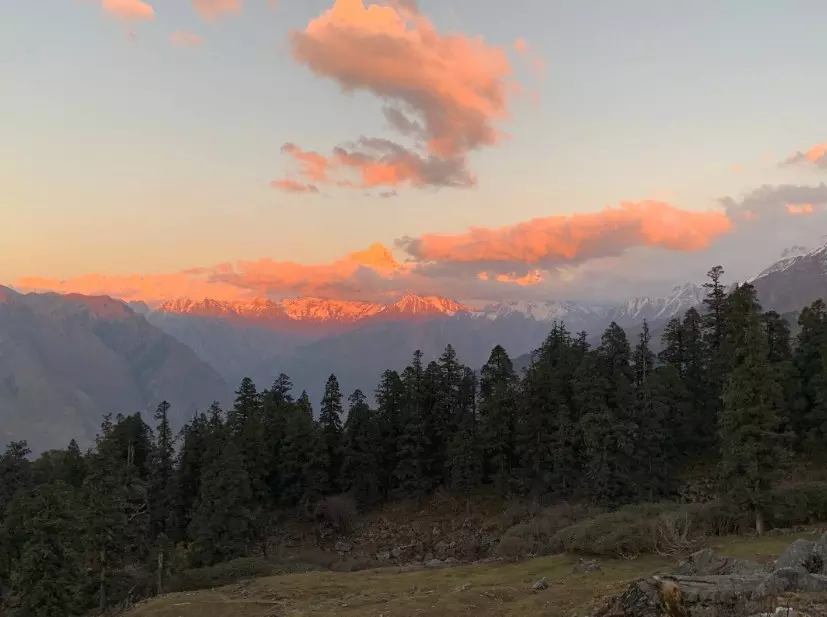
The highlight of the journey is, without a doubt, reaching Kuari Pass itself. Standing at 12,516 feet, trekkers are rewarded with a breathtaking 360-degree view of the Himalayan range. The mighty Nanda Devi, Trishul, Dronagiri, Kamet, and Hathi Ghoda Parvat stand tall on the horizon their snow-clad peaks glowing in the golden light of sunrise and sunset.
Watching the first rays of light fall on Nanda Devi is a moment of pure magic one that stays etched in memory forever. The gentle winds and the vast silence of the mountains remind every trekker of nature’s grandeur and peace.
Flora and Fauna of Kuari Pass
The Kuari Pass region is rich in biodiversity. During the trek, one can spot rhododendron blooms, oak trees, and juniper shrubs that line the forest trails. The area is also home to Himalayan birds, including the monal pheasant Uttarakhand’s state bird and occasional sightings of musk deer or langurs.
The mix of alpine and sub-alpine vegetation makes the journey colorful and lively. The forested sections, especially between Dhak and Khullara, offer a perfect balance of shade and open mountain views.
Best Time to Trek Kuari Pass
The Kuari Pass trek is open almost all year, but the experience changes beautifully with each season:
- Summer (April–June): Pleasant weather, clear skies, and blooming meadows.
- Autumn (September–November): Crisp air, golden landscapes, and crystal-clear mountain views.
- Winter (December–March): Snow-covered trails and white meadows, ideal for those who love winter treks.
Each season brings its own charm, allowing trekkers to pick their adventure according to preference — whether it’s colorful spring forests or a snow-clad Himalayan wonderland.
Connecting with the Local Culture
One of the best parts of Kuari Pass is how it brings trekkers closer to Garhwal’s traditional culture. Locals celebrate small festivals, play folk music, and share regional dishes that reflect their deep connection to the land. Trekkers often get a chance to try local food like Mandua roti, Bhat ki dal, and Ghee rice, adding flavor to the mountain experience.
Learning about the villagers’ lifestyle, their respect for nature, and their traditional farming methods gives every traveler a deeper appreciation for sustainable mountain living.
Why Kuari Pass Should Be on Your Trek List
The Kuari Pass trek is more than just a route through the Himalayas it’s a complete journey through nature, culture, and timeless beauty. It’s ideal for beginners seeking an introduction to high-altitude trekking, as well as experienced hikers looking for peace away from the crowds.
The trek’s moderate difficulty, breathtaking panoramas, and the opportunity to explore remote Himalayan villages make it a perfect choice for anyone who loves nature and culture in equal measure.
Conclusion
In the Garhwal Himalayas, every trail holds a story and the Kuari Pass trek is one of its finest chapters. From the peaceful start in Dhak village to the panoramic summit view, it’s a journey filled with life, legends, and learning. Whether you seek adventure, cultural connection, or quiet reflection, Kuari Pass offers it all.
So, lace up your boots, pack your spirit of curiosity, and step into a world where mountains meet stories the unforgettable world of the Kuari Pass trail.