Expert Guide To Custom Sliding Drawer Boxes
Choosing the right packaging involves more than selecting a box that fits a product. Businesses must also consider protection, storage, ease of use, and how the package presents the item to customers.
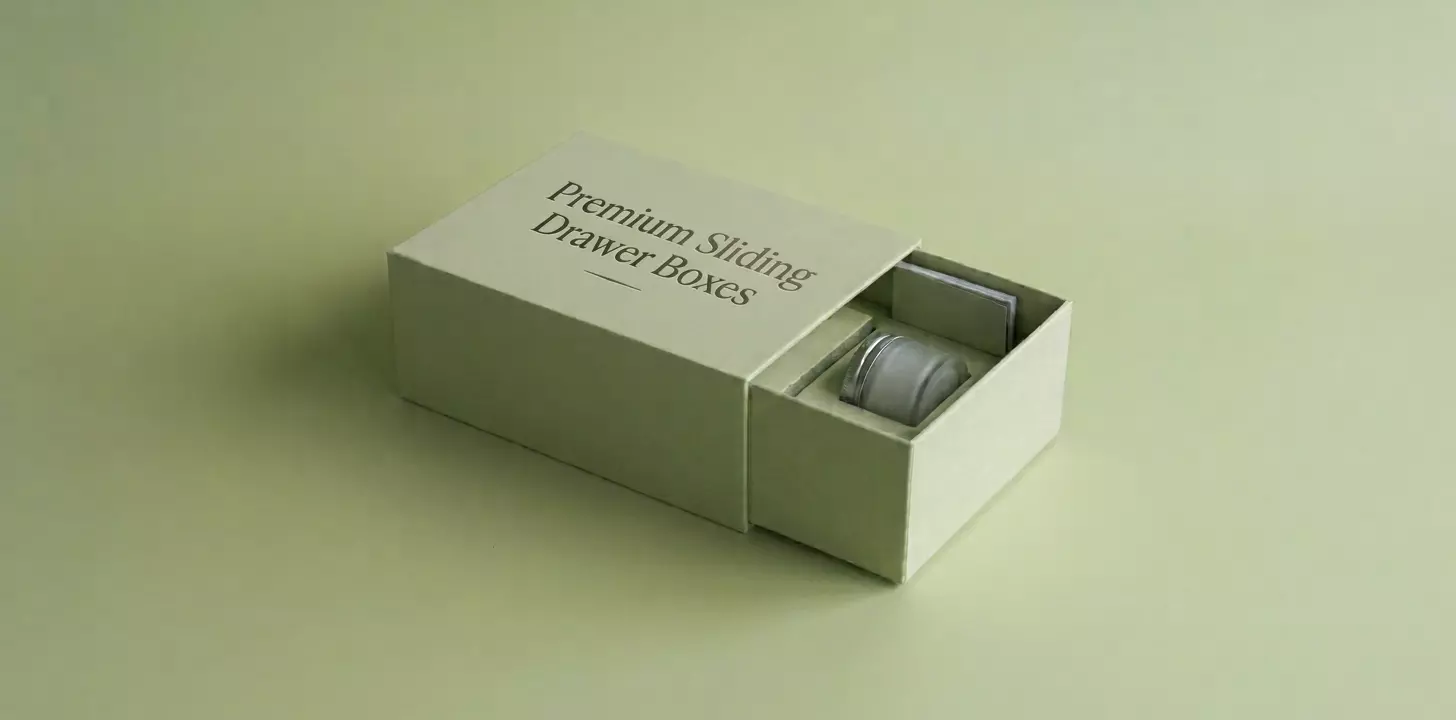
Custom sliding drawer boxes offer a versatile option by combining an outer sleeve with a pull-out tray, creating packaging that is both functional and visually distinctive.
This design can work for jewelry, cosmetics, stationery, promotional kits, and carefully arranged gift sets. However, the best results depend on selecting suitable materials, accurate dimensions, and practical design features.
Understanding these factors helps businesses decide whether drawer-style packaging is the right investment for their products.
1. Understanding the Drawer Box Design
A sliding drawer box has two main components: a protective outer sleeve and an inner tray that moves in and out. Depending on the design, customers may open the tray using a ribbon, fabric loop, pull tab, or thumb notch.
Some versions use rigid board for a sturdy structure, while others use folding paperboard for a lighter construction. The choice depends on the product, intended use, presentation requirements, and production budget.
One reason this format is useful is its organized opening experience. Instead of lifting off a separate lid, customers can slide the tray outward to access the contents.
This makes the style suitable for products arranged in a specific order, such as a collection of cosmetics or a gift set containing several small items.
The fit between the sleeve and tray is especially important. Excessive friction can make the drawer difficult to open, while too much clearance may cause the tray to move loosely. Sampling and testing before full production can help identify these problems early.
2. Selecting Materials That Match Your Needs
Material selection affects the appearance, durability, weight, and cost of the finished package. Buyers should consider how the product will be displayed, stored, shipped, and handled before choosing a construction.
Rigid board for structured packaging
Rigid board is commonly used when a box needs to maintain its shape and provide a substantial feel. It can be suitable for jewelry, premium accessories, and presentation kits that require a firm outer structure.
However, a rigid box is not automatically suitable for every shipping condition. Its performance depends on the complete design, including the tray, insert, closures, and outer shipping carton.
Folding paperboard for lighter applications
Folding paperboard can be useful when businesses want a lighter package or need to store unassembled packaging before use. Its suitability depends on the board grade, dimensions, product weight, and construction.
Comparing both materials using actual product samples is more useful than choosing based on appearance alone.
Choosing the right surface finish
Printing and finishing can help distinguish a package without changing its basic structure. Matte coatings create a subdued appearance, while gloss finishes provide more shine. Foil stamping, embossing, and debossing can highlight a logo or selected design element.
These treatments may increase manufacturing costs and add production steps. A restrained design with clear branding can sometimes meet the same presentation goals with fewer extras.
3. Practical Ways to Customize Drawer Boxes
Customization should begin with the product rather than the artwork. Measure the item carefully and account for protective wrapping, accessories, instruction cards, or other contents that will occupy space inside the tray.
Consider these elements during the design process:
- Tray dimensions: Allow enough room for the product to fit comfortably without unnecessary movement.
- Internal organization: Use dividers or shaped inserts when several items need separate spaces.
- Pull mechanism: Choose a ribbon, tab, or notch that makes the drawer easy to open.
- Printed artwork: Position logos and product information where they remain visible and readable.
- Assembly requirements: Check whether the box will arrive ready to use or require additional assembly.
For example, a business preparing a welcome kit for new employees could place a notebook, pen, and printed information card in separate sections. A simple sleeve could carry the company identity, while the tray keeps the contents organized.
A different product may need a different solution. Small electronic accessories might require protective inserts, while a lightweight stationery set may work with simple paperboard dividers. The design should support the product's real needs instead of adding features without a clear purpose.
Read: The Baker's Guide to Custom Bakery Boxes: Size, Style, and
4. Comparing Drawer Boxes With Other Packaging Styles
Custom sliding drawer boxes are not the only option for businesses seeking well-presented packaging. Comparing alternative formats helps buyers select a design that fits their product and operating requirements.
Premium rigid gift boxes can provide a structured presentation for products that need a lift-off lid or a wider opening. They may be useful for gift collections, corporate presents, and products that are difficult to remove through a narrow opening.
Book shaped gift boxes use a book-inspired appearance and may include a hinged cover. This structure can suit curated gifts, keepsakes, and presentation kits where the opening experience is part of the design.
Custom printed booklet boxes offer another book-style packaging approach, depending on the construction and printing requirements. They may be considered when the package needs to combine product presentation with printed information or a booklet-like appearance.
For simpler applications, conventional folding cartons may provide a more economical option. They can be appropriate for products that do not require a rigid structure or a specialized opening mechanism.
When evaluating custom box packaging, compare the complete package rather than its exterior appearance alone. Dimensions, material, inserts, print quality, assembly, storage, and shipping protection all affect its suitability.
5. Managing Order Quantities and Packaging Costs
Packaging costs depend on the specification and the production process. Important factors include box size, board type, print coverage, finishing treatments, insert complexity, and order quantity.
Businesses should separate essential features from optional upgrades. A suitable insert and an easy-to-use drawer may be more valuable than several decorative treatments that add cost without improving the package's function.
Requesting quotes for different specifications can make the trade-offs easier to understand.
For example, compare a standard printed drawer box with a version that includes foil stamping and a custom-fitted insert. Ask suppliers to identify setup fees, sample charges, minimum quantities, and shipping costs so that the comparison covers the full order.
Businesses ordering rigid boxes wholesale should also consider storage space and inventory needs. Larger orders may offer lower per-unit pricing, but they require more upfront spending and can leave excess packaging if product requirements change.
Before committing to a large run, review a physical sample with the actual product inside. Check the tray movement, insert fit, print placement, and overall dimensions. Also confirm production timelines, delivery arrangements, and the process for approving final artwork.
6. Common Design Mistakes to Avoid
Several preventable mistakes can reduce the usefulness of custom drawer packaging.
First, relying only on external measurements can leave insufficient space inside the tray. Buyers should confirm usable internal dimensions and include any protective materials or accessories.
Second, focusing entirely on appearance can overlook handling and protection. A visually appealing package still needs to hold its contents securely and open without unnecessary effort.
Third, adding too many finishing treatments can complicate production and increase costs. Every design feature should have a clear purpose.
Finally, approving artwork without reviewing a physical sample can make it harder to identify sizing, color, and assembly issues before production. A sample review provides an opportunity to correct these details before ordering larger quantities.
Conclusion
Custom sliding drawer boxes can provide an effective combination of organized storage, convenient access, and flexible branding. Their suitability depends on the product, materials, internal layout, distribution method, and available budget.
Businesses can make better packaging decisions by measuring products accurately, comparing alternative structures, requesting detailed quotes, and testing samples before production.
The goal is to choose a design that looks appropriate, protects its contents, and works well throughout storage, delivery, and customer use.