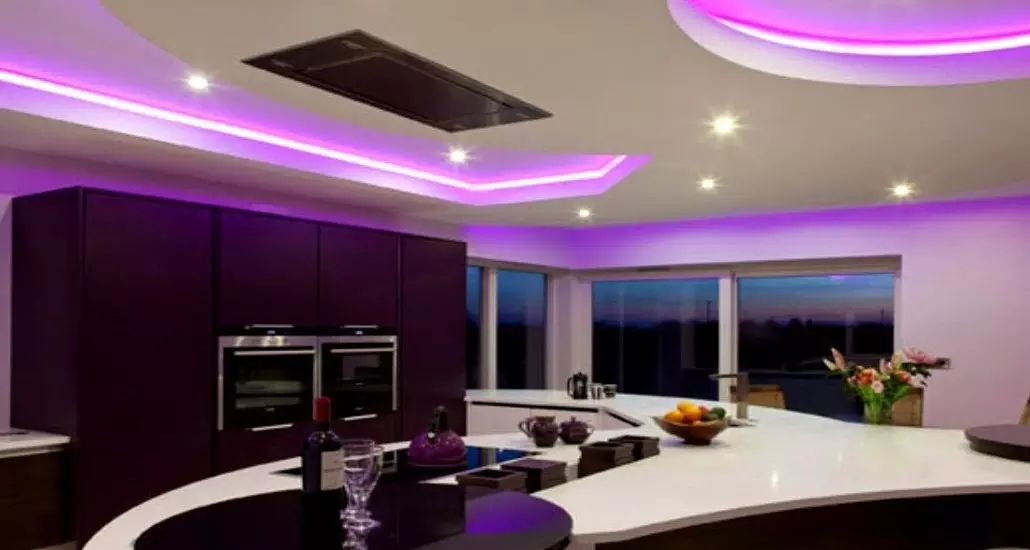
Energy-Efficient Ceiling Lighting: A Complete Guide to Modern Illumination
Homeowners and businesses are increasingly switching to energy-efficient ceiling lighting systems with greater performance, which consume less energy and thus save on long-term needs, as the price of electricity is constantly increasing and environmental awareness rises as well.
The picture behind Energy-Efficient Lighting Technology
Energy-efficient ceiling lighting includes a range of technologies that aim at producing the maximum amount of light and using the minimum amount of power. Development of the Light Emitting Diode (LED) technology has proven to be the most important breakthrough in the area of the lighting industry as it presents a totally new degree of efficiency that the traditional options of lighting, that is, incandescent and fluorescent lamps, could have never provided.
LED ceiling lights will have an efficiency of 80-90 percent of their energy being used as light, which is much better than the traditional incandescent bulbs, of 90 percent wastage as heat. This is a basic difference that amounts to significant savings in energy in the long run.
Modern lighting options, such as LED lighting fixtures, can have a lifetime of 25000-50000 hours compared to a normal incandescent bulb, which usually burns out after 1000 hours; hence, it is a better investment in the long run.
Energy-Efficiency Ceiling Lighting Categories
LED Recessed Lighting is one of the most widespread air-energy efficient ceiling variants. They are recessed at the ceiling, and can be used to give streamlined lights which are clean in appearance and consume only a small amount of energy. LED recessed lights are modern, have a very good dimming potential, and can be operated using home automation.
LED Flush light can be used as a source of general room light consumed with perfect efficiency. These types of lights above the ceilings are of different styles and magnitudes, and thus they are usable in different types of rooms and according to personality styles. Most of them have built-in LED arrays that cannot be swapped out, but have extended service lives of many decades before the need to replace.
LED Track lighting systems provide the flexibility of direction of lights that do not compromise energy consumption. Such systems enable users to alter individual light heads to illuminate particular areas or objects, eliminating the use of more lighting fixtures and, by extension, energy-saving applications.
Smart Ceiling Lights are designed with the latest technology whereby they automatically adjust themselves to different levels of brightness depending on the natural light, presence, and time of day. Such intelligent systems utilize energy efficiently, keeping lights on when it is necessary and with adequate light intensity.
Advantages of Energy Conserving Lighting on the Ceiling
Energy-saving ceiling lighting not only offers significant savings in costs, but also has many more benefits. The first advantage is Reduced Energy Consumption because LED ceiling lights consume only 75-80 percent of the regular energy as compared to traditional incandescent lights. In a typical household, this may come to hundreds of savings annually on the power bill.
Another important benefit is a Reduction in the Impact on the Environment. Through the use of less electricity, energy-efficient ceiling lights can reduce the amount of demand on the electricity grid, which is usually powered by generation plants that run on fossil-based utilities. The resulting reduction in demand also equates to reduced carbon footprint and emissions as well.
Even though a bit underestimated, Enhanced Light Quality is important. New, energy-efficient ceiling lights offer superior color reproductions, equal lighting, and lower flickering, compared to earlier technologies. Most LED systems now provide tunable white light that users can change over the day in a bid to benefit natural circadian rhythms.
Energy-efficient ceiling lighting systems have minimal maintenance requirements, making them especially suitable for commercial applications and installations that are difficult to access, such as homes. The long life span of LED technology equates to fewer bulb replacements, fewer costs incurred on maintenance, and less inconvenience to day-to-day activities.
Automation and smart controls
Energy-efficient ceiling lighting systems allow even more energy savings to be achieved due to integration with smart control. Occupancy sensors are used to control the switches of lights in a room and turn them off when the room or spaces become unoccupied, so there is no energy waste on lights that remain unintentionally switched on. Such sensors may be effective, especially in bathrooms, closets, and utility areas where lights are often switched on by mistake.
Daylight Harvesting Systems incorporates photosensors that keep a check on the natural light and automatically turn artificial lighting ON/OFF. In a building with enough daylight, these installations will dim or switch off ceiling lights in order to maximize energy use without sacrificing light quality.
Programmable Scheduling provides the possibility to configure automatic lighting settings to meet the daily regime and periodicity of the changes. Smart ceiling lights are able to gradually dim in the evening so that it will assist in improving the sleeping habits, but will not save energy in the form of unnecessary lighting in the middle of the day.
Installations and Design Considerations
When a person is to select an energy-efficient ceiling light, he or she needs to choose it carefully based on the size of the room, the height of the ceiling, the purpose of using it, and its design. Illumination patterns produce light differently among different types of fixtures, with broad general illuminations and narrow focused task lighting. Knowledge of such patterns is needed to provide sufficient illumination without excessive lighting due to the waste of energy.
The Energy Efficiency and user comfort are influenced by Color Temperature Selection. Warm color temperatures (2700 K- 3000 K) offer comfortable conditions in places of living, and cool color temperatures (4000 K- 5000 K) make people more alert and can be used in working places. Adjustable color temperature is common with many modern LED ceiling lights, so one does not need to install several lights to get flexibility.
During selection, the Dimming Compatibility must be ensured because not all energy-saving lights of the ceiling are compatible with the current dimmer switch. By selecting dimmable LED fixtures and matching controls, an increased amount of energy can be saved, and a fine-grained control of the lighting is achieved.
Innovations and Trends in the future.
The market of air-efficient ceiling lighting keeps developing and promising novel activities. Automatic lighting that alters the color temperature and intensity to match the daily natural biological cycles, as done by Human-Centric Lighting technologies, is gaining availability and is becoming less expensive. Such systems maximize energy use as well as the well-being of occupants.
Connection to Renewable Energy technologies, such as solar panels, will open up prospects of sustainable ceiling lighting systems in an actual sense. The day will come when homes and businesses will be able to install their energy-efficient ceiling lights and run them completely based on renewable sources, depending on the advancement of battery storage technology.
The Advanced Materials and Manufacturing processes are reducing the costs, as well as enhancing performance. The efficiency and durability of LEDs keep increasing with new phosphors and cooling systems.
Conclusion
A practical energy-efficient ceiling lighting system is an intelligent investment that takes effect both in the short term and the long term. With huge power savings and a smaller footprint on the environment, superior light quality, and virtually no need for maintenance, modern ceiling lighting LED solutions present very compelling benefits compared to conventional light solutions.
With the current growth of technology and a reduction in costs, energy-efficient ceiling lights become more affordable every year, so this factor should be taken into account when performing any lighting renovation or building construction. With smart controls, creative designs, and reliable saving of energy savings, the energy-efficient ceiling lighting is a pillar in contemporary and sustainable interior design.