What is End to End Testing: Best Practices, Tools & More
In modern software development, where applications are often composed of microservices, APIs, and multiple integrations, ensuring everything works together seamlessly is crucial. That’s where end to end testing comes in.
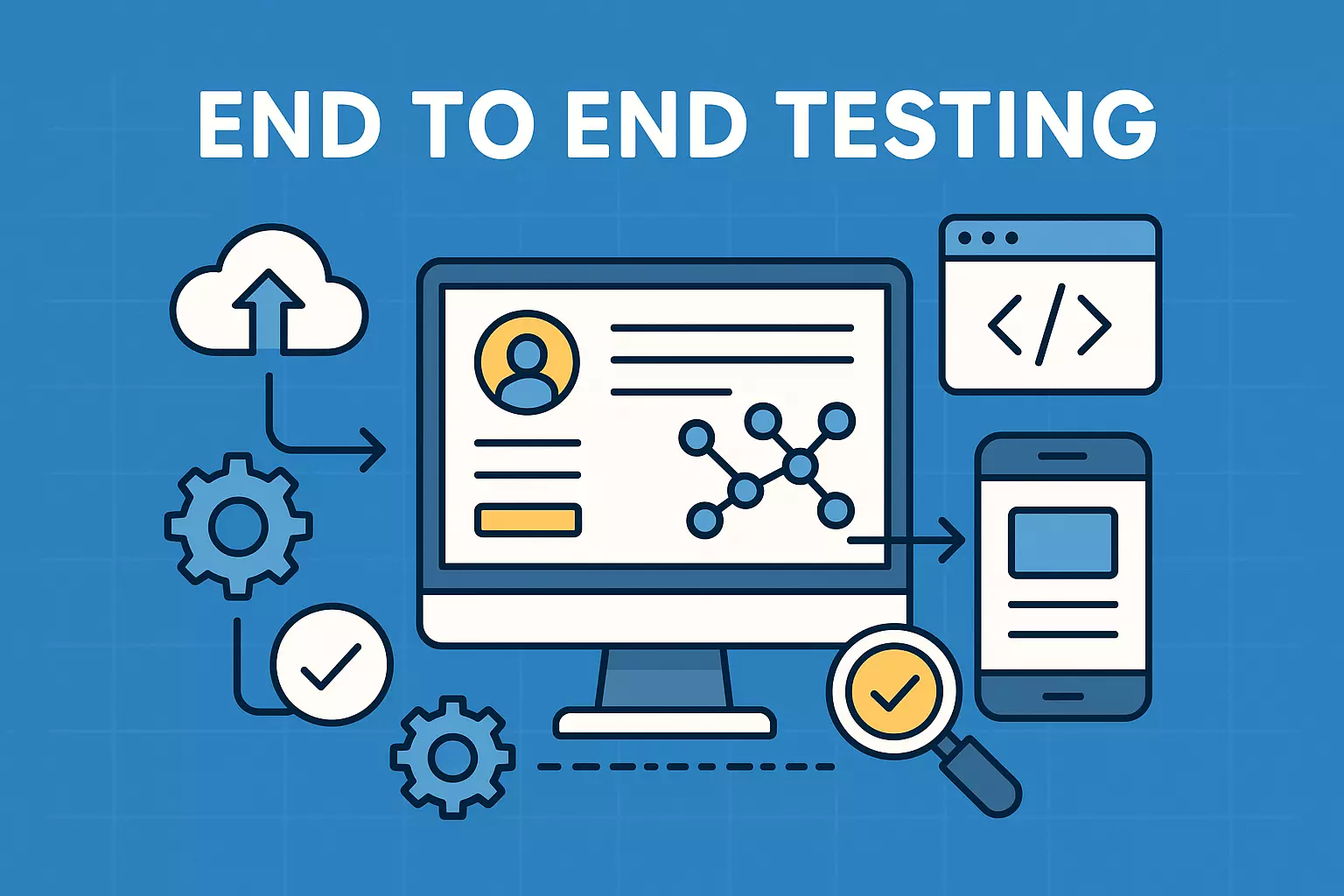
It validates the complete flow of an application, from the user interface down to the database and back, ensuring that every component communicates as expected. Unlike unit or integration tests that only focus on smaller parts of the system, this approach guarantees that the application behaves correctly in real-world usage.
What is End to End Testing?
At its core, end to end testing (commonly shortened to E2E test) is a methodology that checks the functionality and performance of an application’s entire workflow. The process simulates real user scenarios—such as logging in, making a purchase, or accessing data—covering every layer of the system. The goal is to confirm that the system behaves as intended across different environments, APIs, and services.
For example, if an e-commerce platform is being tested, end to end testing would validate the journey from a user browsing products, adding them to the cart, completing payment, and receiving confirmation. Any weak link in this flow could disrupt the user experience, making E2E tests vital for quality assurance.
Why End to End Testing Matters
Applications today are rarely monolithic. They rely on APIs, cloud services, third-party integrations, and distributed databases. A minor change in one service can ripple across the system, breaking critical workflows. End to end testing ensures:
- User journeys remain intact after updates or feature releases.
- Cross-system dependencies function properly.
- Business-critical flows like transactions or data transfers don’t fail in production.
- Confidence in releases by catching issues that other tests may miss.
In short, while unit and integration tests catch localized issues, E2E tests safeguard the customer experience.
Best Practices for Effective End to End Testing
To maximize the benefits of end to end testing, teams should follow certain best practices:
- Test Realistic Scenarios
- Focus on the workflows that matter most to users, such as sign-up, payments, or data synchronization.
- Automate Where Possible
- Manual testing is time-consuming. Automated E2E tests ensure repeatability, faster feedback, and consistent coverage.
- Keep Tests Maintainable
- Avoid writing overly complex test scripts that become difficult to update when applications evolve.
- Balance Test Coverage
- Don’t overdo end to end testing. Balance it with unit and integration testing to maintain efficiency and reduce execution time.
- Use Reliable Test Data
- Ensure test data reflects real-world conditions. Flaky or inconsistent data leads to unreliable results.
- Monitor and Update Regularly
- Since applications evolve, so should the end-to-end testing frameworks and test cases. Continuous monitoring ensures tests remain relevant.
Popular End to End Testing Tools & Frameworks
Choosing the right end to end testing tool or framework is essential for efficiency. Some popular options include:
- Selenium: A widely used open-source tool for automating browser-based testing.
- Cypress: Known for its developer-friendly interface and fast execution for front-end testing.
- Playwright: Supports modern browsers and is great for cross-browser testing.
- TestCafe: Simple setup with built-in testing features.
These end-to-end testing frameworks are powerful, but they come with challenges such as flakiness, high maintenance, and steep learning curves.
How Keploy Stands Out in End to End Testing
While traditional tools rely heavily on manually written scripts, Keploy takes a unique approach. It automatically generates test cases and data mocks directly from real user interactions, eliminating much of the manual effort required in building E2E tests.
Here are some of Keploy’s competitive advantages:
- Automatic Test Generation: Keploy records API calls and responses during development and converts them into reliable tests.
- Reduced Flakiness: By generating deterministic mocks, it minimizes common test failures caused by inconsistent data.
- Simplified Maintenance: Since tests are created from real traffic, updates to workflows are reflected naturally, reducing overhead.
- Seamless Integration: Works with existing CI/CD pipelines, making it easy to adopt without overhauling existing processes.
This approach makes Keploy not just another end to end testing tool, but a productivity booster that reduces testing complexity while ensuring high coverage.
Final Thoughts
End to end testing is no longer optional—it’s a necessity for ensuring that modern, distributed applications work as intended. By simulating real user journeys, E2E tests validate the stability and reliability of the entire system, from frontend to backend. While traditional end-to-end testing frameworks like Selenium and Cypress remain popular, tools like Keploy are reshaping the space with automation-driven, low-maintenance approaches.
Incorporating the right end to end testing tool, following best practices, and continuously improving testing workflows ensures that businesses can release faster, with confidence, and without compromising user experience.