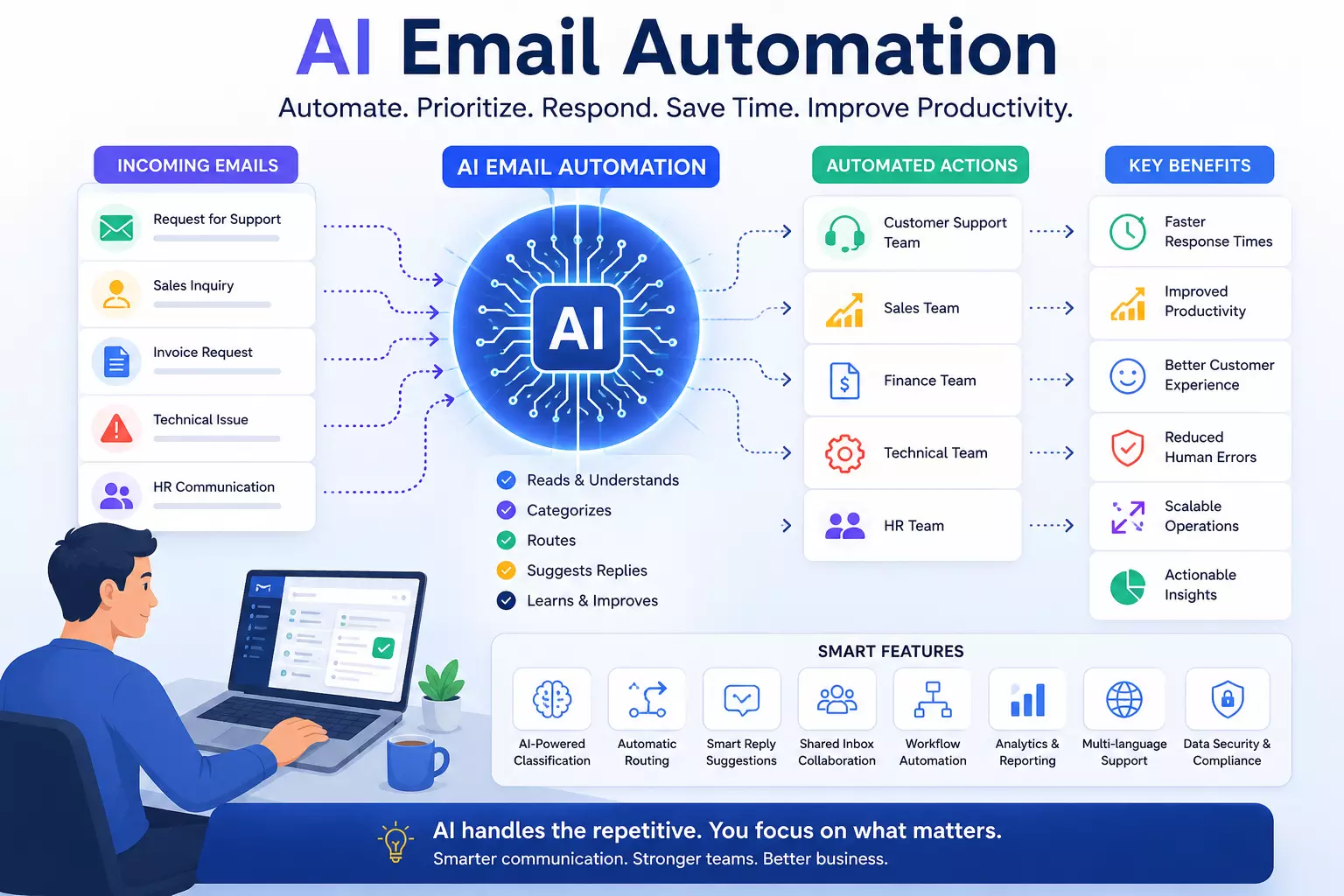
Email Automation: A Complete Guide to Streamline Business Communication
Every business, regardless of its size or industry, relies on effective communication to build strong customer relationships. From welcoming new customers and sending order confirmations to following up with prospects and sharing promotional campaigns, email remains one of the most trusted communication channels.
However, as a business grows, managing hundreds or even thousands of emails manually becomes increasingly difficult. Important follow-ups may be delayed, repetitive tasks consume valuable working hours, and the chances of human error increase significantly.
This is where Email Automation becomes a game-changing solution. Instead of manually sending every email, businesses can automate routine communication while still delivering personalized messages to customers.
Whether it's a welcome email, a product recommendation, a payment reminder, or a customer feedback request, automation ensures every email reaches the right person at the right time.
In today's competitive market, customers expect instant communication and personalized experiences. Businesses that fail to meet these expectations often struggle with lower engagement and missed sales opportunities.
By implementing Email Automation, organizations can improve efficiency, strengthen customer relationships, and allow their teams to focus on more strategic activities rather than repetitive administrative tasks.
What Is Email Automation?
Email Automation is the process of automatically sending emails based on predefined triggers, customer actions, or scheduled workflows. Rather than manually creating and sending individual emails, businesses use automation software to manage communication efficiently and consistently.
For example, when a customer signs up for a newsletter, downloads a resource, places an order, or requests a product demo, the system can instantly send a personalized email without any manual intervention. This ensures that customers receive relevant information exactly when they need it.
Modern email automation platforms can also segment audiences, personalize content, monitor customer behavior, and optimize email campaigns based on performance. This allows businesses to create meaningful interactions that feel personal while reducing the workload on marketing and support teams.
Why Email Automation Is Essential for Modern Businesses
Customer expectations have changed dramatically over the last few years. People no longer want to wait hours—or even days—for a response. They expect businesses to communicate quickly, accurately, and consistently.
Managing this level of communication manually is almost impossible, especially for growing organizations. Sales teams need to nurture leads, customer support teams must answer inquiries, and marketing departments are expected to engage subscribers with valuable content. Without automation, these responsibilities can easily become overwhelming.
Email Automation helps businesses maintain consistent communication while reducing manual effort. Instead of worrying about forgotten follow-ups or delayed responses, teams can rely on automated workflows that operate around the clock. This not only improves productivity but also creates a better customer experience.
How Email Automation Works
The process begins by identifying specific actions that should trigger an email. These actions could include customer registrations, completed purchases, abandoned shopping carts, appointment bookings, or subscription renewals.
Once the trigger is defined, businesses create an automated workflow consisting of one or more emails.
For example, a new customer may first receive a welcome email, followed by a product introduction, educational resources, customer testimonials, and eventually a special promotional offer.
Advanced Email Automation platforms also personalize every message using customer information such as names, purchase history, location, and browsing behavior. This makes communication feel more relevant and significantly increases customer engagement.
Finally, businesses monitor campaign performance using analytics such as open rates, click-through rates, conversions, and customer responses. These insights help improve future email campaigns and maximize return on investment.
Key Benefits of Email Automation
One of the biggest advantages of Email Automation is the amount of time it saves. Instead of repeatedly sending similar emails, businesses can automate routine communication and focus on activities that require human creativity and decision-making.
Automation also improves consistency. Every customer receives the same high-quality communication without delays or forgotten follow-ups. This creates a professional image and builds customer trust over time.
Another major benefit is personalization. Modern automation platforms allow businesses to send tailored emails based on customer interests and behavior. Personalized emails generally achieve higher open rates, better engagement, and stronger conversion rates compared to generic email campaigns.
Email automation also reduces operational costs by minimizing manual work. Marketing and support teams become more productive because they spend less time on repetitive tasks and more time on strategic initiatives that drive business growth.
Perhaps most importantly, automation helps businesses generate more leads and increase sales. By automatically nurturing prospects with relevant content, companies can guide potential customers through the buying journey without constant manual follow-up.
Common Types of Email Automation
Businesses use Email Automation in many different ways depending on their goals.
Welcome emails create a positive first impression by introducing new subscribers to the company and explaining what they can expect. These emails often achieve some of the highest engagement rates because they reach customers immediately after signup.
Lead nurturing campaigns educate potential customers through a series of valuable emails, gradually building trust until they are ready to make a purchase.
E-commerce businesses frequently use abandoned cart emails to remind customers about products left in their shopping carts. These automated reminders help recover lost sales and improve conversion rates.
Transactional emails such as order confirmations, payment receipts, shipping updates, and appointment reminders provide customers with important information instantly while reducing support inquiries.
Businesses also use automation to request customer feedback, share educational content, announce new products, and reconnect with inactive subscribers through re-engagement campaigns.
Read: Email Workflow Automation vs. Traditional Email Marketing
Industries That Benefit from Email Automation
- Almost every industry can benefit from implementing Email Automation.
- Online retailers use automation to send order updates, product recommendations, and promotional campaigns that encourage repeat purchases.
- Healthcare organizations automate appointment reminders, patient follow-ups, and wellness notifications to improve patient engagement.
- Educational institutions use automated emails to communicate with prospective students, send admission updates, and share course information.
- Real estate companies nurture buyer leads, schedule property visits, and provide market updates through automated email campaigns.
- Software companies rely on automation for user onboarding, product tutorials, feature announcements, and subscription renewal reminders.
- Financial institutions use email automation to send payment confirmations, security alerts, account updates, and compliance notifications.
Best Practices for Successful Email Automation
Implementing Email Automation successfully requires more than simply scheduling emails. Businesses should first understand their audience and divide subscribers into meaningful segments based on interests, behavior, or purchase history. This allows each customer to receive content that is genuinely relevant.
Personalization should always be a priority. Including the recipient's name is helpful, but true personalization involves sending content based on customer preferences and previous interactions.
Businesses should also avoid overwhelming subscribers with excessive emails. Finding the right balance helps maintain engagement while reducing unsubscribe rates.
Regularly reviewing campaign analytics is equally important. Monitoring open rates, click-through rates, and conversions helps identify opportunities for improvement and ensures automation continues delivering value.
The Future of Email Automation
Artificial Intelligence is transforming the future of Email Automation. Modern platforms can now predict customer behavior, recommend the best time to send emails, generate personalized content, and automatically optimize campaigns based on user engagement.
As AI technology continues to evolve, businesses will be able to create even more personalized customer experiences while reducing manual effort. Future email automation systems will become smarter, faster, and more capable of understanding customer intent, making communication more effective than ever before.
Conclusion
Email Automation has become an essential business tool for organizations that want to improve communication, save time, and strengthen customer relationships. By automating repetitive email tasks, businesses can deliver timely, personalized messages that keep customers engaged throughout their journey.
Whether your goal is to nurture leads, improve customer support, increase online sales, or build long-term loyalty, email automation provides a reliable and scalable solution. Instead of spending valuable hours managing repetitive communication, your team can focus on innovation, customer success, and business growth.