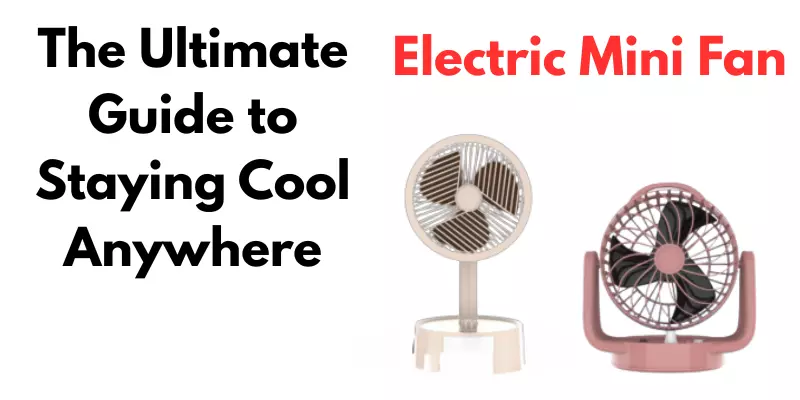
Electric Mini Fan: The Ultimate Guide to Staying Cool Anywhere
If you often feel sweating through a hot commute, stuck in a power outage, or working in a room with poor ventilation, an electric mini fan might be exactly what you need. It’s a small, portable device designed to provide a refreshing breeze wherever you go, whether it's your desk, your car, or your kitchen.
Unlike traditional fans, mini fans are lightweight, compact, and energy-efficient. They offer targeted airflow and are perfect for personal cooling without the bulk or noise of larger appliances.
In this guide, you’ll learn:
- How electric mini fans work
- Key features to consider before buying
- Best real-life use cases
- Care and maintenance tips
- Answers to common questions people ask online
Let’s break it down.
How Does an Electric Mini Fan Work?
Electric mini fans use a small DC motor powered by either batteries or a USB connection. When powered on, the motor rotates the blades to produce airflow. Most fans offer multiple speed settings and adjustable angles to control the direction and strength of the breeze.
Common power options:
- USB-powered: Plug into laptops, power banks, or wall adapters
- Battery-operated: Disposable or rechargeable batteries for wireless use
- Built-in rechargeable battery: Charged via USB for eco-friendly, cordless operation
Many models also include features like foldable designs, silent motors, clip-on stands, and LED lighting.
Benefits of Using an Electric Mini Fan
Here’s what makes them a smart purchase:
Portability
Most Portable fan are lightweight and compact, fitting into handbags or backpacks with ease.
Energy Efficiency
They use far less power than regular fans. Ideal for personal cooling without increasing your electricity bill.
Rechargeable Convenience
No need for disposable batteries. Just charge via USB and go. Runtime ranges from 3 to 10 hours depending on speed settings.
Versatile Design
Available in styles like clip-on, foldable desk fans, handheld, or neck-hanging models. Some even include phone stands or fragrance diffusers.
Also Read: Best Gadgets to Carry While Traveling This Summer
What to Look for Before Buying
Not all electric mini fans are created equal. Here’s what you should consider before purchasing:
1. Battery Capacity and Charging Method
Choose a fan with at least 2000mAh battery capacity for longer runtime. USB-C charging is faster and more modern than Micro USB.
2. Fan Speed Options
At least two or three speed levels let you adjust the airflow to your comfort.
3. Noise Level
Look for a fan that operates under 40 decibels if you plan to use it in quiet environments like offices or bedrooms.
4. Safety and Blade Design
Soft silicone blades are safer for children and pets. For stronger airflow, hard plastic blades are more effective.
5. Mounting or Holding Style
Choose based on your use:
- Handheld for on-the-go
- Clip-on for beds and baby strollers
- Foldable or tabletop for desks
- Neck fans for hands-free usage
Best Use Cases for Electric Mini Fans
During Commutes
Keep one in your bag for buses, trains, or cars without air conditioning.
Power Outages
Rechargeable models provide comfort during power cuts or stormy weather.
Office or Work Desk
Compact size and silent operation make them perfect for focused work.
Outdoor Activities
Ideal for picnics, walking, festivals, or gardening. Some models attach to strollers or umbrellas.
Makeup and Skincare
Used by professionals and enthusiasts to dry setting spray or keep cool while applying products.
How to Use and Maintain an Electric Mini Fan
How to Use
- Fully charge before the first use (typically 3–4 hours).
- Adjust the fan’s angle for best airflow direction.
- Select a speed mode based on your comfort.
- Switch off when not in use to save battery.
Maintenance Tips
- Use a dry brush or compressed air to remove dust.
- Wipe blades with a slightly damp cloth—never submerge in water.
- Keep charging ports clean to ensure consistent performance.
- Store in a dry place when not in use for long periods.
What to Avoid
- Avoid overcharging, unplug after full charge to extend battery life.
- Keep away from water unless labeled waterproof.
- Keep out of reach of small children if it has hard plastic blades.