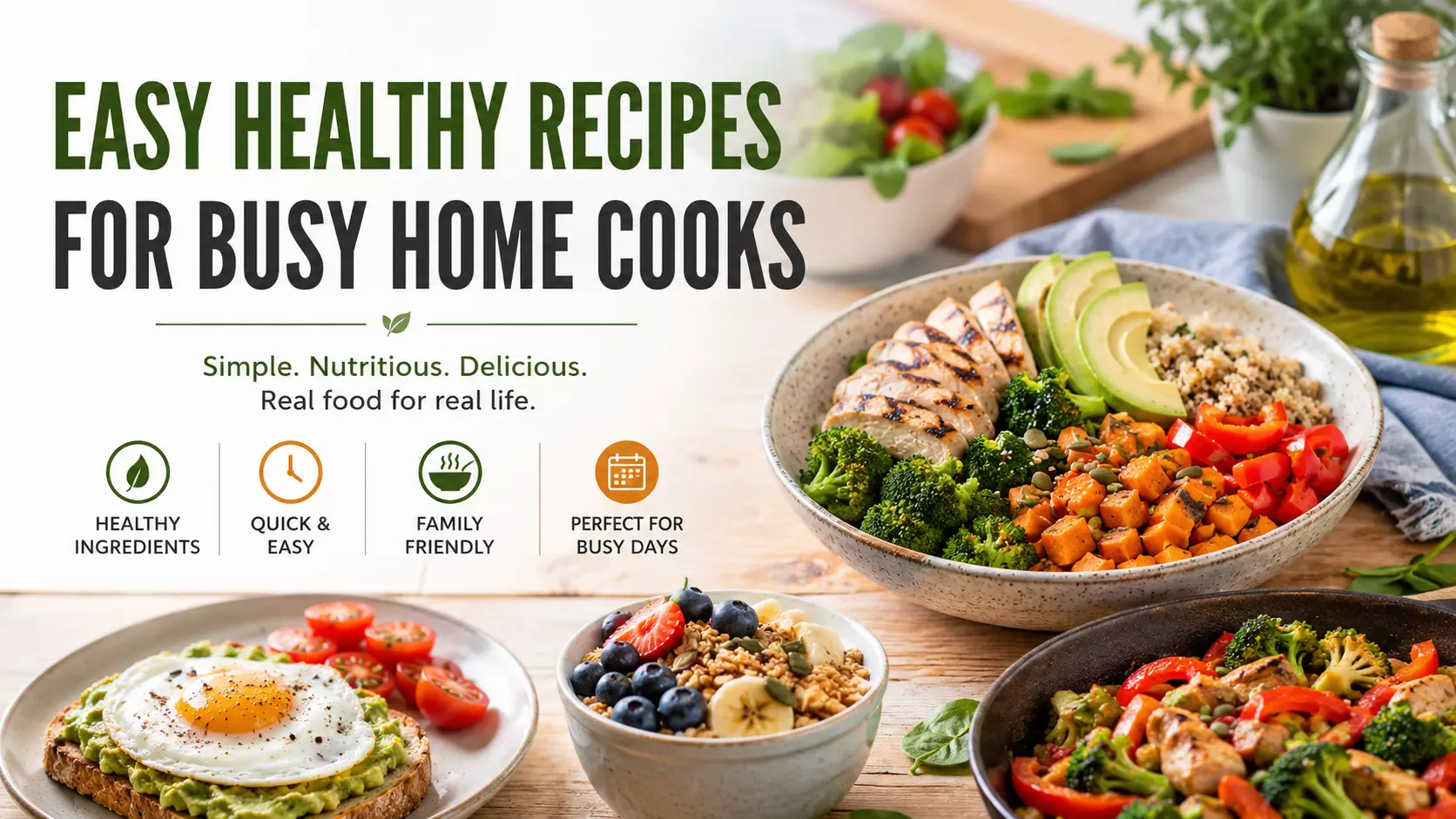
Easy Healthy Recipes for Busy Home Cooks
Finding time to cook healthy meals can be difficult when your day is already filled with work, family responsibilities, errands, and everything else life brings.
After a long day, spending hours in the kitchen may not sound appealing. The good news is that healthy home cooking does not have to be complicated.
With simple ingredients, practical preparation methods, and a few reliable recipes, busy home cooks can prepare satisfying meals without spending the entire evening at the stove.
The goal is not to make every meal perfect. It is to create easy recipes that fit naturally into a busy lifestyle.
Why Simple Healthy Cooking Matters
Cooking at home gives you more control over the ingredients that go into your meals.
You can choose fresh vegetables, lean proteins, whole grains, herbs, and other ingredients that suit your preferences.
Simple cooking also makes it easier to build consistent habits. Instead of relying on complicated recipes that require a long list of ingredients, choose meals that can be prepared with ingredients you already keep in your kitchen.
A healthy meal can be as straightforward as roasted vegetables with chicken, a colorful grain bowl, or a quick pasta dish with vegetables and a flavorful sauce.
Quick Breakfast Ideas for Busy Mornings
Breakfast is often the meal people skip when mornings become hectic. Fortunately, several nutritious options can be prepared quickly or made ahead.
Overnight oats are one of the easiest choices. Combine oats with milk or yogurt, add fruit, and let everything chill overnight. In the morning, you can add nuts, seeds, cinnamon, or berries before eating.
Eggs are another versatile option. Scrambled eggs with spinach and tomatoes can be prepared in minutes, while a vegetable-filled egg bake can be prepared ahead and enjoyed throughout the week.
Smoothies are also convenient when you need something quick. Combine fruit, yogurt or milk, and ingredients such as spinach, oats, or nut butter for a filling breakfast.
Read: How to Build Healthy Eating Habits Without Stress
Easy One-Pan Chicken and Vegetables
One-pan meals are especially useful for busy families because they simplify both cooking and cleanup.
For a basic chicken and vegetable dinner, arrange chicken breast or boneless chicken thighs on a baking sheet with vegetables such as broccoli, carrots, bell peppers, zucchini, or onions.
Season everything with olive oil, garlic, black pepper, herbs, and a small amount of salt. Roast until the chicken is fully cooked and the vegetables are tender.
The recipe can easily change depending on what is available in your refrigerator. This flexibility makes one-pan meals practical for reducing food waste and avoiding unnecessary grocery trips.
Quick Vegetable and Bean Pasta
Pasta does not have to be a heavy meal. With plenty of vegetables and beans, it can become a convenient weeknight dinner.
Start with your favorite pasta and prepare it according to the package directions. While it cooks, sauté vegetables such as spinach, mushrooms, zucchini, tomatoes, or bell peppers in a skillet.
Add beans for extra substance and toss everything together with a light tomato, garlic, or olive oil-based sauce.
This type of meal is easy to customize. You can change the vegetables, use different beans, or add grilled chicken if you prefer.
Healthy Salmon with Roasted Vegetables
Salmon can make an excellent weeknight dinner because it cooks relatively quickly and pairs well with many different vegetables.
Place salmon portions on a baking sheet and season them with lemon juice, garlic, black pepper, and herbs. Add vegetables such as asparagus, broccoli, green beans, or Brussels sprouts around the fish.
Roast everything together until the salmon is cooked through and the vegetables are tender.
Serve the meal with brown rice, quinoa, roasted potatoes, or another grain for a complete dinner.
A Simple Homemade Soup
Soup is one of the most useful meals for busy cooks because it can often be prepared in a single pot and stored for later.
A basic vegetable soup can start with onions, carrots, celery, tomatoes, beans, and broth. Add herbs and spices for flavor, then simmer until the vegetables are tender.
You can also add cooked chicken, lentils, whole-grain pasta, or potatoes depending on what you have available.
Making a large batch can provide several meals throughout the week. Portion leftovers into containers and refrigerate or freeze them according to appropriate food-storage practices.
Smart Meal Planning Saves Time
Healthy cooking becomes much easier when you plan before you become hungry.
Instead of deciding what to cook at the end of every workday, spend a few minutes planning several meals for the week. Check your refrigerator, freezer, and pantry first so you can use ingredients you already have.
The USDA's MyPlate guidance recommends planning meals, creating a grocery list, considering your schedule, and making use of leftovers as ways to make healthy eating more practical.
Keep a Few Versatile Ingredients on Hand
A well-stocked kitchen can make busy evenings much easier. You do not need dozens of ingredients. Instead, focus on versatile foods that can be used in multiple meals.
Ingredient
Easy Ways to Use It
Eggs
Breakfast bowls, omelets, sandwiches
Oats
Overnight oats, breakfast bowls, baked snacks
Beans
Salads, soups, tacos, pasta
Frozen vegetables
Stir-fries, soups, pasta, side dishes
Chicken
Salads, wraps, bowls, one-pan dinners
Brown rice
Grain bowls, stir-fries, side dishes
Greek yogurt
Breakfast, sauces, smoothies, snacks
Fresh herbs
Salads, chicken, fish, pasta
Having these basics available means you can create a meal without starting completely from scratch.
Make Vegetables Easier to Eat
Adding more vegetables does not have to mean preparing complicated salads every day. Small changes can make vegetables a regular part of your meals.
Add spinach to eggs, broccoli to pasta, roasted peppers to sandwiches, or chopped vegetables to rice bowls. Frozen vegetables can also be useful when fresh produce is unavailable or when you need something that requires little preparation.
The USDA notes that vegetables can be fresh, frozen, canned, or dried, giving home cooks plenty of practical options.
Roasting is another easy method. Toss vegetables with a small amount of oil and seasonings, then roast until they develop lightly browned edges.
Healthy Snacks for Busy Days
When hunger strikes between meals, having simple snacks available can prevent the temptation to reach for whatever is easiest.
Fresh fruit, Greek yogurt, nuts, vegetables with hummus, or whole-grain toast can all work well as convenient options.
Preparing snacks ahead of time can make them even easier. Wash fruit, cut vegetables, portion nuts, or prepare yogurt cups at the beginning of the week.
Small amounts of preparation can save considerable time later.
Make Leftovers Part of Your Routine
Leftovers are one of the easiest ways to make home cooking more efficient.
Instead of cooking one portion of chicken, rice, or roasted vegetables, prepare enough for another meal. The leftovers can become a completely different dish the next day.
For example, leftover roasted chicken can become a salad, wrap, grain bowl, or soup. Extra vegetables can be added to eggs, pasta, or sandwiches.
This approach reduces cooking time while also helping you use food more efficiently.
Cooking Healthy Meals Does Not Have to Be Complicated
Many people associate healthy cooking with expensive ingredients, complicated recipes, or strict meal plans. In reality, everyday healthy meals can be quite simple.
A balanced plate can include a protein source, vegetables, grains or another carbohydrate, and a flavorful ingredient such as herbs, spices, lemon, or a homemade sauce.
The most useful recipes are often the ones you can actually imagine making on a busy Tuesday evening.
From Home Cooking to Sharing Meals
Cooking at home is not only about nutrition. Food also brings people together.
A homemade meal can become an opportunity to spend time with family, introduce children to new ingredients, or share something special with friends. Even simple meals can feel memorable when they are prepared with care.
If homemade foods are prepared for gatherings, gifts, or customers, presentation can also make a difference.
Clean containers, clear labeling, and attractive custom printed food packaging can help baked goods and other prepared foods look more polished while keeping the focus on the food.
Create a Routine That Works for You
There is no single meal plan that works for every household. Some people prefer cooking every evening, while others prepare several components on the weekend.
The best approach is the one that fits your schedule.
Try preparing grains, vegetables, proteins, and sauces in advance. Store them separately so you can combine them into different meals throughout the week.
For example, cooked quinoa can become a lunch bowl one day and a side dish the next. Roasted vegetables can work with chicken, eggs, pasta, or rice.
This creates variety without requiring a completely different recipe every night.
Final Thoughts
Healthy home cooking does not need to be complicated or time-consuming.
With simple ingredients, easy recipes, basic meal planning, and a little preparation, busy cooks can create meals that are both satisfying and practical.
Start with a few dependable recipes rather than trying to completely change your eating routine overnight. Learn which meals your household enjoys, keep versatile ingredients available, and use leftovers whenever possible.
The most successful healthy cooking routine is one that you can maintain.
When nutritious meals become simple enough to fit into your everyday schedule, cooking at home becomes less of a chore and more of a natural part of your lifestyle.