Early Stage Investment Opportunities in AI Infrastructure
The artificial intelligence boom is producing a second investment story underneath the excitement around applications and models: infrastructure.
Companies building AI systems increasingly need access to specialised processors, enormous data-centre capacity and dependable energy. As demand rises, the financial requirements associated with computing infrastructure are becoming difficult to ignore.
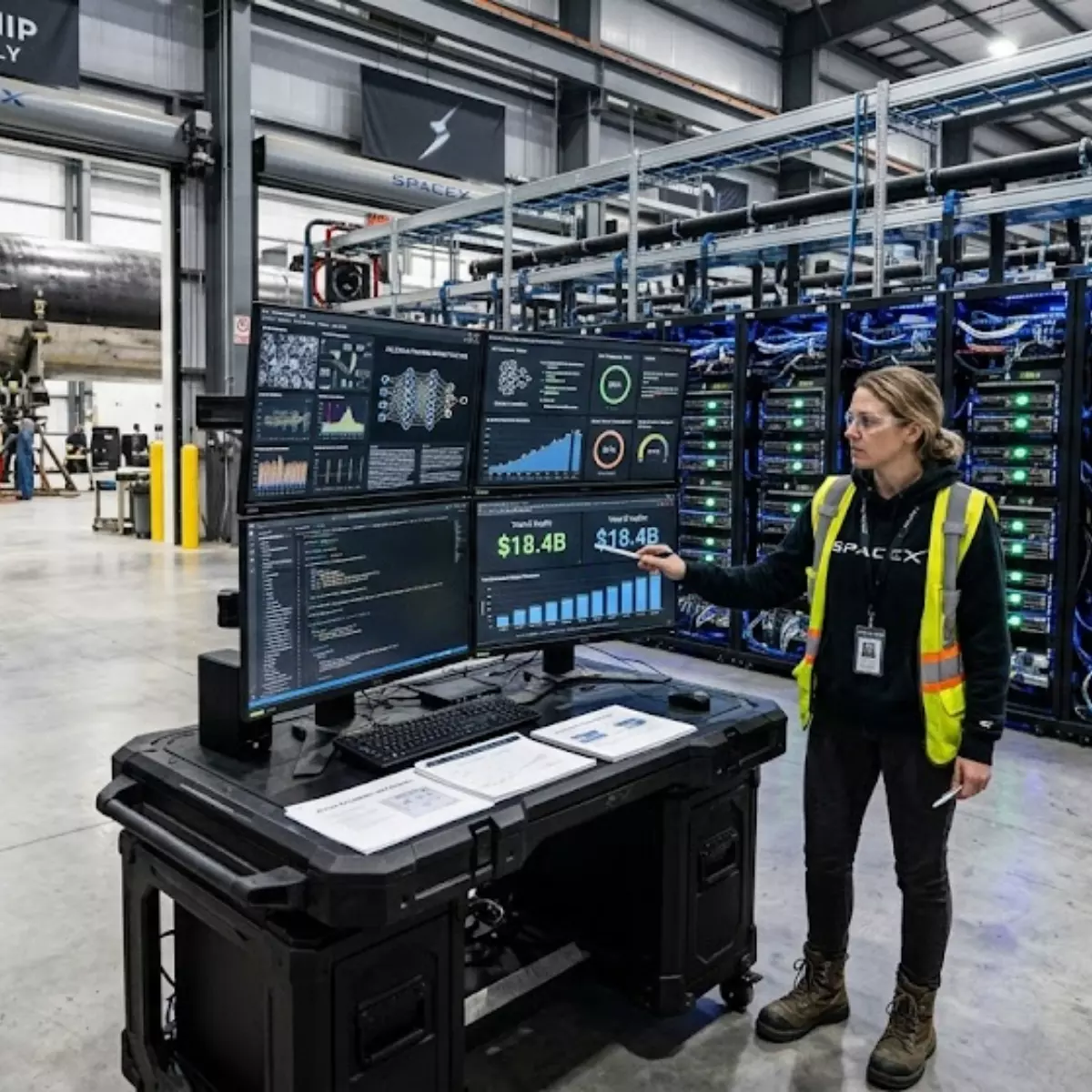
Reports that SpaceX is seeking approximately $40 billion in financing to purchase Nvidia AI chips provide a striking example of the scale involved.
The reported financing could combine bank loans and investment-grade debt, demonstrating that AI infrastructure is increasingly attracting capital from traditional financial institutions as well as technology investors.
The development has implications far beyond one company.
AI Has Become a Capital-Intensive Industry
Software businesses have traditionally been attractive to venture investors because they can scale without proportional increases in physical infrastructure.
AI changes that equation.
Training and operating sophisticated models can require significant computing capacity. Companies therefore face expenses associated with processors, data centres, electricity, networking and cooling.
That means investors need to understand the relationship between technology performance and capital intensity.
A startup might show impressive user growth but still struggle financially if every additional customer creates substantial infrastructure costs.
For investors evaluating early stage investment opportunities, this is becoming a critical diligence question.
Revenue Growth Is Not Enough
Traditional startup analysis often focuses on annual recurring revenue, customer acquisition cost, retention and gross margin.
AI businesses require an additional layer.
Investors should ask how much compute is required to serve each customer and how that cost changes as usage increases.
A business with strong revenue growth but weak infrastructure economics may need repeated funding rounds simply to support expansion.
That creates dilution risk for founders and financing risk for investors.
The more capital-intensive the business becomes, the more important it is to understand the route toward sustainable margins.
The Opportunity Beneath the Infrastructure Boom
Large infrastructure requirements can also create opportunities for smaller startups.
The market needs companies working on chip connectivity, optimisation, cooling, energy management, cloud orchestration, inference efficiency and data-centre operations.
Not every startup needs to compete directly with Nvidia or build a data centre.
A company that reduces the cost of running AI workloads by 20% could potentially create significant value because the overall infrastructure market is expanding rapidly.
This is where a venture capital firm Singapore perspective can be useful. Southeast Asian founders can participate in the AI infrastructure economy through specialised software and hardware rather than attempting to reproduce the largest capital-intensive projects.
The region also offers strong opportunities in logistics, manufacturing, financial services and telecommunications, all of which can become customers for AI infrastructure solutions.
Financing Is Becoming More Creative
The reported SpaceX financing story also highlights an important change in how technology companies may fund expansion.
Traditional venture capital is not always the right instrument for infrastructure-heavy growth.
Debt, equipment financing, strategic investment, project financing and partnerships can all play a role.
Founders therefore need to understand capital structure rather than treating every financing decision as a venture round.
For companies planning to raise capital for startup Singapore markets, this distinction can become increasingly important as they mature.
Equity is expensive because founders surrender ownership. Debt can preserve ownership but introduces repayment obligations. Strategic capital may provide industry access but can introduce commercial restrictions.
The right combination depends on the business model.
What Investors Should Measure
Infrastructure startups require a different diligence framework.
Investors should examine hardware utilisation, deployment cycles, customer concentration, gross margins, energy requirements, capital expenditure and the expected lifespan of infrastructure.
They should also assess whether technological improvements could make the company’s current infrastructure obsolete.
An attractive market does not automatically produce an attractive investment.
A founder may operate in a rapidly growing sector but still lose value if the company cannot finance expansion efficiently.
Read: Top 10 AI Software Companies in 2026
Southeast Asia Has a Different Advantage
The infrastructure race does not mean Southeast Asia has been left behind.
The region has growing demand for cloud computing, digital payments, logistics technology, enterprise software and AI applications.
Singapore can serve as a capital and business hub while startups expand into Indonesia, Vietnam, Malaysia, Thailand and the Philippines.
For a VC firm Southeast Asia, the opportunity is to identify companies that understand local operating conditions and can translate global technology into regional products.
Investors who want to invest in startups Singapore should therefore consider regional scalability as an important part of their assessment.
A startup serving only one small customer segment may have limited upside. A platform that can move across multiple Asian markets may have significantly stronger potential.
Evolve Venture Capital Financial Adviser View
From a financial-adviser perspective, founders should separate growth capital from infrastructure capital.
Before raising money, calculate the capital required to reach each operational milestone. If equipment or computing resources are involved, compare equity funding with strategic financing and debt options.
Investors should focus on capital efficiency, not simply market size.
The most exciting infrastructure opportunity may not be the company spending the most money. It could be the company helping everyone else spend less.
The broader message from the current AI financing environment is simple: technology creates opportunity, but infrastructure determines how economically that opportunity can scale.