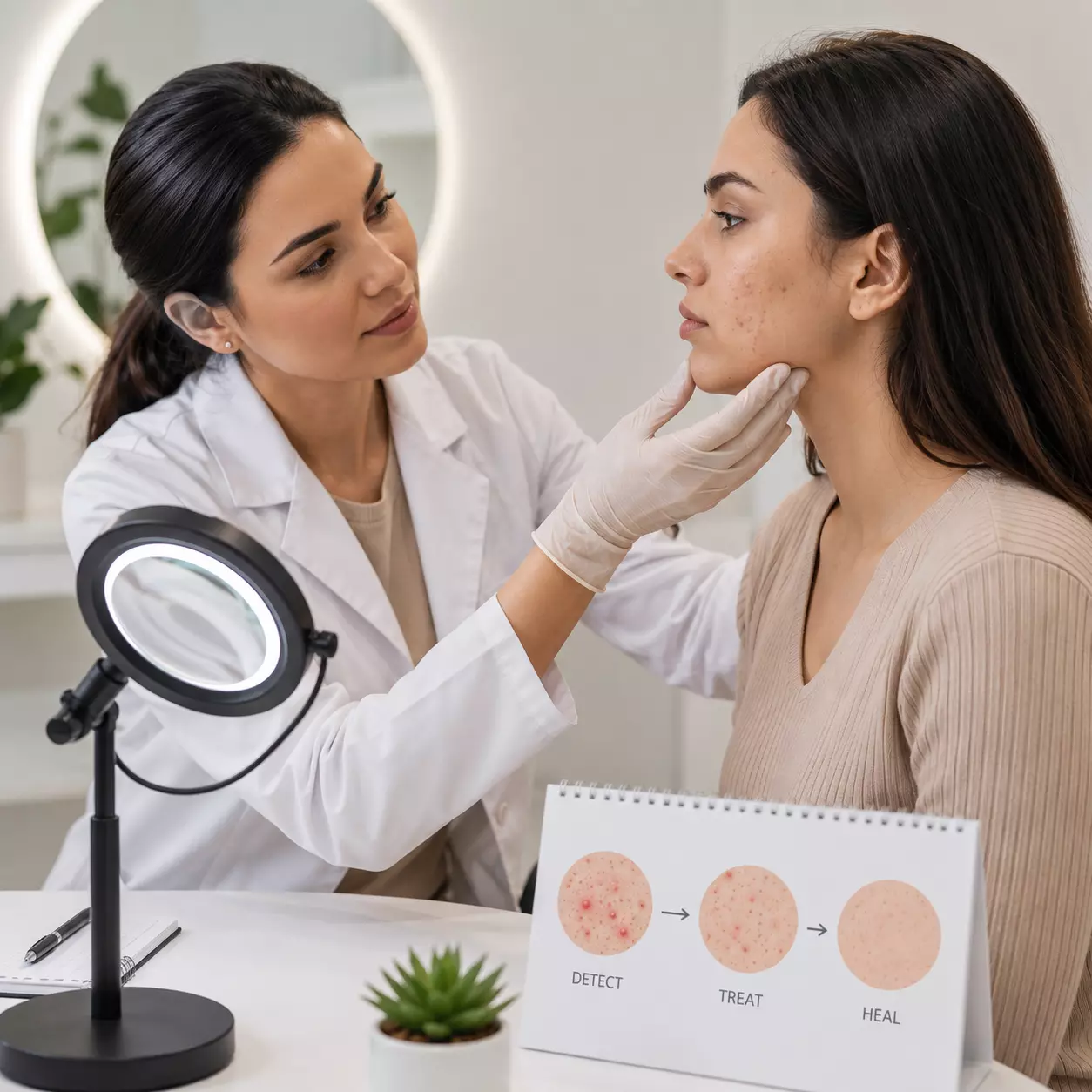
Why Early Diagnosis Improves Skin Treatment Results
It starts small. A patch of skin that's a shade darker than the rest. An itch that comes and goes. A few pimples along the jawline that weren't there last month. None of it feels urgent, so it gets filed under "I'll deal with it later." Weeks pass.
Then months. And somewhere along the way, what could have been a quick, simple fix turns into a longer, more stubborn problem. This is exactly why so many people eventually search for a Skin Doctor in PCMC — not in a panic, but after realizing that "waiting it out" quietly made things harder to treat.
Small Skin Problems Rarely Stay Small
Scarring can result from a few acne blemishes. Pigmentation can deepen and expand from a small region. Mild flaking can escalate into a full-blown flare-up of eczema. Before you even recognize it as a trend, a patch of thinning hair may get bigger.
All of this takes time. It occurs gradually, which is precisely why it's so simple to ignore. However, if left untreated, skin disorders rarely remain in their "mild" form; instead, they either swiftly resolve with the correct early treatment or gradually compound into something that takes much longer to reverse.
What Happens Beneath the Surface Before You Notice Symptoms?
Something has typically been going on beneath the surface for some time by the time a skin problem becomes apparent.
Before redness manifests, inflammation may develop subtly. Long before a dark patch appears, pigment-producing cells can be disturbed.
Before it is apparent to the naked eye, an infection can spread. Long before you see anything noteworthy on the surface, the skin barrier may gradually deteriorate and the immune system may already be responding within.
For this reason, "it just appeared out of nowhere" is rarely the whole picture. Usually, your skin was alerting you to something long before you became aware of it.
Why Waiting Makes Treatment More Difficult
The longer a skin condition is left untreated, the more variables it introduces: a larger affected area, more difficult-to-reverse pigmentation, previously absent acne scars, chronic inflammation that is more difficult to reduce, damaged hair follicles, and a recovery period that can take weeks or months.
- Early Diagnosis
- Delayed Diagnosis
- Simpler, shorter treatment
- Longer, more complex treatment
- Faster recovery
- Extended recovery period
- Lower overall cost
- Higher cumulative cost
- Lower risk of recurrence
- Higher chance of recurrence
- Minimal scarring risk
- Increased risk of permanent scarring
Skin Conditions Where Early Diagnosis Makes the Biggest Difference
Early acne treatment rarely results in scarring. It frequently does if left untreated for months.
Melasma and pigmentation react far more favorably when detected before the pigment penetrates deeply into the skin. When a dermatologist in Pimpri-Chinchwad sees these situations early, they can generally treat them more quickly and gently than if they were treating pre-existing pigment.
Both eczema and psoriasis often flare up in cycles; early detection of a flare-up typically results in a shorter course of treatment rather than a protracted battle with chronic inflammation.
When vitiligo is discovered in its early stages, it frequently reacts better to therapy than when it has already spread to greater areas.
Before repeated exposure exacerbates the reaction, skin allergies that are promptly detected can be linked to their trigger.
One of the few skin signs where "wait and see" isn't actually the safer course of action is a mole that is changing in size, form, or color; timing is crucial here more than practically anywhere else.
When discovered early, sudden hair loss frequently has a treatable cause, but the longer the underlying trigger is ignored, the more difficult it may be to treat.
Ridging, discoloration, or thickening of the nails are often early signs of disorders that are much easier to treat before they worsen.
How Dermatologists Detect Problems Before They Become Serious
Instead of using a prescription pad, detection begins with a dialogue. A thorough consultation includes a review of your medical history, a physical and visual assessment of your skin, and a pattern-recognition technique based on years of observation of the typical course of disorders.
When a problem requires more than visual assessment to confirm, diagnostic tests are performed. Dermoscopy, a magnified inspection of the skin, frequently reveals features invisible to the unaided eye.
Dr. Vrushali Nikam, a PCMC dermatologist skilled in this type of layered review, is frequently able to identify patterns that a self-diagnosis or a cursory internet search would completely overlook.
Signs Your Skin Is Asking for Professional Help
While not all symptoms require an urgent consultation, the following patterns should be noted for a Pimpri-Chinchwad skin doctor rather than waiting them out:
- redness that persists for several days
- Acne that persists in spite of regular treatment
- Pigmentation that appears to be spreading
- A mole that has undergone color, size, or shape changes
- Itching without a clear cause
- Hair loss that has significantly increased
- An unhealing wound or patch
- Recurring rashes
- Suddenly more sensitive skin
- Suddenly appearing dryness
Why Home Remedies Sometimes Delay Recovery
Many minor skin issues can be resolved with basic care, and not all home remedies are dangerous. The problem is not with home cures per se, but rather with what they might accomplish covertly while a sickness persists beneath the surface.
They may conceal outward signs while the underlying problem continues to worsen. By temporarily improving the appearance of a problem, they can postpone an accurate diagnosis.
Some may aggravate skin that is already damaged. Above all, they can take up weeks or months of time that could have been used for a targeted plan and an accurate diagnosis.
Read: Your Best Skin A Guide to Richmond's Premier Skin Clinics
What Happens When Treatment Starts Early?
All things considered, early treatment is typically easier: quicker recovery, less medicine required, lower total cost, better cosmetic results, less scarring, and frequently a discernible increase in confidence as the obvious symptoms begin to go away. The same thing is typically stated by a PCMC skin specialist: the earlier an issue is identified, the less tools are needed to control it.
Can Early Diagnosis Prevent Permanent Skin Damage?
Yes, occasionally. This is the point at which timing actually affects results.
Early detection of acne greatly reduces the likelihood of long-term scarring. Early detection of cumulative sun damage allows for management before deep-set pigmentation develops.
When hair loss is treated early on, it is more likely to be reversed than when it is allowed to worsen for years. Even though not all moles require attention, one of the most straightforward ways dermatology promotes early skin cancer identification is by raising awareness of altering moles.
The Biggest Myths That Delay Treatment
Myth
Reality
"It will go away on its own."
Some conditions do, but many quietly progress without visible warning.
"It's only stress."
Stress can be a factor, but it rarely explains the full picture alone.
"Google already told me what it is."
Search results can't examine your skin or account for your specific history.
"I'll try one more product."
Repeated trial-and-error often delays the diagnosis that would have worked faster.
"Skin problems aren't serious."
Some aren't — but a few genuinely require timely attention.
Questions Patients Often Ask
Q: How soon should I see a dermatologist?
Answer: Instead of waiting any longer, it is worthwhile to get a skin problem assessed if it persists for more than two to three weeks or if it is changing, spreading, or growing worse.
Q: Can early treatment prevent acne scars?
Answer: Yes, most of the time. When acne is treated early on, it is much less likely to cause long-lasting effects than when it is allowed to worsen.
Q: Can pigmentation become permanent?
Answer: The longer it is ignored, the more difficult it can be to treat, especially once the pigment has penetrated deeper into the skin.
Q: Does early diagnosis reduce treatment costs?
Answer: In general, yes. In general, shorter, more straightforward treatment regimens are less expensive than the longer periods required for more complex illnesses.
Q: When should I worry about a mole?
Answer: A mole should be inspected very away if there is any discernible change in its size, shape, color, or border.
Thinking About Getting It Checked?
It doesn't have to become more serious before it's worth talking about if something has remained on your skin for longer than it should. You can learn more about what's truly going on with a prompt evaluation from
Dr. Vrushali Nikam at Bodysutra, as well as whether taking action now could spare you months of needless treatment down the road. Getting it examined as soon as possible is sometimes the simplest and most successful course of action.