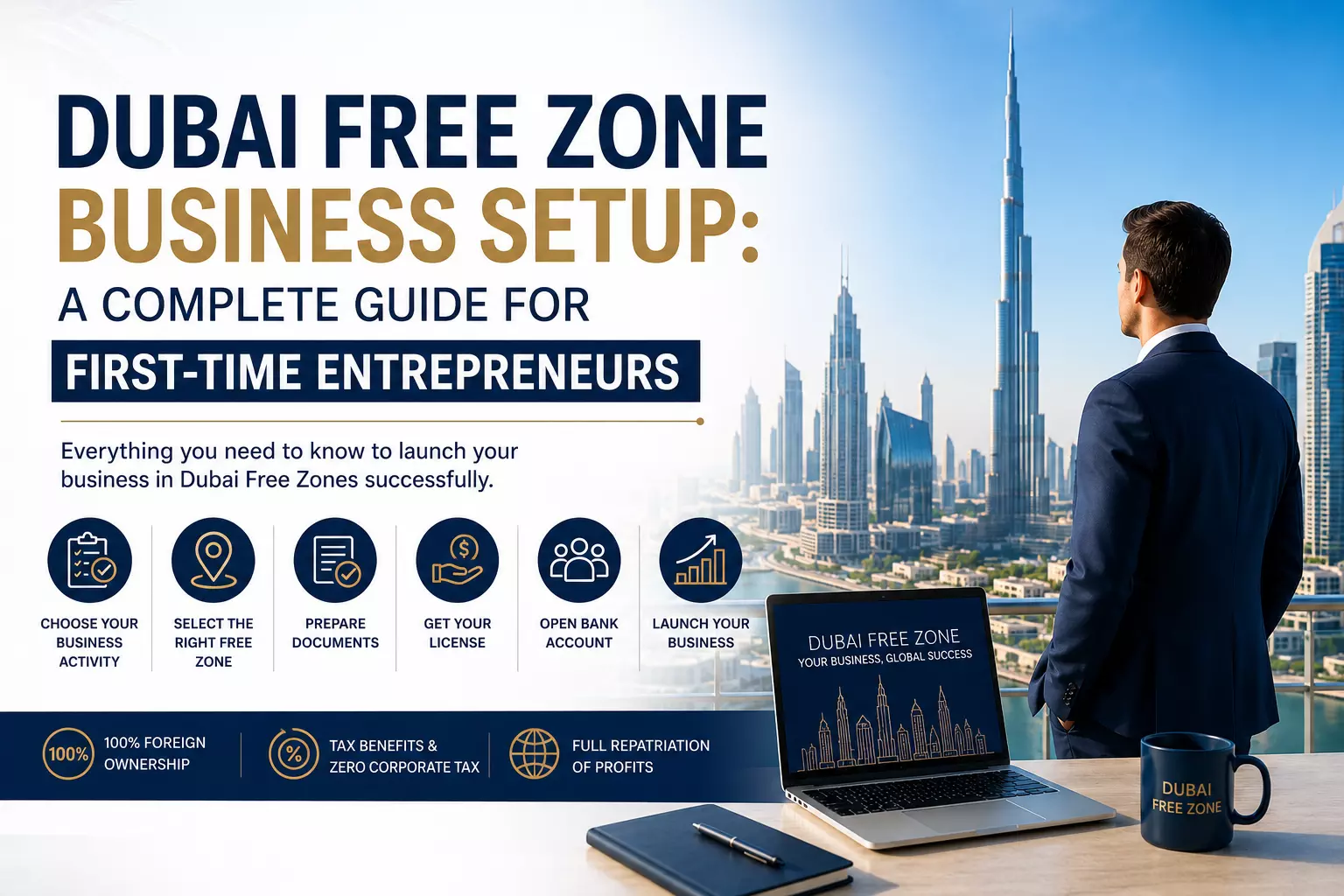
Dubai Free Zone Business Setup: A Complete Guide for First-Time Entrepreneurs
Dubai has become one of the world's leading destinations for entrepreneurs looking to establish new businesses. Its strategic location, strong economy, modern infrastructure, and investor-friendly regulations have made it a preferred choice for startups and international companies alike.
Every year, thousands of entrepreneurs choose Dubai as the launchpad for their business because it offers access to regional and global markets while providing a stable environment for long-term growth.
For first-time business owners, however, choosing the right company structure can be overwhelming. Questions about ownership, licensing, registration requirements, costs, visas, and compliance often make the process seem more complicated than it actually is.
One of the most popular options available to foreign entrepreneurs is Dubai free zone business setup. Free zones are designed specifically to encourage foreign investment by offering simplified company formation procedures, industry-focused business environments, and attractive incentives for international investors.
Whether you are planning to launch a consultancy, e-commerce store, technology startup, trading business, or professional services company, understanding how Dubai free zone business setup works will help you make informed decisions from the beginning.
This guide covers everything first-time entrepreneurs need to know, including the benefits, registration process, licensing options, costs, common mistakes, and tips for choosing the right free zone.
What Is Dubai Free Zone Business Setup?
Dubai free zone business setup refers to establishing a company within one of Dubai's designated free zones. These are special economic areas created to attract local and international investment by offering streamlined regulations and business-friendly policies.
Each free zone operates under its own regulatory authority and typically focuses on specific industries or business sectors.
Examples include businesses involved in:
- Technology
- Artificial intelligence
- E-commerce
- Logistics
- Healthcare
- Education
- Financial services
- Media
- Manufacturing
- Professional consulting
Because free zones are designed to support business growth, they offer entrepreneurs an efficient way to establish companies while benefiting from modern infrastructure and simplified administrative procedures.
Why Dubai Is One of the Best Places to Start a Business
Dubai has consistently ranked among the world's most business-friendly destinations for several reasons.
Strategic Global Location
Located between Europe, Asia, and Africa, Dubai provides businesses with access to some of the world's fastest-growing markets.
Its location makes international trade, logistics, and regional expansion significantly easier.
Stable Economy
The UAE has developed a diversified economy supported by sectors such as tourism, finance, technology, healthcare, logistics, manufacturing, and renewable energy.
This economic stability creates confidence for entrepreneurs making long-term investments.
Advanced Infrastructure
Dubai offers:
- International airports
- Modern seaports
- Smart government services
- High-speed telecommunications
- World-class office facilities
- Efficient transportation systems
These resources help businesses operate smoothly from the very beginning.
Business-Friendly Policies
Government initiatives continue to encourage entrepreneurship by simplifying business registration and attracting international investors.
Benefits of Dubai Free Zone Business Setup
Choosing a free zone offers several advantages, particularly for entrepreneurs starting their first business.
1. 100% Foreign Ownership
One of the biggest reasons entrepreneurs choose free zones is the ability to retain full ownership of their company.
This gives business owners complete control over:
- Company operations
- Business strategy
- Financial decisions
- Future expansion
For foreign investors, maintaining complete ownership is often a major advantage.
2. Simplified Registration Process
Compared to many international jurisdictions, Dubai offers a relatively efficient company registration process.
Many free zone authorities provide support for:
- Business registration
- Trade license applications
- Government approvals
- Office solutions
- Visa applications
Digital services have further simplified the setup experience for entrepreneurs.
3. Business-Friendly Tax Environment
Another important advantage of Dubai free zone business setup is its attractive tax environment.
Depending on the business activity and applicable regulations, entrepreneurs may benefit from tax efficiencies that support long-term business growth.
Because tax obligations vary based on individual circumstances and changing regulations, professional tax advice should always be obtained.
4. Access to International Markets
Dubai serves as a global gateway connecting businesses to markets across:
- Europe
- Asia
- Africa
- The Middle East
This makes it an ideal location for entrepreneurs planning regional or international expansion.
5. Industry-Specific Business Communities
Many free zones are designed around particular industries.
This allows businesses to operate alongside similar companies while benefiting from:
- Networking opportunities
- Industry events
- Collaboration
- Specialized facilities
- Business support services
Being part of an industry-focused ecosystem can accelerate business growth.
Step-by-Step Dubai Free Zone Business Setup Process
Although each free zone has its own procedures, the overall registration process follows a similar pattern.
Step 1: Define Your Business Activity
The first step is identifying exactly what your company will do.
Your chosen activity determines:
- Licensing requirements
- Regulatory approvals
- Office requirements
- Future expansion opportunities
Selecting the correct activity from the beginning is essential.
Step 2: Choose the Right Free Zone
Dubai has numerous free zones, each designed for different industries.
When comparing free zones, consider:
- Business activity
- Industry specialization
- Office options
- Registration costs
- Visa eligibility
- Future scalability
Choosing the right jurisdiction can have a significant impact on long-term business success.
Step 3: Select Your Legal Structure
Depending on your business objectives, you may establish different legal structures.
The appropriate option depends on factors such as:
- Number of shareholders
- Ownership structure
- Business activities
- Expansion plans
Professional advice can help determine the most suitable legal entity.
Step 4: Reserve Your Company Name
The proposed company name must comply with the naming regulations of the selected free zone.
Generally, the name should:
- Be unique
- Avoid prohibited terms
- Meet professional naming standards
Preparing several alternatives can help avoid delays.
Step 5: Prepare the Required Documents
Although requirements vary slightly between free zones, entrepreneurs are commonly asked to provide:
- Passport copies
- Passport-size photographs
- Proof of residential address
- Business plan (where required)
- Visa documents (if applicable)
Submitting complete documentation helps speed up the approval process.
Step 6: Apply for Your Business License
The business license is one of the most important parts of company formation.
Depending on your activities, licenses may include:
- Commercial License
- Professional License
- Service License
- Trading License
- Industrial License
- E-commerce License
Choosing the correct license ensures compliance with applicable regulations.
Step 7: Secure Office Space
Most free zones offer multiple workspace options, including:
- Flexi-desks
- Shared offices
- Private offices
- Executive suites
- Warehouses
- Industrial units
The office solution selected may also affect visa eligibility.
Step 8: Receive Your Company Documents
Once approved, entrepreneurs receive official incorporation documents, including:
- Business license
- Certificate of Incorporation
- Shareholder documents
- Company registration certificates
The company can then begin operating according to the approved business activities.
Read: Freezone Business Setup in Dubai: A Complete Step-by
How Much Does Dubai Free Zone Business Setup Cost?
The cost of setting up a company depends on several factors, including:
- Selected free zone
- License type
- Office requirements
- Number of visas
- Government fees
- Professional service fees
Because every business has unique requirements, entrepreneurs should request a customized quotation rather than relying on general estimates.
Common Mistakes First-Time Entrepreneurs Make
Many first-time business owners make avoidable mistakes during the setup process.
Choosing a Free Zone Based Only on Price
The cheapest option is not always the best.
Industry support, office facilities, and future expansion opportunities should also be considered.
Selecting the Wrong Business Activity
Incorrect licensing choices can create operational challenges later.
Business activities should match both current operations and future plans.
Ignoring Future Growth
Entrepreneurs often focus only on immediate needs.
Choosing a free zone that supports long-term expansion can save considerable time and money.
Underestimating Ongoing Costs
Registration fees are only one part of the overall investment.
Business owners should also budget for:
- License renewals
- Office rental
- Visa renewals
- Compliance requirements
- Professional services
Proper financial planning reduces unexpected expenses.
Why Professional Business Setup Support Matters
Although Dubai has simplified company formation, entrepreneurs still need to make several important decisions during the registration process.
Professional consultants can assist with:
- Selecting the right free zone
- Identifying appropriate business activities
- Preparing documentation
- Managing government approvals
- Obtaining licenses
- Processing visas
- Ensuring ongoing compliance
Their expertise can help entrepreneurs avoid delays, reduce administrative burdens, and establish the right business structure from the outset.
Conclusion
For entrepreneurs looking to launch a business in one of the world's most dynamic commercial hubs, Dubai free zone business setup offers an efficient and flexible solution.
With benefits such as 100% foreign ownership, streamlined registration, access to international markets, industry-focused ecosystems, and world-class infrastructure, free zones continue to attract startups and established businesses from around the globe.
Success, however, begins with choosing the right free zone, selecting the appropriate business activity, and planning for future growth. By understanding the setup process and avoiding common mistakes, first-time entrepreneurs can establish a strong foundation for a successful business journey in Dubai.
If you are considering starting a company in a Dubai free zone, Dubai Business and Tax Advisors (DBTA) can provide expert guidance throughout the company formation process, helping you choose the right free zone, complete the registration efficiently, and build a business that is ready for long-term success.