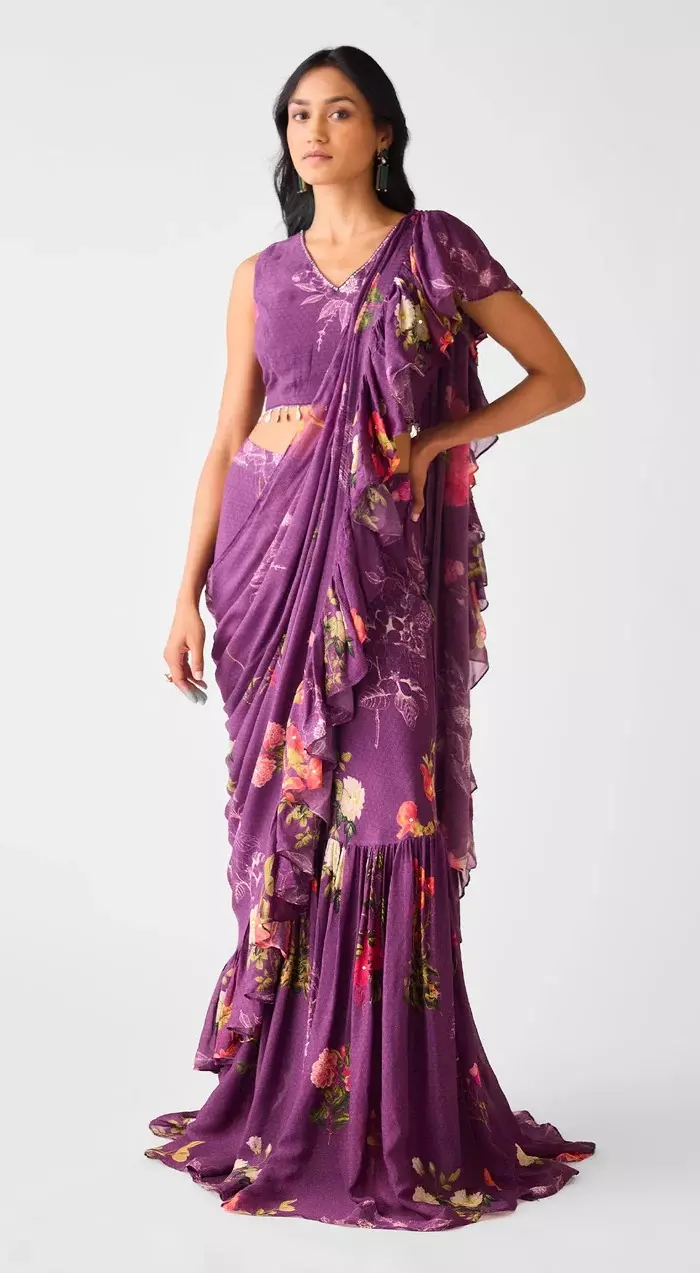
Draped Saree vs. Stitched Saree Gown: Which Should You Buy Online?
If you've spent any time shopping for sarees online in the past few years, you've likely noticed two distinct categories competing for your attention: the traditional draped saree, sold as loose, unstitched fabric, and the stitched saree gown, a pre-constructed garment designed to mimic the saree silhouette without any actual draping required.
Both have passionate fans within the Indian-American community, and both have real advantages depending on your lifestyle, the occasion, and your comfort level with traditional draping.
So which one should you actually buy? Let's break it down.
What Is a Traditional Draped Saree?
A traditional saree is sold as a single, unstitched length of fabric — typically 5.5 to 9 yards — that you wrap, pleat, and tuck yourself using a separately purchased petticoat and blouse. This is the saree most of us grew up watching our mothers and grandmothers wear, requiring hands-on draping skill and, usually, a bit of time and practice.
Pros
- Customizable fit and length — You control exactly how the pleats fall, how high or low the pallu sits, and how the saree adjusts to your specific height and body shape.
- Authentic, time-honored technique — For ceremonial and religious events, the traditional drape often feels most appropriate and respectful of custom.
- Versatility — One saree can be draped in multiple regional styles (Nivi, Bengali, Gujarati, and more), giving you more looks from a single garment.
Cons
- Time-intensive — Even an experienced draper needs 15–20 minutes; beginners can take much longer.
- Requires skill — Not everyone in the diaspora has had the chance to learn proper draping technique.
- Less secure for high-movement events — Pins and tucks can come loose during dancing or long hours of standing.
What Is a Stitched Saree Gown?
A stitched saree gown — often called a pre-draped saree — comes pre-constructed with the pleats, pallu, and waist tuck already sewn into the garment. You simply step into it and secure it at the waist, much like a skirt or dress.
Pros
- Incredibly fast — Most pre-draped sarees take under five minutes to put on, no draping skill required.
- Consistent, polished look — Every pleat is factory-precise, eliminating the risk of uneven or sloppy draping.
- Secure for movement — Built-in structure means it stays in place through dancing, sitting, and long event hours far better than a hand-pinned drape.
- Beginner-friendly — Perfect for first-generation Americans or anyone who never learned traditional draping.
Cons
- Less customizable — The pleats and pallu are fixed in place, offering less flexibility for adjusting fit or style on the day.
- Sizing matters more — Because the garment is pre-constructed, getting the right size is essential for a flattering fit.
- Can feel less "traditional" for ceremonial events where authenticity is highly valued.
Side-by-Side Comparison
Factor
Traditional Draped Saree
Stitched Saree Gown
Time to wear
15–30+ minutes
Under 5 minutes
Skill required
High
None
Best for
Ceremonies, religious events
Receptions, sangeets, parties
Movement security
Moderate (can loosen)
High (built-in structure)
Customization
High
Limited to size/fit
Beginner-friendly
No
Yes
Read: Pure Mashru Silk Saree: Royal Beauty with Traditional
Which Should You Buy? It Depends on the Occasion
Choose a traditional draped saree if: You're attending a religious ceremony, a wedding mandap, or any event where authenticity and customization matter most, and you either know how to drape or have time to learn before the event.
Choose a stitched saree gown if: You're attending a high-movement event like a sangeet or cocktail reception, you're short on time, you're new to saree-wearing, or you simply want guaranteed, consistent elegance without the stress of draping.
The Smart Answer: Why Not Both?
Many experienced Indian-American shoppers have landed on the same conclusion: you don't have to choose just one. Building a wardrobe with both a few traditional sarees for ceremonial occasions and a few stitched saree gowns for high-energy or time-crunched events gives you the flexibility to dress appropriately for any situation life — or wedding season — throws at you.
If you're ready to explore the stitched, ready-to-wear route, take a look at a dedicated draped saree collection built specifically for convenience without compromising on elegance — ideal for sangeets, parties, and any event where time is tight but style still matters.
And if you're building out your traditional wardrobe for ceremonial occasions, a well-curated designer saree collection offers the fabric quality and craftsmanship needed for those important, deeply personal moments where authenticity matters most.
What to Check Before Buying Online
Regardless of which style you choose, a few details matter universally when shopping online:
- Accurate sizing charts — Especially critical for stitched saree gowns, where fit can't be adjusted after purchase the way a traditional drape can.
- Fabric description — Make sure the listing specifies fabric type, weight, and care instructions.
- Return and exchange policy — Online saree shopping always carries some fit uncertainty; a clear return policy protects your purchase.
- Customer photos or reviews — These give a far more realistic sense of drape, color, and fit than studio photography alone.
Final Thoughts
There's no universally "right" answer between a traditional draped saree and a stitched saree gown — only the right answer for your specific event, schedule, and comfort level.
The good news is that today's Indian-American shopper doesn't have to compromise: you can build a wardrobe that includes both, giving yourself the freedom to choose authenticity when it matters most and convenience when your calendar simply won't allow for anything else.