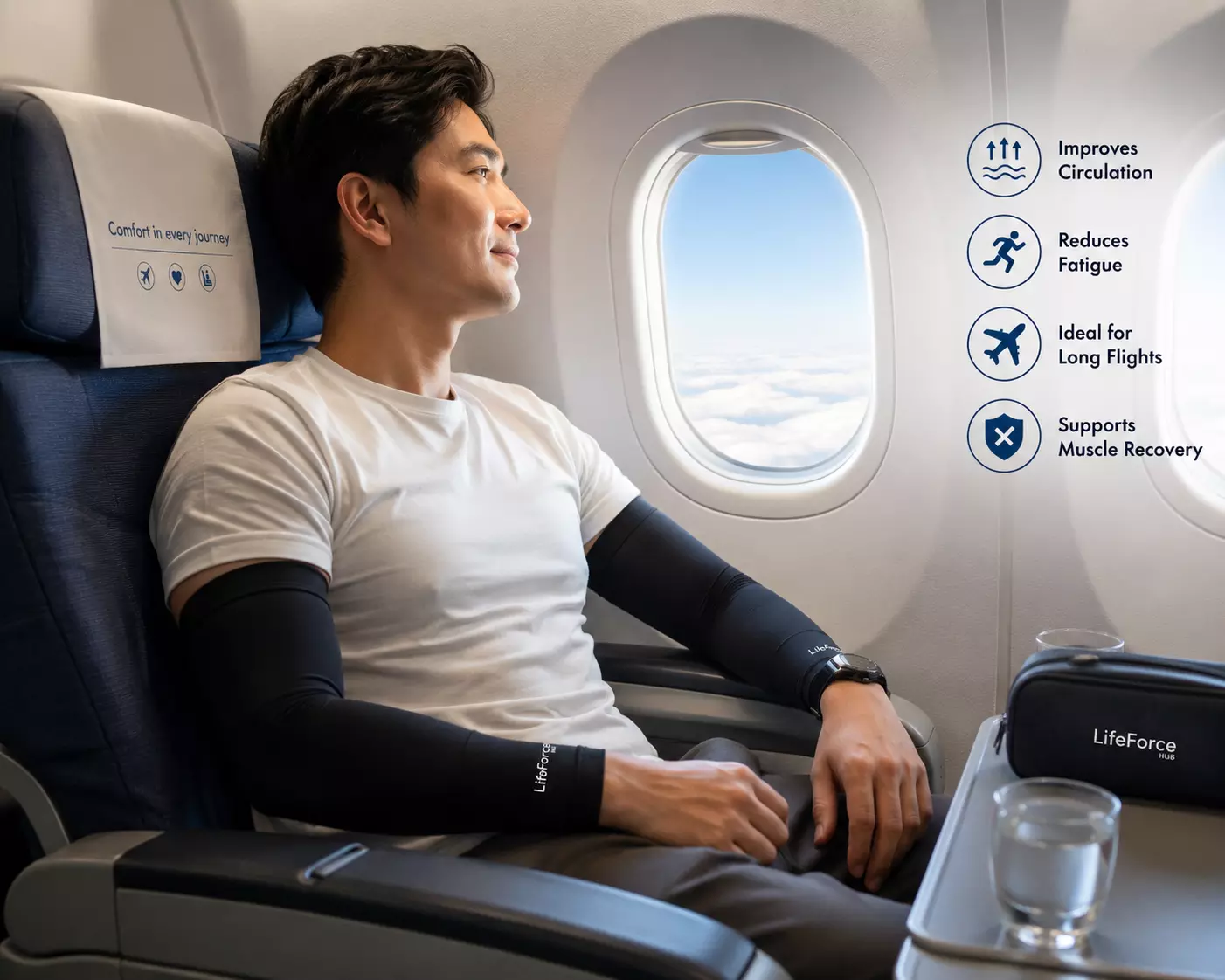
Do You Need a Compression Sleeve for Flying? Here's What Experts Recommend
Many lymphoedema therapists and travel medicine specialists usually recommend that if you have lymphoedema, you should wear a compression sleeve for flight.
Because of the changes in cabin pressure, less movement and sitting for long periods, fluid can build up in the arm. If you’re flying, wearing a snug-fitting compression garment helps to keep the lymph flowing and lessens the risk of swelling or an in-flight flare-up.
Why Air Travel Is a Risk Factor for Lymphedema Flare-Ups
Flying is not inherently dangerous for people with lymphedema, but the conditions inside an aircraft cabin create a unique combination of triggers.
Commercial aircraft are pressurized to simulate altitudes between 6,000 and 8,000 feet — lower than sea level pressure. This subtle change in cabin pressure can affect how fluid moves through your lymphatic system.
Add to that the fact that most passengers sit still for hours, and the result is reduced muscle activity that would normally help pump lymph fluid through the vessels.
For someone with compromised lymphatic drainage — whether from cancer treatment, surgery, or injury — this combination can push the system past its tolerance threshold.
Research published in lymphedema management guidelines consistently highlights air travel as one of the higher-risk activities for lymphedema patients, particularly those with upper limb involvement following breast cancer treatment.
What Experts Actually Recommend for Flying With a Compression Sleeve
The National Lymphedema Network (NLN), a leading authority on lymphedema care in the United States, recommends that patients with diagnosed lymphedema wear their compression garment during all flights, regardless of duration. This guidance applies even to short domestic trips.
Here is what certified lymphedema therapists typically advise:
- Wear your compression sleeve for the entire duration of the flight, including takeoff and landing when pressure changes are most significant
- Put on the sleeve before you reach the airport — not just before boarding
- If your flight exceeds four hours, consider a gauntlet or compression glove in addition to the sleeve
- Stay hydrated and perform gentle in-seat arm exercises every 45 to 60 minutes
- Avoid carrying heavy bags with the affected arm, especially when boarding or lifting luggage
The goal is not just to manage swelling that has already started — it is to prevent the conditions that allow swelling to begin.
Does Flight Duration Change the Recommendation?
Short Flights (Under 2 Hours)
Even for short-haul flights, compression is still advised if you have been diagnosed with lymphedema. The pressure differential during ascent and descent occurs on every flight regardless of how long you are in the air. Skipping the sleeve for a one-hour domestic hop may seem harmless, but repeated exposure without protection can accumulate over time.
Long-Haul Flights (4+ Hours)
This is where the risk increases meaningfully. Extended periods of inactivity, repeated pressure shifts, and dry cabin air all work against lymphatic circulation.
For long-haul travel, some therapists recommend a higher compression class garment — though this should always be discussed with your certified lymphedema therapist before travel, not decided independently.
International flights also introduce time zone changes and disrupted sleep, which can affect overall immune function and tissue response. Planning compression garment use as part of a broader travel protocol matters here.
Read: Arm Compression Sleeves for Golfers – Do They Improve
What to Look for in an Arm Sleeve for Flying
Not every compression product on the market is appropriate for lymphedema management during air travel. There is a meaningful difference between a general athletic compression sleeve and a medically graded garment designed for lymphedema.
When selecting an arm sleeve for flying, look for:
- Compression class: Class 1 (20–30 mmHg) or Class 2 (30–40 mmHg) garments are typically prescribed for lymphedema. Class choice depends on your individual stage and therapist guidance
- Custom fit vs. off-the-shelf: Custom-fitted sleeves provide more consistent gradient compression along the arm, which is important for managing fluid during travel
- Fabric breathability: Aircraft cabins are dry and warm. A moisture-wicking, breathable fabric reduces skin irritation during longer flights
- Silicone grip band: A sleeve that stays in place without rolling or bunching ensures consistent compression throughout the flight
Never purchase a compression sleeve based on size alone. Measurement by a trained fitter or lymphedema therapist significantly improves outcomes and reduces the chance of the garment causing a tourniquet effect if sized incorrectly.
Compression Sleeve for Air Travel: A Quick Reference Table
Flight Type
Recommended Action
Additional Notes
Short-haul (under 2 hrs)
Wear compression sleeve throughout
Focus on pressure changes at takeoff and landing
Medium-haul (2–4 hrs)
Wear sleeve + perform in-seat exercises
Hydrate consistently; avoid alcohol
Long-haul (4+ hrs)
Sleeve + consider gauntlet or glove
Consult therapist before travel; book aisle seat if possible
Multiple connecting flights
Maintain sleeve use throughout entire travel day
Bring a backup garment in carry-on luggage
Practical Tips for the Day of Travel
Managing lymphedema during air travel is about more than just the garment. Small decisions made throughout your travel day can either support or undermine your compression therapy.
- Book an aisle seat: This allows you to stand, stretch, and move your arms without disturbing other passengers
- Pack your sleeve in your carry-on: Checked luggage gets lost. Your compression garment should always travel with you
- Bring a second garment: If one gets damp from humidity or spills, you need a backup
- Avoid salty airport food: Excess sodium encourages fluid retention, which compounds the challenge your lymphatic system already faces mid-flight
- Tell the airline if needed: If you require extra mobility assistance or have a medical device concern, airlines generally accommodate passengers with documented medical needs
When You Might Not Need a Sleeve — And When You Absolutely Do
If you are at risk for lymphedema — for example, you have had lymph nodes removed but have not developed the condition — some clinicians take a more individualized approach rather than recommending universal precautions. The evidence on prophylactic compression use in at-risk (but not diagnosed) patients is mixed, and this remains an area of evolving guidance.
However, if you have a confirmed lymphedema diagnosis, the expert consensus is clear: flying without compression sleeve protection increases your risk of acute swelling, and recovery from a flare triggered by air travel can take weeks.
If you are unsure about your specific situation, a pre-travel consultation with a certified lymphedema therapist is the most valuable step you can take before booking a flight.
Making Compression Part of Your Travel Routine
Wearing a compression sleeve for air travel should feel as automatic as packing your passport. Once it becomes part of your pre-flight routine, it removes the guesswork and anxiety that many lymphedema patients experience around travel.
For those looking to deepen their understanding of compression sleeve options, how to care for garments, and what to look for in lymphedema-specific products, LifeForce Hub offers practical, expert-informed resources built specifically for people managing lymphedema. Their [guide to arm compression sleeves is a strong starting point if you are navigating sleeve selection for the first time.
Frequently Asked Questions
Should I wear a compression sleeve on every flight if I have lymphedema?
Yes. Lymphoedema specialists and groups such as the National Lymphoedema Network recommend that all travellers, regardless of distance, wear a compression sleeve on all flights.
Lymphatic flow can be affected by pressure changes during take-off and landing, even for short flights. Regular use avoids the gradual build-up of swelling that can happen after repeated unprotected air travel.
Can I fly without a compression sleeve if my lymphedema is mild?
Even mild lymphedema can flare during air travel due to cabin pressure changes and prolonged immobility. Whether your condition is mild or moderate, wearing compression during flight is advisable.
The severity of your condition should inform the compression class you wear, not whether you wear one at all. Always consult your lymphedema therapist before making this decision independently.