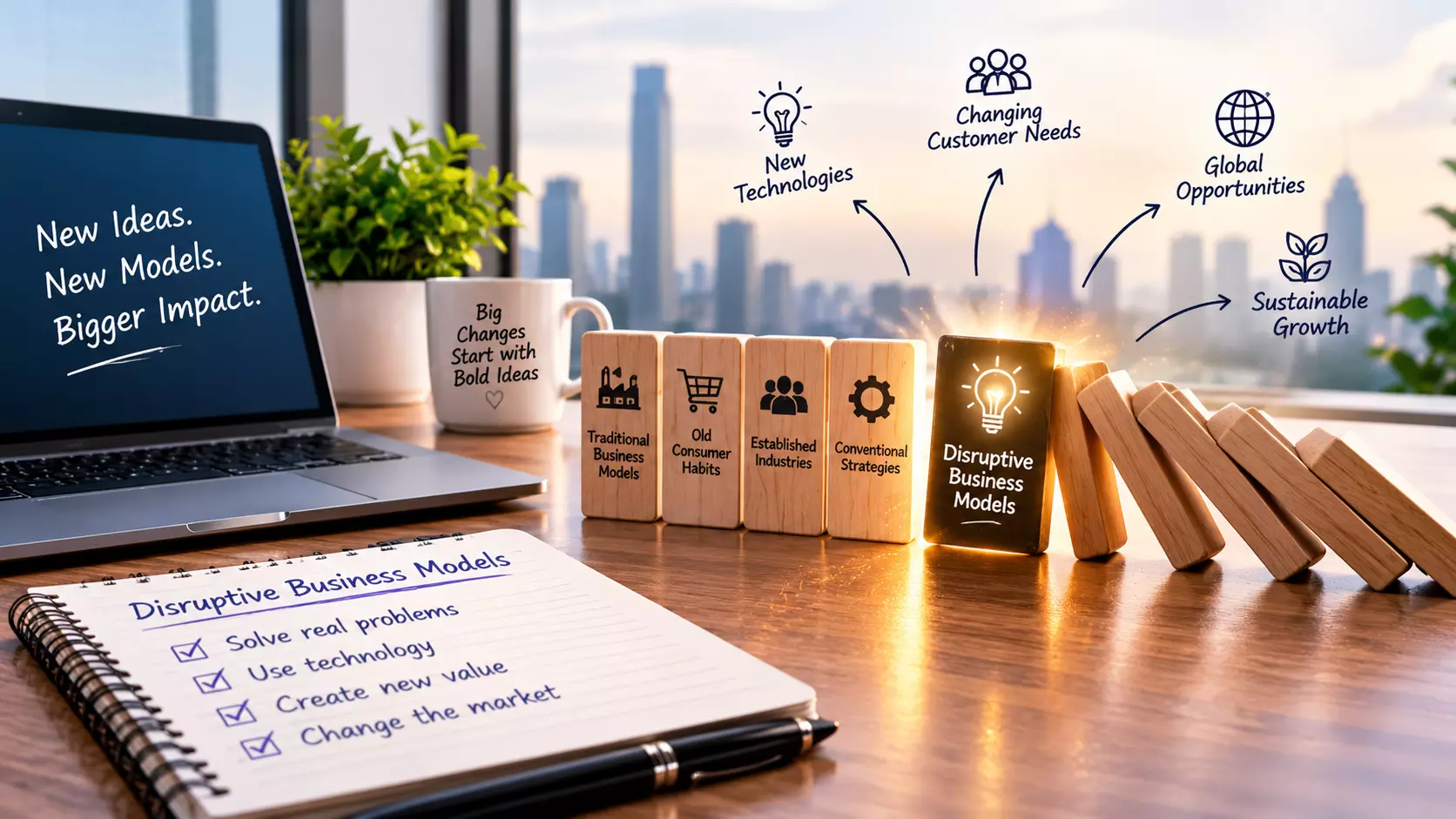
Disruptive Business Models - Transforming Industries Through Innovation
The business world continues to evolve as technology, customer expectations, and market conditions change. Companies that once dominated their industries can quickly lose their competitive advantage when new competitors introduce more convenient, affordable, or accessible solutions.
This shift has made innovative business strategies increasingly important for organizations seeking long-term success.
Disruptive Business Models introduce alternative ways of creating, delivering, and capturing value.
Rather than simply improving existing products or services, these approaches challenge established market practices and introduce solutions that may attract previously underserved customers. They often begin by targeting smaller market segments before expanding into mainstream markets.
Understanding this concept helps entrepreneurs, investors, and established organizations recognize opportunities, respond to competition, and develop strategies that support future growth.
Understanding the Concept of Disruptive Business Models
A disruptive business model changes how an organization operates and competes within its industry. It may replace traditional distribution methods, introduce new pricing structures, or use technology to make services more accessible.
For example, subscription-based platforms have changed how customers access entertainment, software, and educational resources.
Instead of purchasing individual products, consumers can pay recurring fees for continuous access. Similarly, digital marketplaces connect buyers and sellers without requiring traditional physical stores.
These approaches demonstrate that innovation is not limited to developing new products. It can also involve changing the entire process through which customers receive value.
An effective model focuses on solving genuine customer problems while creating an operational structure that can remain financially sustainable.
Key Characteristics of Disruptive Business Models
Several characteristics distinguish innovative business approaches from conventional commercial strategies.
1. Customer-Centered Solutions
Successful businesses identify customer frustrations and develop practical alternatives. They often focus on affordability, convenience, accessibility, and improved experiences.
2. Innovative Revenue Structures
Traditional companies may depend on direct product sales, while emerging organizations explore subscriptions, commissions, licensing, advertising, and usage-based payments.
3. Technology Integration
Digital platforms, automation, artificial intelligence, and cloud computing allow businesses to deliver services efficiently and reach wider audiences.
4. Operational Flexibility
Organizations need adaptable systems that respond to changing customer preferences and market conditions. Flexible operations also make
experimentation easier.
5. Market Accessibility
Innovative companies frequently serve customers who were previously overlooked because existing solutions were expensive, complicated, or geographically limited.
Together, these characteristics help organizations establish stronger market positions and develop alternative sources of competitive advantage.
How Disruptive Business Models Transform Traditional Industries
Industry transformation occurs when new approaches challenge established practices and encourage companies to reconsider how they serve customers.
The transportation sector provides a useful example. Digital ride-hailing platforms introduced convenient booking systems, cashless payments, and flexible transportation options. These services changed customer expectations and encouraged traditional providers to reconsider their operating methods.
Retail has experienced similar changes through online marketplaces. Customers can compare products, review sellers, and place orders without visiting physical stores. Businesses have responded by combining digital shopping experiences with traditional retail operations.
The financial services industry has also experienced significant transformation. Digital payment platforms and financial technology companies have introduced faster transactions and accessible financial services.
These developments demonstrate how Disruptive Business Models can influence entire industries by changing customer behavior, encouraging competition, and creating opportunities for new market participants.
Real-World Examples of Business Model Innovation
Several well-known companies demonstrate how alternative commercial strategies can create substantial market opportunities.
Netflix: The entertainment company moved from DVD rental services toward subscription-based digital streaming. This transition changed how audiences access television programs and movies.
Uber: Its platform connects passengers with independent drivers through digital applications. The approach introduced a different way to arrange transportation and manage customer payments.
Airbnb: The accommodation platform allows property owners to offer available spaces to travelers. It created an alternative to conventional hotel booking systems.
Spotify: Its subscription and advertising-supported services provide access to extensive music libraries without requiring customers to purchase individual albums.
These examples highlight the importance of understanding customer needs, adopting suitable technology, and developing revenue structures that support consistent service delivery.
Benefits of Adopting Disruptive Business Models
Organizations exploring innovative approaches can gain several strategic advantages.
- Greater Market Reach: Digital platforms help businesses connect with customers beyond their immediate geographical areas. This creates opportunities for expansion without requiring extensive physical infrastructure.
- Improved Customer Experience: Convenient ordering, personalized services, and flexible payment options can strengthen customer satisfaction and encourage loyalty.
- Operational Efficiency: Automation and digital processes reduce repetitive tasks, improve coordination, and support better resource management.
- New Revenue Opportunities: Alternative pricing strategies allow businesses to explore additional income sources and serve different customer segments.
- Competitive Differentiation: Companies offering distinctive solutions can establish stronger market identities and attract customers seeking alternatives to conventional services.
However, these advantages depend on effective implementation, reliable operations, and a clear understanding of market demand.
Challenges Businesses May Face During Implementation
Although innovative strategies offer opportunities, introducing a new business approach involves considerable challenges.
One major difficulty is customer acceptance. Consumers may hesitate to adopt unfamiliar services, particularly when established alternatives already meet their expectations. Businesses must communicate their value clearly and demonstrate reliability.
Financial limitations can also affect implementation. Developing digital platforms, hiring skilled professionals, and maintaining infrastructure require investment. Startups may struggle to secure sufficient funding before achieving consistent revenue.
Regulatory requirements present another consideration. Companies operating in healthcare, finance, transportation, and other regulated sectors must understand applicable laws and compliance obligations.
Competition can become intense when a new concept attracts attention. Established organizations may introduce similar services, invest in technology, or adjust their pricing strategies.
To manage these challenges, businesses should conduct market research, test their ideas, monitor performance, and make improvements based on measurable results.
Strategies for Building a Sustainable Disruptive Business Model
Developing an innovative business approach requires more than introducing a different product or service. Organizations need a structured strategy that connects customer demand with long-term financial performance.
Start by identifying an unresolved customer problem. Research should examine existing alternatives, pricing concerns, service limitations, and changing consumer expectations.
Next, develop a minimum viable product or service. A smaller initial launch allows businesses to collect feedback without committing excessive resources. Customer responses can reveal which features provide genuine value.
Revenue planning is equally important. Companies should determine how they will generate income, manage expenses, and maintain profitability as operations expand.
Technology should support the business strategy rather than become an unnecessary expense. Selecting suitable digital tools can improve productivity and simplify customer interactions.
Finally, establish measurable performance indicators. Customer retention, acquisition costs, revenue growth, operational expenses, and satisfaction levels provide useful information for evaluating progress.
A disciplined approach enables organizations to refine their strategies while maintaining financial and operational stability.
The Future of Disruptive Business Models
The future of business innovation will be influenced by artificial intelligence, automation, digital infrastructure, and changing consumer expectations.
Organizations are increasingly exploring personalized services, decentralized operations, and technology-enabled customer experiences.
Sustainability will also influence future business decisions. Companies may introduce circular production systems, product-sharing platforms, and resource-efficient services to address environmental concerns.
Small businesses and startups could benefit from accessible digital tools that reduce the cost of entering competitive markets. At the same time, established organizations will need to review their strategies regularly to remain relevant.
The long-term success of Disruptive Business Models will depend on their ability to solve meaningful problems, respond to market changes, and create measurable value for customers and businesses.
Frequently Asked Questions (FAQs)
1. What are Disruptive Business Models?
Disruptive Business Models are alternative approaches to creating and delivering value that challenge traditional industry practices and introduce new ways to serve customers.
2. Why are disruptive business strategies important?
They encourage innovation, improve customer accessibility, create competitive opportunities, and help organizations respond to changing market demands.
3. What industries can benefit from disruptive business models?
Retail, healthcare, transportation, education, entertainment, financial services, and technology can all benefit from innovative commercial approaches.
4. What are some examples of disruptive business models?
Subscription services, digital marketplaces, ride-hailing platforms, online streaming, and peer-to-peer accommodation services are common examples.
5. How can a company develop a disruptive business model?
A company can begin by identifying customer problems, researching market opportunities, testing a practical solution, selecting an appropriate revenue structure, and improving its strategy through customer feedback.