Discover the Rich Heritage of Guatemala Coffee Beans
In the world of coffee, some origins stand out not just for their flavor, but for the story behind every bean. Guatemala is one of those places a land where towering volcanoes, fertile soil, and centuries of tradition come together to produce coffee that’s as rich in history as it is in taste.
For coffee lovers, Guatemala offers more than just a satisfying brew. It offers a journey. Every sip tells of small farms tucked into misty highlands, of farmers whose families have cultivated the land for generations, and of a deep respect for both nature and craftsmanship. To truly appreciate Guatemala coffee beans, we need to travel back through time and into the landscapes where this treasured crop thrives.
A Legacy Rooted in the Highlands
Coffee first arrived in Guatemala in the 18th century, introduced by Jesuit missionaries. At first, it was planted in monasteries and used ornamentally in gardens, but over time, its potential as a commercial crop became clear. By the mid-1800s, Guatemala had embraced coffee as a key agricultural product, and it quickly became a cornerstone of the country’s economy.
The climate and geography of Guatemala proved perfect for coffee cultivation. The country’s high elevations, ranging from 1,200 to over 2,000 meters above sea level, slow the ripening of coffee cherries. This slower growth allows the beans to develop more complex flavors, making Guatemalan coffee prized among roasters and baristas worldwide.
Even today, many of Guatemala’s coffee farms remain family-owned, with knowledge and techniques passed down through generations. For these farmers, coffee isn’t just a crop it’s a heritage and a way of life.
The Land Shapes the Flavor
One of the most fascinating aspects of Guatemala coffee beans is how diverse they are in flavor. This diversity is thanks to the country’s unique geography. Guatemala sits within the “coffee belt,” but its microclimates vary dramatically from region to region. The combination of volcanic soil, ample rainfall, and distinct weather patterns means that coffee from one area can taste completely different from coffee grown just a few miles away.
Some of the most renowned coffee-growing regions include:
- Antigua: Nestled between three volcanoes, this region produces coffee with a rich, full body, gentle acidity, and notes of chocolate and spice.
- Huehuetenango: Known for high-altitude farms that produce bright, fruity coffees with floral aromas and crisp acidity.
- Cobán: A lush, rainy area where beans develop a softer acidity and delicate flavor, often with hints of cocoa.
These regional differences are so pronounced that coffee buyers often seek out beans from a specific area to match their preferred taste profiles.
The Role of Volcanic Soil
Volcanic soil is one of Guatemala’s secret weapons when it comes to coffee quality. The country’s many volcanoes, both active and dormant, have enriched the soil with minerals that nourish coffee plants. This mineral-rich foundation helps produce beans with deep, complex flavors and a distinct smoothness.
In areas like Antigua, volcanic ash also acts as a natural insulator, protecting coffee plants from sudden temperature changes. It’s one of the reasons Guatemalan coffee has such a consistent flavor profile year after year.
Farming with Care and Tradition
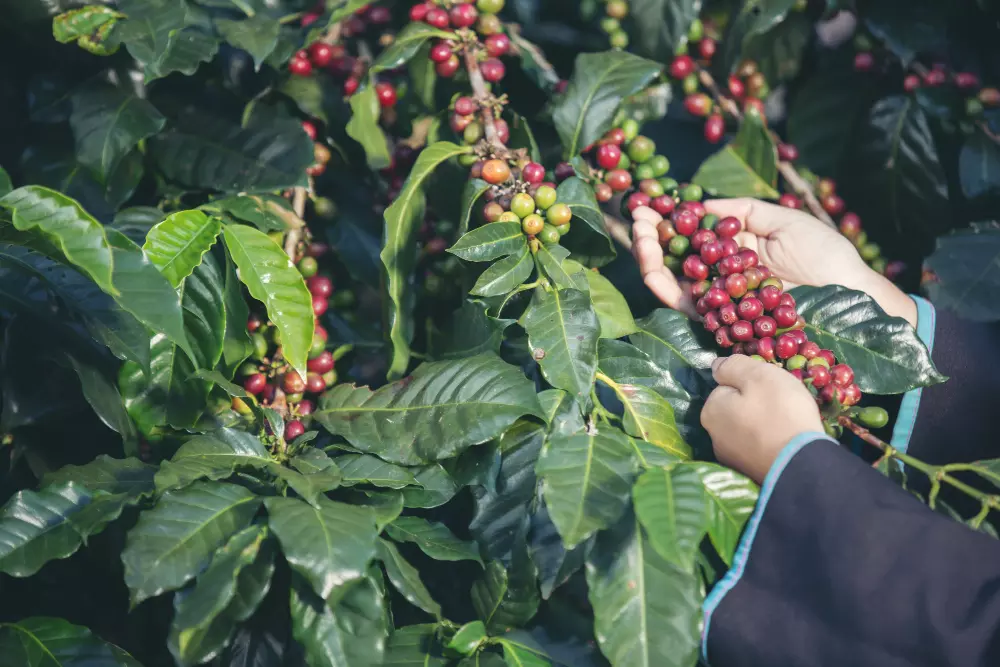
Guatemala’s coffee heritage is closely tied to traditional farming practices. Many farmers still cultivate their beans on small plots, handpicking only the ripest cherries. This labor-intensive method ensures that only the best fruit makes it into the final product.
In recent decades, a growing number of Guatemalan coffee producers have embraced organic and shade-grown methods. Shade-grown coffee involves planting coffee under a canopy of trees, which helps maintain biodiversity, protects the soil, and allows cherries to mature slowly. Organic farming avoids synthetic pesticides and fertilizers, relying instead on natural composting and pest control.
These sustainable practices not only produce exceptional coffee but also protect the environment and provide long-term stability for farming communities.
From Cherry to Cup
The journey of Guatemalan coffee beans from farm to cup is one of patience and precision. After being handpicked, the cherries go through one of several processing methods most commonly the washed (wet) process. In this method, the beans are separated from the fruit and fermented to remove the mucilage before being carefully dried.
The washed process is known for producing clean, bright flavors, which is why it’s favored in Guatemala. However, some regions also experiment with natural and honey processing, which can create sweeter and more fruit-forward profiles.
Once dried, the beans are hulled, sorted, and graded. Guatemalan coffee is often exported as “Strictly Hard Bean” (SHB), a designation for beans grown at high altitudes with denser structure and superior quality. From there, the beans are roasted to bring out their unique characteristics, whether that means highlighting a chocolatey body or amplifying a floral, citrusy brightness.
The Cultural Connection
In Guatemala, coffee is not just an export commodity; it’s a cultural touchstone. Many rural communities center their livelihoods around coffee farming, and the harvest season becomes a time of shared effort and celebration.
Traditional coffee preparation methods are still cherished in households, where beans are often roasted in small batches over open flames before being ground by hand. While much of Guatemala’s finest coffee is sent abroad, the pride in the crop remains deeply rooted in everyday life.
Coffee also plays a role in local festivals and markets, where bags of freshly roasted beans sit alongside textiles, spices, and produce. For visitors, sipping a cup of coffee in its country of origin perhaps overlooking the very slopes where it was grown is an unforgettable experience.
Why Coffee Lovers Seek Out Guatemalan Beans
The global demand for Guatemalan coffee beans isn’t just about quality though that’s certainly a big part of it. It’s also about authenticity. Coffee from Guatemala carries a distinct sense of place, shaped by centuries of cultivation and a deep respect for the land.
When you choose Guatemalan coffee, you’re tasting the result of volcanic soils, high-altitude climates, careful handpicking, and traditional processing methods. You’re also supporting farming communities that have made coffee their life’s work for generations.
For many coffee enthusiasts, this connection to heritage is just as satisfying as the flavors themselves. There’s something special about knowing that your morning cup has a story one that began on a misty hillside halfway across the world.
Bringing Guatemala to Your Mug
If you want to experience Guatemalan coffee at its best, look for beans that highlight their region of origin, such as “Antigua SHB” or “Huehuetenango SHB.” Buying whole beans and grinding them just before brewing will help preserve the complex flavors that make Guatemalan coffee so prized.
Consider trying different roasts to see how they bring out various characteristics. A medium roast often showcases the balance between acidity and body, while a darker roast can highlight the chocolate and spice notes that many Guatemalan coffees are known for.
Whichever way you brew it pour-over, French press, espresso take a moment to savor the aroma before that first sip. You’ll notice the subtle layers, from floral hints to nutty undertones, each telling a part of Guatemala’s coffee story.
Final Thoughts
The rich heritage of Guatemala coffee beans is a blend of natural gifts and human dedication. From the volcanic soil and high mountain air to the farmers who have tended the land for centuries, every element contributes to a cup that’s as meaningful as it is delicious.
In a world where coffee is often treated as a quick caffeine fix, Guatemalan coffee invites us to slow down. To appreciate the journey of the bean, the tradition behind the harvest, and the beauty of a flavor shaped by history and place.
Next time you brew a cup from Guatemala, think of the hands that picked it, the slopes where it grew, and the generations that have kept this heritage alive. You might just find that your coffee tastes even richer when you know the story it carries.