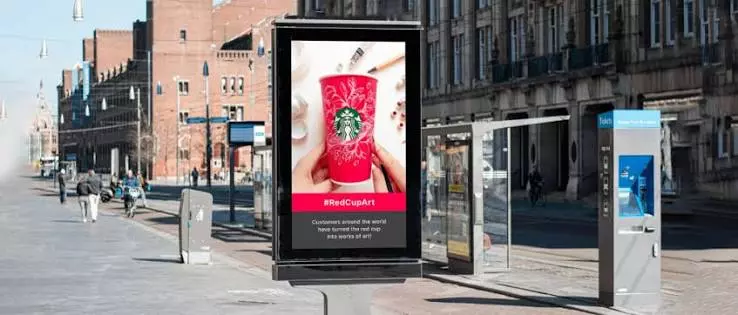
Digital Outdoor Media Transforms Brand Visibility Across Fast-Growing GCC Cities
Digital out-of-home advertising is reshaping how brands communicate with audiences across shopping centres, airports, roads, metro stations, entertainment districts, offices, and public spaces.
Unlike static outdoor formats, digital displays can deliver moving visuals, scheduled messages, and location-specific campaigns.
Rapid urban development, tourism, retail expansion, and investment in smart infrastructure are strengthening the role of digital outdoor media across GCC countries.
A recent study by MarkNtel Advisors highlights that the GCC digital out-of-home advertising sector was valued at USD 572 million in 2025.
It is projected to grow from USD 612 million in 2026 to USD 952 million by 2032, registering a CAGR of 7.64% during 2026–2032. Saudi Arabia held the largest regional share of 43% in 2026.
Digital Screens Create More Flexible Campaigns
Traditional billboards generally display one advertisement for a fixed period. Digital screens allow media owners to rotate several campaigns throughout the day, enabling advertisers to adapt messages according to location, time, audience movement, events, or commercial priorities.
Digital billboards and LED screens held a 48% share of the GCC sector in 2026. Their visibility makes them suitable for major roads, commercial districts, transport terminals, and high-footfall public locations.
Advertisers can also update creative material remotely, reducing the time required to replace printed displays and allowing campaigns to respond quickly to changing conditions.
Urban Growth Expands High-Visibility Locations
GCC cities continue to develop large-scale retail, tourism, transport, residential, and entertainment projects.
These environments create additional locations for digital displays, including shopping-centre entrances, airport terminals, roadside structures, railway platforms, sports venues, and mixed-use developments.
DOOH is particularly relevant in spaces where audiences spend time waiting, travelling, shopping, or attending events.
The Interactive Advertising Bureau explains that digital out-of-home includes multiple screen formats, ranging from digital billboards and taxi displays to airport, gym, and waiting-room screens. This variety allows advertisers to select locations according to campaign context and likely audience behaviour.
Retailers Connect Advertising with Physical Visits
Retail represented a 33% share of GCC digital outdoor advertising demand in 2026. Shopping centres, supermarkets, restaurants, luxury stores, and entertainment venues use digital displays to promote products, announce events, guide visitors, and support seasonal campaigns.
Screens positioned near commercial locations can influence audiences close to the point of purchase. Retailers may adapt content according to store hours, product availability, events, or different periods of the day. QR co
des and mobile integrations can also connect outdoor messages with digital product information, booking platforms, loyalty programmes, or online stores.
Programmatic Buying Improves Campaign Control
Programmatic DOOH uses automated technology to buy advertising inventory according to defined conditions.
Advertisers can select screens, locations, schedules, audience characteristics, or campaign triggers through digital platforms rather than arranging every placement manually.
The Out of Home Advertising Association of America notes that programmatic outdoor advertising offers scalability and flexible campaign management, together with stronger targeting and measurement capabilities.
These tools can help advertisers coordinate outdoor activity with mobile, social, search, and online display campaigns.
Programmatic systems also allow campaigns to respond to real-time conditions. A restaurant may promote breakfast during morning hours, while an entertainment venue can advertise upcoming events near relevant transport routes.
Effective implementation depends on reliable inventory data, consistent technical standards, and suitable audience controls.
Read: Digital Marketing on a Budget: Your Guide to Services in Mohali
Measurement Becomes More Data-Driven
Outdoor advertising was historically evaluated through estimates of traffic and location visibility. Modern DOOH systems can combine screen data, mobility patterns, audience modelling, campaign delivery records, and attribution methods to provide a more detailed view of performance.
The IAB’s digital out-of-home measurement guidance covers audience targeting, programmatic buying, data collection, and attribution.
It also identifies inconsistent measurement practices as an industry challenge, highlighting the need for shared methods that allow advertisers and media owners to evaluate campaigns more consistently.
Creative Quality Shapes Audience Attention
Digital displays provide motion, animation, colour, and rapid message changes, but creative material must remain easy to understand.
Audiences may see roadside advertisements for only a few seconds, making clear typography, limited wording, strong contrast, and recognisable imagery important.
Content must also fit the location. Advertising displayed in an airport may require a different pace and level of detail from a roadside billboard or shopping-centre screen.
Media owners and advertisers must balance visual impact with public-safety requirements, brightness controls, local regulations, and surrounding architecture.
Smart Cities Support Long-Term Development
The GCC digital out-of-home advertising sector is developing alongside smart-city investment, transport expansion, tourism, retail growth, and advanced digital infrastructure.
These changes are creating more connected public environments in which advertising content can be scheduled and managed through central platforms.
Future development will depend on screen availability, programmatic integration, reliable audience measurement, creative quality, data governance, and regulatory compliance.
As GCC cities become more digitally connected, DOOH will continue linking physical locations with flexible and measurable brand communication.