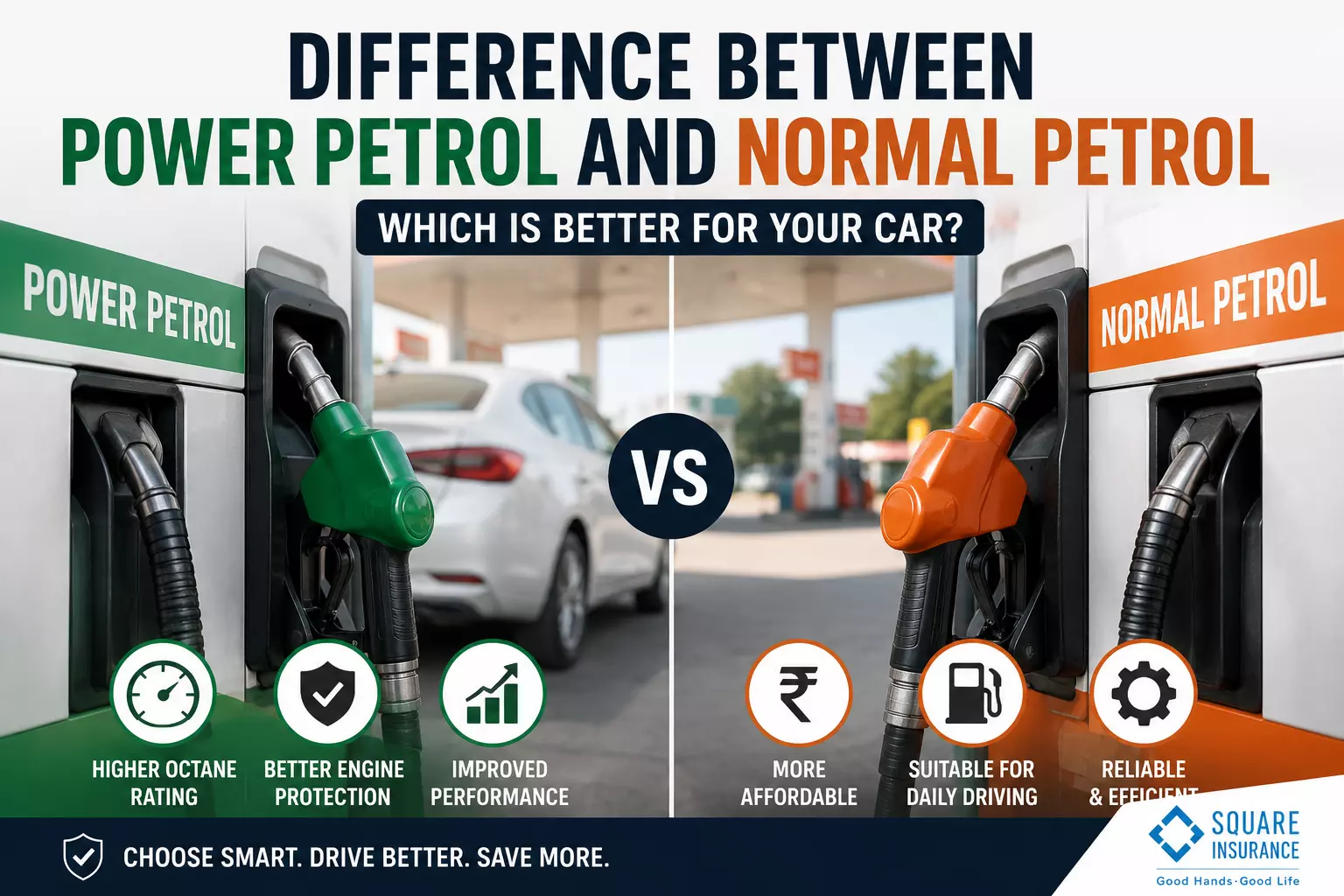
Difference Between Power Petrol and Normal Petrol - Mileage, Performance & Cost
Choosing the right petrol at the fuel station can be confusing, especially when you see options such as normal petrol and premium or power petrol. Many drivers wonder whether paying extra for power petrol actually improves mileage, performance or engine life.
The difference between power petrol and normal petrol mainly comes down to octane rating, additives and pricing.
Premium petrol is generally designed to provide better resistance to engine knocking and may be more beneficial in vehicles with high-compression or performance-oriented engines.
For most everyday cars designed to run on regular petrol, however, the real-world benefits can be limited.
Here is everything you need to know about normal petrol versus power petrol, including mileage, performance and cost.
What Is Normal Petrol?
Normal petrol, commonly called regular petrol, is the standard fuel available at most fuel stations. It is formulated to meet the fuel requirements of regular petrol engines and is suitable for the majority of cars, motorcycles and scooters sold in India.
Regular petrol generally has a lower octane rating than premium petrol. Octane rating indicates how resistant the fuel is to premature combustion, commonly known as knocking. It does not directly indicate how much energy the fuel contains or guarantee better mileage.
For a vehicle whose manufacturer recommends regular petrol, using normal petrol is generally sufficient for everyday driving.
What Is Power Petrol?
Power petrol is a term commonly used by fuel companies for their premium petrol. Depending on the brand, it may have a higher octane rating and a package of additional additives designed to support fuel-system cleanliness and combustion performance.
The exact formulation differs between fuel companies, so not every product marketed as premium or power petrol is identical. Some premium fuels are specifically positioned for vehicles that require or benefit from higher-octane fuel.
The most important thing to remember is that higher octane does not automatically mean higher power. The benefit depends heavily on the engine's design and the fuel recommended by the manufacturer.
Power Petrol vs Normal Petrol: What Is the Main Difference?
The biggest technical difference is usually the octane rating. A higher octane fuel is more resistant to knocking under conditions that can cause premature combustion.
Premium petrol may also contain different additive packages. These additives can be intended to help keep certain engine and fuel-system components cleaner, although the exact benefits vary by product and usage.
Normal petrol, on the other hand, is generally the more economical choice for vehicles designed to operate on regular fuel.
Read: Tata Safari Mileage: Real-World Performance & Fuel
Does Power Petrol Give Better Mileage?
This is one of the most common questions among Indian car owners.
Power petrol does not automatically deliver better mileage. If your vehicle is designed and tuned to run on regular petrol, switching to premium fuel may produce little or no noticeable improvement in fuel economy.
In some engines, especially those designed to take advantage of higher-octane fuel, premium petrol can help the engine operate closer to its intended combustion parameters. This may contribute to better efficiency under certain driving conditions.
However, mileage depends on many factors, including driving style, traffic, tyre pressure, vehicle load, air-conditioning use, road conditions and engine condition. Therefore, paying more for premium petrol solely to increase mileage may not always make financial sense.
Does Power Petrol Improve Performance?
Premium petrol can improve performance when the engine is designed or calibrated to benefit from its higher octane rating.
A high-compression or turbocharged petrol engine may be more sensitive to fuel quality and knocking. In such vehicles, using the recommended higher-octane fuel can help the engine maintain the ignition timing and operating conditions intended by the manufacturer.
For an ordinary naturally aspirated petrol car designed for regular petrol, you should not expect a dramatic increase in acceleration or horsepower simply by filling the tank with power petrol.
In simple terms, premium fuel can help a compatible engine perform as designed, but it does not turn a regular engine into a high-performance engine.
Which Petrol Is More Expensive?
Power petrol is usually more expensive than normal petrol. The price difference varies according to the fuel company, location and market conditions.
For occasional use, the additional cost may not be significant. But if you drive long distances every month, consistently choosing premium petrol can noticeably increase your fuel bill.
This is why it is important to consider the manufacturer's fuel recommendation before making premium petrol a regular purchase.
Is Power Petrol Better for Your Car?
Not necessarily.
The best petrol for your car is the fuel that matches the manufacturer's recommended octane rating and specifications. If your owner's manual specifies regular petrol, there is generally no need to pay extra for premium fuel unless you have a specific reason to do so.
If the manufacturer recommends a higher-octane petrol, or your vehicle's engine is specifically designed to benefit from it, premium fuel can be a more appropriate choice.
Always check the owner's manual or the fuel recommendation provided by the vehicle manufacturer rather than relying only on fuel-station marketing.
Power Petrol vs Normal Petrol: Which Should You Choose?
For most budget-conscious drivers with everyday petrol cars, normal petrol is the sensible option when it meets the manufacturer's specifications. It keeps running costs lower without sacrificing the intended performance of the vehicle.
Power petrol makes more sense for vehicles that specifically recommend higher-octane fuel, particularly certain turbocharged, high-compression or performance-focused engines.
If you are unsure, check the recommended octane rating in your car's owner's manual. This is a more reliable guide than assuming that premium petrol is always better.
Final Verdict
The difference between power petrol and normal petrol is primarily related to octane rating, additives and price.
Power petrol can offer advantages in engines designed to benefit from higher-octane fuel, particularly in terms of knock resistance and maintaining intended engine performance.
However, premium petrol does not automatically provide significantly better mileage or more power in every car. For a vehicle designed for regular petrol, normal petrol is usually the more cost-effective choice.
Ultimately, follow your car manufacturer's fuel recommendation. If your engine does not require premium petrol, spending extra on it may offer little measurable benefit for everyday driving.