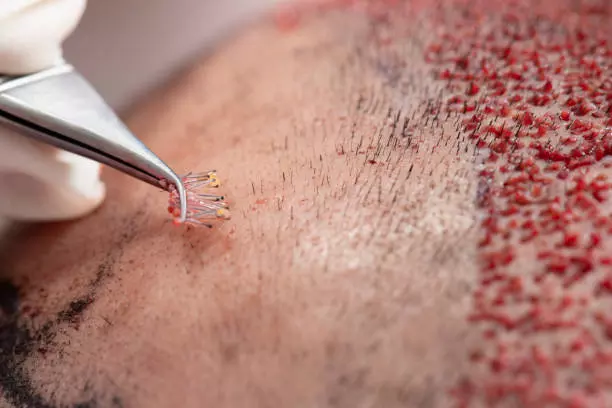
DHI Direct Hair Implant in Dubai for Widening Part Lines
A widening part line can make the scalp increasingly visible even when the surrounding hair still appears relatively full. DHI Direct Hair Implant in Dubai can be considered when reduced density along the parting area creates a persistent contrast between the hair and scalp.
The goal is not simply to place more follicles into the area. Treatment planning needs to consider the direction of existing hair, the width of the visible part, donor availability, and the possibility of continuing native hair loss.
Why a Widening Part Line Becomes More Noticeable
The part line naturally exposes a narrow section of scalp, so even modest changes in density can become visually obvious.
As surrounding hairs become farther apart, light reaches the scalp more easily. This can make the area appear thinner under bright indoor lighting, sunlight, or photography.
Hair Separation Can Affect Appearance
Hair does not need to disappear completely for a part to look wider.
A gradual reduction in follicular density can create more space between individual shafts, increasing scalp visibility without producing an obvious bald patch.
Direction Matters Along the Part
Existing hairs usually follow a recognizable directional pattern.
Newly implanted follicles need to complement that pattern rather than creating a uniform row of vertically oriented hairs.
DHI Direct Hair Implant in Dubai for Part-Line Density
DHI uses extracted follicular units that are implanted into planned recipient sites.
For a visible part line, the clinician can evaluate where additional density may provide useful coverage while avoiding unnecessary disruption of existing follicles.
Strategic Placement Instead of Uniform Filling
Some areas may need more reinforcement than others depending on the patient's existing hair distribution and the degree of scalp visibility.
Protecting Existing Native Hair
Native follicles may still be producing healthy hair within the treatment area.
Recipient-site planning should therefore account for existing follicles and minimize unnecessary trauma while placing new grafts where they can contribute meaningful coverage.
How Clinicians Assess a Widening Part
A consultation usually involves more than simply looking at the part from above.
The clinician may examine the scalp under magnification and assess the density and characteristics of the surrounding hair.
Important Assessment Factors
- Width of the visible part
- Density on either side
- Hair calibre
- Follicular-unit composition
- Direction of existing growth
- Donor density
- Pattern of thinning
- Evidence of ongoing progression
- Previous scalp procedures
These observations help distinguish an isolated density concern from a broader hair-loss pattern.
Creating Coverage Without Making the Part Look Artificial
A natural-looking result depends on integration with the existing hair.
If grafts are placed too uniformly, the transition can appear different from naturally distributed follicles.
Following Existing Growth Direction
The angle of implantation should generally complement neighbouring hair.
This becomes especially important where the recipient area connects with thicker surrounding strands.
Balancing Density With Donor Supply
The available donor area is limited.
A responsible treatment plan considers current needs alongside the possibility that additional thinning may occur elsewhere in the future.
The exact approach depends on follicle density, scalp condition, and the clinician's assessment.
Read: Expert Hair Restoration Options in Riyadh
DHI Direct Hair Implant in Dubai Treatment Roadmap
Review the part-line pattern
The clinician examines the width, density, and distribution of visible scalp.
Assess surrounding follicles
Existing hair characteristics and growth directions are documented.
Evaluate the donor region
Available follicular supply is assessed before defining treatment scope.
Map recipient zones
Areas requiring reinforcement are identified rather than treating the entire scalp uniformly.
Extract suitable grafts
Follicular units are collected according to the planned treatment strategy.
Implant into selected sites
Grafts are positioned to complement the direction and density of existing hair.
Monitor maturation
Transplanted follicles develop progressively as part of their normal growth cycle.
Lighting, Photography, and Part-Line Visibility
Some patients notice their widening part most clearly in photographs.
Direct overhead lighting can create stronger scalp contrast, while wet or closely separated hair can make the part appear broader.
This does not necessarily mean the underlying density has suddenly changed. A clinical examination can help distinguish lighting-related visibility from genuine progression.
Maintaining the Result Over Time
A transplant redistributes donor follicles into areas requiring coverage. It does not automatically prevent native hair from continuing to thin.
For that reason, long-term planning may include monitoring surrounding hair and discussing appropriate medical options with a qualified clinician when indicated.
A More Individual Approach to Part-Line Restoration
A widening part is a specific density problem, not simply a request for more hair everywhere.
DHI planning should account for scalp visibility, follicular direction, existing native hair, donor capacity, and future changes. For individualized assessment and treatment planning, patients can explore Tajmeels Clinic.