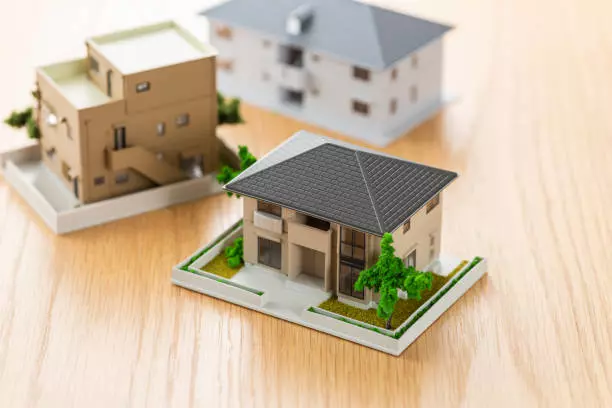
Designing for the Future: Trends Shaping Modern ADU Plans
A Small Structure With a Surprisingly Large Conversation Around It
There's a particular kind of homeowner who builds a small detached unit in the backyard with every intention of housing an aging parent — and then, three years later, is renting it to a young professional while the parent ended up preferring a retirement community after all. The unit still makes financial sense.
The situation just evolved. And the design that accommodated one scenario adapted reasonably well to another, which was either good planning or good luck, depending on how carefully the original layout was thought through.
That kind of flexibility is increasingly what separates a well-considered accessory dwelling from one that frustrates its owner within a few years of being built. The conversation around ADU plans has matured significantly — past the initial wave of "
just get something permitted and built" into something more nuanced, where design decisions are being weighed against long-term adaptability, energy costs, regulatory shifts, and the lived experience of whoever ends up occupying the space.
Flexibility Is the Dominant Design Philosophy Right Now
Not a trend in the passing sense. More of a recalibration.
For a long time, ADU design was fairly prescriptive — a bedroom, a bathroom, a compact kitchen, done. The logic was efficiency: maximise livable area within a small footprint, keep costs manageable, satisfy the permit.
That logic still applies. But designers and homeowners who've been through the process a few times are increasingly asking a different question upfront: who might actually live here over the next ten to fifteen years?
The answer changes the design meaningfully. A unit built for a college-age child who'll use it for four years before moving out has different priorities than one intended to eventually serve an elderly relative with mobility considerations.
Multi-generational thinking is reshaping spatial decisions — wider doorways that aren't obviously accessible-looking but meet the clearance requirements, bathrooms positioned to allow future grab bar installation without hitting studs in the wrong places, ground-floor sleeping areas that allow single-level living if needed.
None of this costs dramatically more at the design stage. But retrofitting for accessibility after a unit is built? Expensive and disruptive. Designing for it quietly from the start is one of those decisions that looks very smart in hindsight.

The Energy Performance Expectation Has Shifted
Small structures are actually easier to make energy-efficient than large ones — the ratio of insulated envelope to conditioned volume works in their favour. But that advantage only materialises if the design takes it seriously, and a surprising number don't.
Mini-split systems have become near-standard for ADU heating and cooling, and for good reason. They're efficient, they don't require ductwork (which is both a cost saving and a spatial one in a compact unit), and they allow independent temperature control.
Pairing them with proper insulation, thermally broken window assemblies, and airtight construction details produces a unit that's genuinely cheap to operate — which matters when someone is paying rent, or when the owner is covering utilities as part of a family arrangement.
Passive design principles are being incorporated more thoughtfully too. Window placement for cross-ventilation, roof overhangs calculated for the specific latitude to shade summer sun while allowing winter gain, orientation of the primary living areas.
These decisions add essentially nothing to construction cost when made at the design stage.
They do require an architect or designer who's actually thinking about them rather than just dropping windows wherever they look balanced on an elevation drawing.
Solar-ready design — conduit runs, panel mounting points, electrical panel capacity — is becoming a standard inclusion in better ADU designs even when panels aren't installed immediately. The logic is obvious once stated: the cost of adding solar-readiness during construction is marginal; the cost of retrofitting it later is not.
Regulatory Awareness as a Design Input
ADU regulations have changed substantially in many jurisdictions over the past five or six years, particularly in California, where state-level preemption has pushed localities to significantly relax restrictions on size, setbacks, and owner-occupancy requirements. Other states have followed with varying degrees of liberalisation.
What this means practically is that design decisions that were once constrained by strict local rules are now more open — and designers who understand the current regulatory environment can push toward more useful outcomes than those working from outdated assumptions.
A unit that was once capped at 640 square feet might now legally be 1,200. A design that avoided a second story because of height limits might have more flexibility than the owner realises.
On the other side, some jurisdictions have tightened rules around short-term rentals operating in ADUs, which affects how some owners approach design — particularly around privacy, separate entrances, and acoustic separation between the main house and the unit. Sound attenuation details that once felt like a premium add-on are now a standard design conversation.
Read: Discover Your Dream Home at Arvind Aqua City Kalyangadh
Aesthetic Integration Is Finally Being Taken Seriously
For a long time the visual relationship between an ADU and the primary residence was treated as secondary to function and cost. The result, on many properties, is a detached unit that reads as a utilitarian box dropped into the yard — clearly added later, clearly not part of any coherent site vision.
That's changing. Homeowners investing $200,000 or more in a backyard structure are increasingly unwilling to accept something that looks like a storage shed got ambitious. Material choices, roof forms, window proportions, and landscape integration are being considered as part of the overall site design rather than afterthoughts.
For anyone developing backyard home plans at this level of investment, the design approach increasingly mirrors what would be applied to a primary residence — a coherent architectural language, site-specific decisions, and attention to how the unit reads from the street and from the main house simultaneously.
It costs more in design fees. The outcome is measurably better in resale terms and in daily livability.

What the Next Phase of ADU Design Looks Like
The units being designed right now — the thoughtful ones, anyway — are smaller than they look, more adaptable than they appear, and quieter to operate than most people expect. They're designed by people who've absorbed the lessons of the first wave of ADU construction and adjusted accordingly.
The shift from "what can fit" to "what will actually work well over time" is the defining change. It shows up in flexible floor plans that don't lock occupants into a single use pattern, in mechanical systems chosen for operating cost rather than just installation cost, in details that accommodate future changes without requiring demolition.
That's what designing for the future actually means in this context. Not smart home technology or modular construction systems, though those conversations are happening too. Just buildings that were thought through carefully enough to remain useful as circumstances change.
Turns out that's harder than it sounds — and more valuable than most people appreciate until they're living with the consequences of a design that wasn't.