Designing Enterprise-Scale Customer Data Models
Modern enterprises depend heavily on customer data to drive decisions, personalization, and growth. However, as organizations expand, customer data becomes fragmented across multiple systems. This fragmentation creates inconsistent records, duplication, and poor visibility into customer behavior. As a result, businesses struggle to build a unified understanding of their customers.
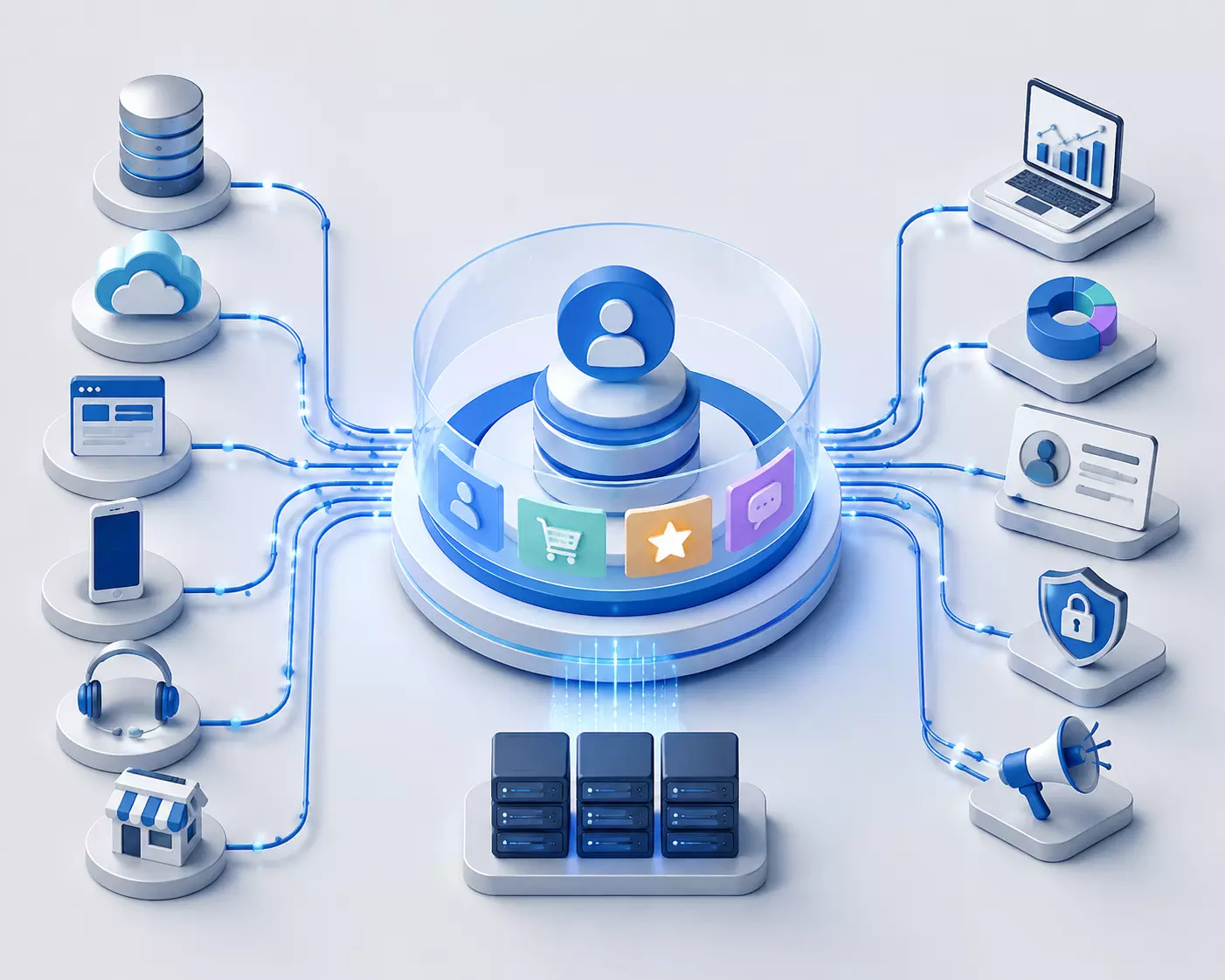
Designing enterprise-scale customer data models solves this problem by creating structured, consistent, and scalable ways to manage customer information. These models connect data from different sources and present a single view of the customer. Moreover, they help organizations maintain accuracy, compliance, and performance across systems.
In practice, large enterprises often collaborate with system integrators and platforms to connect CRM, marketing, and analytics ecosystems. In such setups, a Salesforce Integration company often plays a key role in aligning customer data flows across enterprise applications, ensuring that identity, behavior, and transaction data remain synchronized in real time.
Understanding Enterprise Customer Data
Customer data in large organizations comes from many touchpoints. These include websites, mobile apps, sales systems, support platforms, and external partners. Each system collects different types of information, which often leads to inconsistency.
Typically, customer data is categorized into identity data, behavioral data, and transactional data. Identity data includes names, emails, and IDs. Behavioral data includes clicks, browsing history, and engagement patterns. Transactional data includes purchases, invoices, and subscriptions.
However, managing these datasets across multiple platforms creates duplication and mismatched records. Therefore, enterprises must design models that can unify and standardize data at scale.
Core Principles of Enterprise Data Modeling
Enterprise data models must follow clear principles to remain scalable and usable. First, they must prioritize a single customer view across all systems. This ensures that each customer has one unified identity.
Second, models must balance normalization and performance. Highly normalized models reduce duplication but can slow down queries. On the other hand, denormalized structures improve speed but increase storage complexity.
Third, data ownership must be clearly defined. Each domain should manage its own data while contributing to a shared ecosystem. This prevents conflicts and ensures accountability.
Finally, scalability must be considered from the beginning. As data volume increases, the model should handle growth without major redesign.
Key Components of Customer Data Models
Enterprise customer data models consist of several core components. The first is the identity layer. This layer assigns a unique identifier to each customer. It ensures that records across systems map to a single entity.
Next is the profile layer. This contains both static and dynamic attributes such as demographics, preferences, and account status.
Another important component is the interaction layer. It stores all customer activities, including clicks, support tickets, and communications. This layer is often event-driven and continuously updated.
Additionally, relationship data plays a major role. It defines how customers relate to organizations, households, or accounts. This is especially important in B2B environments.
Lastly, lifecycle data tracks the customer journey. It includes stages like lead, active user, and churned customer.
Architecture Patterns for Large-Scale Systems
There are several architecture patterns used in enterprise environments. A centralized data warehouse is one of the oldest approaches. It consolidates structured data into a single repository for reporting and analytics.
However, modern systems increasingly use data lakes or lakehouse architectures. These allow both structured and unstructured data to be stored together. They also support flexible querying.
Event-driven architecture is another popular approach. It captures real-time customer actions and processes them as streams. This enables faster decision-making and personalization.
Many enterprises also adopt Customer Data Platforms. These systems unify data from multiple sources and provide a single interface for activation and analytics.
In practice, hybrid architectures are most common. They combine batch processing for historical data and streaming for real-time insights.
Data Integration Layer
- The integration layer connects different systems into the customer data model. It is responsible for collecting, transforming, and synchronizing data.
- ETL processes are traditionally used for this purpose. However, modern systems increasingly rely on ELT approaches due to scalability and cloud adoption.
- APIs also play a major role in integration. They allow real-time communication between applications. Additionally, streaming tools enable continuous data flow with minimal delay.
- Deduplication is another critical function. It ensures that duplicate records do not enter the system. This improves data accuracy and consistency.
- Legacy systems often create integration challenges. Therefore, careful mapping and transformation rules are required to align old and new systems.
Identity Resolution and Golden Records
- Identity resolution is one of the most important aspects of customer data modeling. It ensures that multiple records representing the same person are merged correctly.
- Deterministic matching uses exact identifiers such as email addresses or phone numbers. Probabilistic matching uses patterns and probabilities to identify likely matches.
- Once matches are identified, a golden record is created. This record represents the most accurate version of a customer’s data.
- However, maintaining golden records is not a one-time process. Continuous updates and conflict resolution rules are required to keep data accurate.
Read: Top 8 Salesforce Managed Services Providers in 2026
Data Quality and Governance
- Data quality determines the reliability of the entire model. Therefore, validation rules must be applied at the point of entry.
- Data lineage tracking is also essential. It helps organizations understand where data originated and how it has changed over time.
- Metadata management supports documentation and discoverability of datasets. This improves collaboration between teams.
- Master Data Management systems often support governance by enforcing consistency rules across domains. Additionally, clear roles ensure accountability for data accuracy.
Performance and Scalability Considerations
- Enterprise systems must handle large volumes of data efficiently. Partitioning and sharding help distribute data across multiple nodes.
- Indexing improves query performance, especially for large customer tables. Caching frequently accessed data also reduces load on databases.
- High-velocity event streams require optimized processing pipelines. These pipelines must handle spikes without delays or data loss.
- Cost optimization is another key concern. Efficient storage and compute usage can significantly reduce operational expenses.
Security and Compliance
- Customer data must be protected at all times. Encryption ensures that data remains secure both at rest and in transit.
- Role-based access control restricts sensitive data to authorized users only. This reduces the risk of data breaches.
- Compliance with regulations such as GDPR and CCPA is also necessary. These laws require proper handling of personal data and user consent.
- Audit logs provide transparency by tracking all data access and modifications. This helps organizations meet regulatory requirements.
Real-Time Use Cases
- Modern enterprises rely on real-time customer data for many applications. Personalization engines use live data to recommend products and content.
- Fraud detection systems analyze behavior patterns to identify suspicious activity quickly. Similarly, marketing automation systems trigger campaigns based on user actions.
- Customer 360 dashboards provide a complete view of customer interactions. These dashboards support faster decision-making.
- Real-time systems improve responsiveness and customer satisfaction significantly.
Common Pitfalls in Data Modeling
- Many organizations face challenges when designing customer data models. One common mistake is over-engineering the initial system. This leads to unnecessary complexity.
- Another issue is weak governance. Without clear ownership, data becomes inconsistent quickly.
- Poor identity resolution strategies also create duplicate records. This reduces trust in the system.
- Additionally, lack of planning for schema evolution leads to future migration problems.
- Finally, siloed teams often design incompatible systems that are hard to integrate later.
Best Practices for Enterprise Design
- Successful data models start with business use cases rather than technical design. This ensures relevance and usability.
- Schema evolution should be planned from the beginning. This allows the system to adapt to new requirements easily.
- Modular design helps separate different domains of customer data. This improves maintainability.
- Strong identity management should be implemented early. It forms the foundation of all customer views.
- Finally, continuous monitoring of data pipelines ensures reliability and performance over time.
Future Trends in Customer Data Modeling
- The future of customer data models is moving toward real-time intelligence. AI-driven systems will automatically detect patterns and update customer profiles.
- Unified customer graphs will replace traditional relational models in many use cases. These graphs will represent relationships and behaviors more naturally.
- Privacy-first design will also become more important. Systems will need to minimize data collection while maximizing value.
- Additionally, composable architectures will allow organizations to build flexible data ecosystems. This reduces dependency on single platforms.
Conclusion
- Designing enterprise-scale customer data models requires careful planning, structured architecture, and strong governance. These systems must handle complexity while remaining flexible and scalable.
- When designed correctly, they provide a complete and accurate view of each customer. This improves decision-making, personalization, and operational efficiency.
- Ultimately, success depends on balancing technology, data quality, and business needs in a consistent way