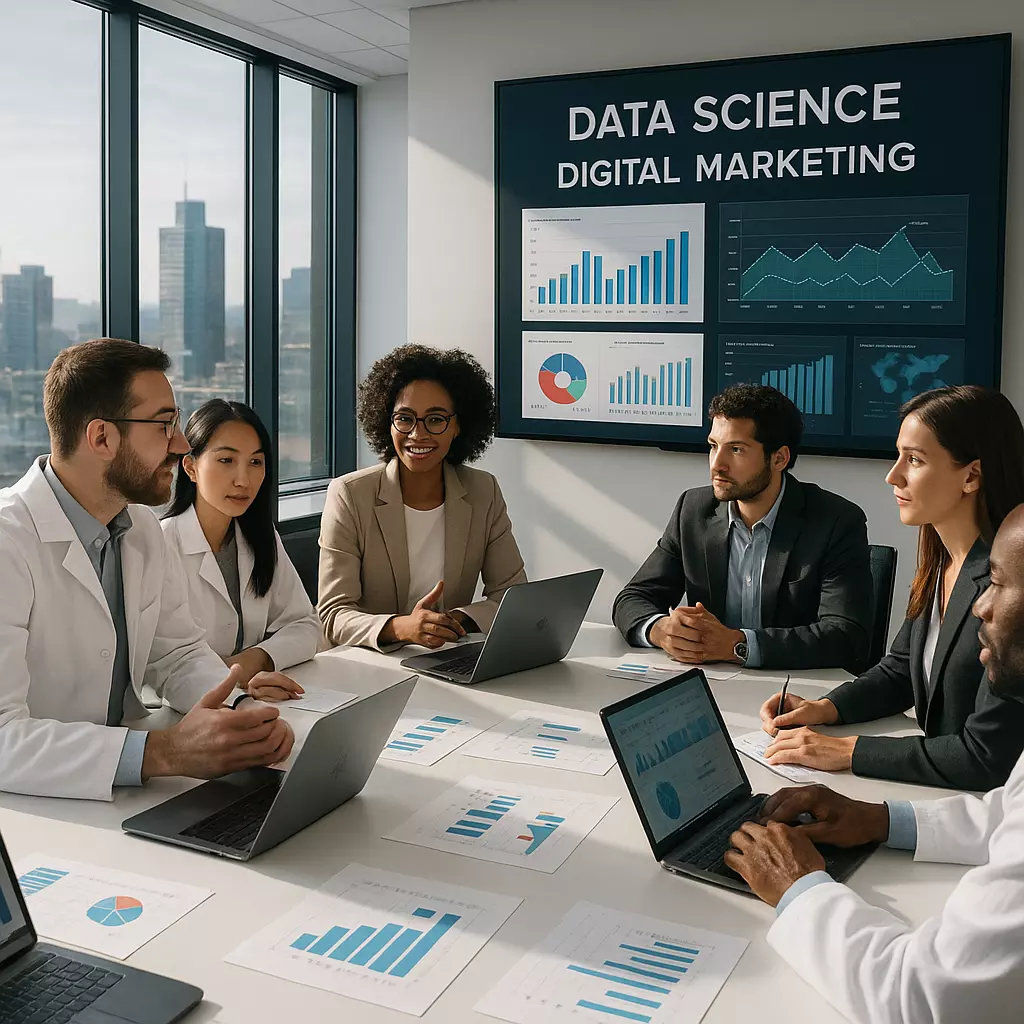
How Data Science and Digital Marketing Work Together
The combination of data science and digital marketing has changed how organizations interact with their customers in today's digital world. Data science helps digital marketing reach its aim of creating focused, effective, and personalized ads by finding useful information in large datasets. This article looks at how these two fields are related, focusing on important uses, advantages, and real-life instances of how they work together.
How to Understand Data Science and Digital Marketing
Data Science is a field that uses statistical analysis, machine learning, and computational approaches to get useful information from both structured and unstructured data. It includes things like gathering, cleaning, analyzing, and visualizing data to help people make decisions.
Digital marketing includes ways to use internet channels including search engines, social media, email, and websites to promote goods or services. Its main goals are to get people to pay attention, get them to visit, and get them to buy.
Data science and digital marketing are related since they both use data to improve their tactics. Data science gives marketers the analytical tools they need to stop guessing and start making accurate, data-driven decisions that make campaigns more effective and increase return on investment (ROI).
Important Uses of Data Science in Digital Marketing
Data science improves digital marketing in a number of ways, each of which focuses on a different part of marketing strategy:
Dividing customers into groups
Data science lets marketers split up their customers based on things like demographics, behavior, preferences, and past purchases. Machine learning algorithms find patterns in these datasets and make complete consumer profiles. For instance, an online store might utilize clustering methods like K-Means to classify clients based on how they shop, which would let them run ads that are specific to each group. This level of accuracy boosts engagement and conversion rates.
Analytics that predict
Predictive models can tell you things like how likely a customer is to leave or how much they will be worth over their lifetime. For example, data science can look at past data to guess which consumers are most likely to discontinue using a service. This lets marketers use retention methods like targeted offers. Companies like Salesforce utilize predictive lead scoring to put the most promising leads at the top of their lists, which helps them make the most of their sales efforts.
Recommendations just for you
Data science powers recommender systems that look at your browsing and buying history to identify products or content that could be of interest to you. Netflix and Amazon employ similar technologies to provide users individualized movie or product recommendations, which makes them happier and increases sales. These algorithms use methods like content-based filtering and collaborative filtering.
Analysis of Sentiment
Natural language processing (NLP) looks at consumer comments, social media posts, and reviews to figure out how people feel about a brand. This lets marketers figure out how customers feel and change their advertising as needed. Sentiment research can find problems in customer experiences, for example, so that brands can fix them and keep customers coming back.
Testing A/B and Improving Campaigns
Data science makes it possible to use A/B testing to find out which ads, messaging, or channels work best. Marketers may improve their campaigns in real time by looking at analytics like click-through rates and conversions. Data scientists also utilize regression analysis and other methods to figure out how things like ad spending affect sales and make the best use of their budgets.
Search Engine Optimization (SEO)
Data science helps SEO by looking at how well keywords work and how users act. For instance, algorithms can find high-value phrases that are easy to rank for, which helps marketers make content that fits with what people are searching for. Google's RankBrain is a machine learning algorithm that leverages data science to make search results more relevant, which has an indirect effect on SEO methods.
The Advantages of Using Data Science in Digital Marketing
There are many benefits of using data science in digital marketing, such as:
- Better Understanding of Customers: Data science reveals extensive information about customers' likes and dislikes, allowing for hyper-personalized advertising that connect with people.
- Better ROI: Data science makes marketing spending more effective by making sure that budgets are used wisely and that high-value customers are targeted.
- Competitive Advantage: Businesses that use data-driven strategies may stay flexible and respond to changes in the market and customer needs faster than their competitors.
- Automation and Efficiency: AI and machine learning take care of boring duties like optimizing content and targeting ads, which lets marketers focus on more important things.
- Real-Time Decision-Making: Marketers can change campaigns on the fly by looking at real-time data, which keeps them relevant and effective.
Examples from the Real World
- Netflix: Netflix uses data science to look at how people watch their shows and movies and then suggests content that is tailored to each viewer. This keeps people watching and coming back for more. These insights help it send customized emails and app notifications that keep people subscribed for longer.
- Starbucks: Starbucks uses data analytics to look at how people buy things using its mobile app. It then sends targeted offers that make customers more loyal and use the app more.
- By looking at how users interact with the site, Airbnb can make personalized trip suggestions and targeted ad campaigns, which leads to more reservations and conversions.
- Walmart employs market basket analysis to find things that people often buy together. For example, they might put alcohol and diapers next to each other based on past purchases to increase upselling chances.
Things to think about and problems
Even while it offers benefits, combining data science with digital marketing is not always easy:
- Data Privacy: Following what users do raises moral issues, thus companies must follow rules like GDPR. To keep people's trust, data practices must be open and honest
- Skill Gaps: To apply it correctly, you need to know both data science and marketing well, which means you need to spend money on training or employing qualified workers.
- Data Quality: Insights that are based on wrong or missing data can be wrong. It's really important to have strong processes for cleaning and validating data.
- Next Steps
The synergy between data science and digital marketing is poised to grow with advancements in AI and machine learning. Emerging trends include:
- AI-Driven Automation: AI will further automate personalized campaigns, enhancing efficiency and scalability.
- Real-Time Analytics: The rise of IoT and digital platforms will enable faster, more granular data analysis, improving campaign agility.
- Ethical AI: As privacy concerns grow, data scientists and marketers will need to prioritize ethical data use to build consumer trust.
Conclusion
Data science and digital marketing are intertwined disciplines that, when combined, unlock powerful opportunities for businesses. By leveraging data science techniques like predictive analytics, segmentation, and sentiment analysis, marketers can craft targeted, efficient, and impactful campaigns.
Real-world examples from companies like Netflix and Starbucks demonstrate the transformative potential of this synergy. As technology evolves, the integration of data science into digital marketing will continue to shape the future of customer engagement, driving innovation and growth in an increasingly data-driven world.