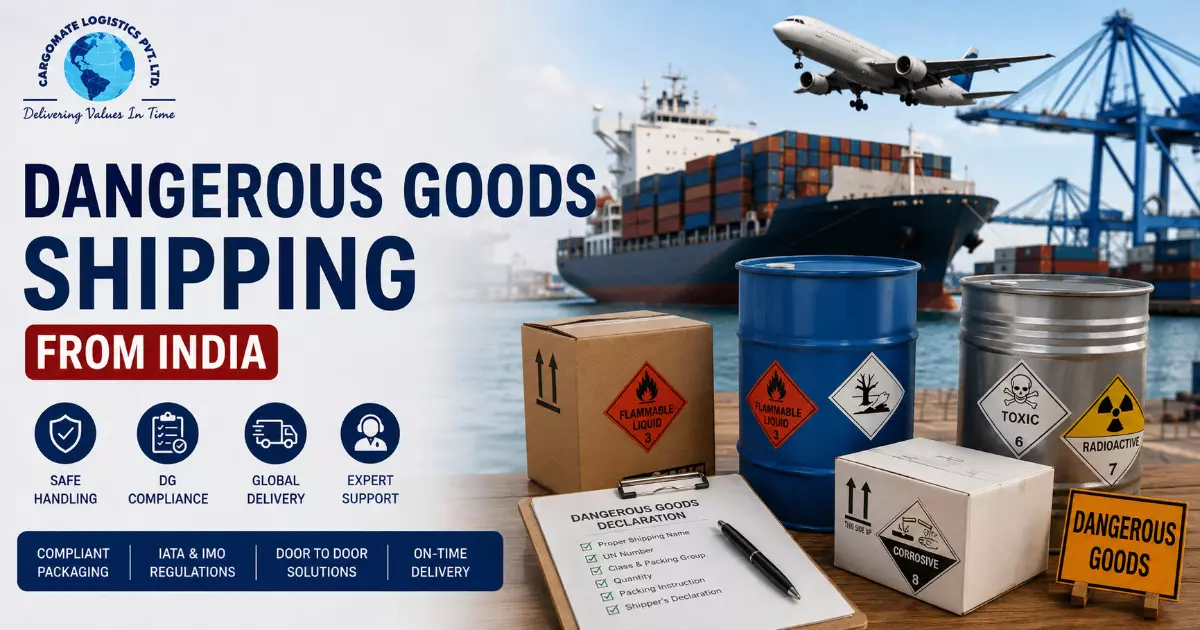
Dangerous Goods Shipping: Safe, Compliant & Reliable DG Cargo Solutions for Global Trade
Dangerous Goods Shipping is no longer simply about moving hazardous products from one location to another.
With global supply chains becoming faster, more interconnected, and highly compliance-driven, businesses need specialized logistics partners that understand cargo classification, documentation, packaging, handling, transportation regulations, and delivery requirements.
From chemicals and batteries to industrial materials, pharmaceuticals, aerosols, and other regulated products, every shipment requires the right transportation strategy.
A small documentation or packaging error can result in shipment delays, additional costs, cargo rejection, penalties, or serious safety concerns.
What Is Dangerous Goods Shipping?
Dangerous Goods Shipping refers to the specialized transportation of products, substances, or materials that may pose risks to people, property, vehicles, aircraft, vessels, or the environment during transportation.
These shipments require more than standard freight services. Depending on the nature of the cargo, businesses may need appropriate classification, packaging, marking, labeling, documentation, handling procedures, and transportation arrangements.
Common examples of dangerous or hazardous cargo can include:
- Chemicals and chemical products
- Flammable liquids and solids
- Compressed gases
- Lithium batteries and battery-powered equipment
- Certain paints, adhesives, and solvents
- Industrial chemicals
- Corrosive substances
- Toxic materials
- Certain pharmaceutical or laboratory products
- Environmentally hazardous substances
- Regulated aerosols and related products
The exact requirements depend on the product, its classification, quantity, packaging, mode of transport, origin, destination, and applicable regulations.
Why Businesses Need Specialized Dangerous Goods Logistics
Regular freight handling procedures are not always suitable for hazardous cargo. Dangerous Goods Logistics requires specialized planning from the moment the shipment is prepared until it reaches its final destination.
A professional logistics provider can help businesses manage critical areas such as:
1. Cargo Classification
The first step is understanding what is being shipped and how it is classified under the applicable dangerous goods regulations.
Correct classification helps determine the appropriate packaging, labels, documentation, handling procedures, and transportation method.
2. Documentation Management
DG shipments can involve detailed documentation requirements. Incorrect or incomplete paperwork may cause customs or carrier delays.
Experienced logistics professionals can review shipment information and coordinate the documentation required for transportation.
3. Specialized Packaging
Hazardous cargo often requires packaging that is appropriate for the specific material and transportation mode. Packaging must be selected and prepared according to applicable requirements.
4. Carrier Coordination
Not every airline, shipping line, warehouse, or transport operator accepts every category of dangerous goods. A specialized Dangerous Goods Freight Forwarder can coordinate with suitable carriers and service providers.
5. Shipment Tracking and Coordination
Businesses need visibility throughout the supply chain. Professional DG logistics solutions can provide coordinated shipment handling, milestone tracking, and communication between relevant parties.
Dangerous Goods Transport: Choosing the Right Mode
The best transportation method depends on the cargo characteristics, urgency, destination, quantity, cost requirements, and applicable regulations.
Dangerous Goods Air Freight
Dangerous Goods Air Freight can be suitable for time-sensitive international shipments when the cargo is accepted for air transportation and all applicable requirements are met.
Air freight can offer faster transit compared with many other transportation modes. However, dangerous goods transported by air are subject to specific and strict requirements.
Businesses should work with experienced professionals for shipment preparation, documentation, packaging, carrier acceptance, and handling.
Dangerous Goods Sea Freight
Dangerous Goods Sea Freight can be a practical option for larger consignments and international cargo where transit time allows ocean transportation.
Sea freight may offer cost advantages for suitable shipments, but hazardous cargo still requires proper declaration, packing, marking, documentation, container handling, and coordination.
Road Transportation
For domestic and first-mile or last-mile movement, Hazardous Material Transportation requires careful planning, appropriate vehicles, trained handling teams, route considerations, and compliance with applicable local requirements.
The right multimodal strategy can connect road transportation with air or ocean freight for efficient end-to-end movement.
Read: How to Prepare Documents for Smooth Import Export Process.
IATA Dangerous Goods Shipping: What Businesses Should Know
For air transportation, IATA Dangerous Goods Shipping is an important consideration. Businesses involved in international air cargo need to understand the requirements applicable to their specific shipment.
Depending on the cargo, considerations may include:
- Proper dangerous goods classification
- Appropriate packaging
- Required marks and labels
- Shipper documentation
- Carrier acceptance requirements
- Quantity limitations
- Handling instructions
- Emergency information
- Destination-specific requirements
Because air cargo moves through highly regulated supply chains, businesses should avoid treating DG shipments like ordinary commercial cargo.
A knowledgeable logistics partner can help coordinate the process and reduce avoidable shipment complications.
DG Cargo Handling: Why Every Step Matters
DG Cargo Handling begins before the shipment reaches the airport, seaport, warehouse, or transport terminal.
Professional handling can involve:
Each stage has a role in maintaining cargo safety and regulatory compliance.
Poor handling can create risks such as leakage, damage, contamination, mislabeling, shipment rejection, or unnecessary delays.
That is why businesses dealing with hazardous products should select logistics providers based on their experience with regulated cargo rather than choosing a provider solely on transportation price.
Hazardous Cargo Services for Modern Supply Chains
Modern manufacturers, exporters, importers, distributors, laboratories, and industrial businesses may require Hazardous Cargo Services at different stages of their supply chain.
A comprehensive solution can support:
- International DG freight forwarding
- Import and export shipment coordination
- Air cargo movement
- Ocean cargo movement
- Road transportation coordination
- DG documentation support
- Carrier coordination
- Cargo handling
- Warehouse coordination
- Customs-related coordination
- Shipment tracking
- Multimodal logistics planning
This integrated approach helps businesses avoid managing multiple disconnected logistics activities.
How to Choose a Dangerous Goods Freight Forwarder
Choosing the right Dangerous Goods Freight Forwarder can directly affect shipment safety, timelines, and overall logistics efficiency.
Before selecting a provider, businesses should evaluate:
Experience With DG Cargo
Ask whether the logistics provider regularly handles dangerous or regulated cargo and understands the requirements associated with different shipment categories.
Global Freight Network
International DG shipments may involve airlines, shipping lines, customs authorities, warehouses, trucking companies, and overseas agents. A capable network can make coordination easier.
Documentation Support
Documentation errors are a common source of shipment disruption. Look for a logistics partner that understands the paperwork and information required for the specific cargo.
Multimodal Capabilities
A provider capable of coordinating road, air, and sea transportation can offer greater flexibility when supply chain requirements change.
Transparent Communication
DG shipments require coordination. Clear communication regarding cargo status, documentation, carrier acceptance, and potential delays is essential.
CargoMate Logistics for Dangerous Goods Shipping
- CargoMate Logistics helps businesses coordinate specialized logistics requirements for regulated and sensitive cargo.
- With a focus on professional freight forwarding and supply chain coordination, CargoMate Logistics can support businesses looking for dependable Dangerous Goods Shipping, Dangerous Goods Transport, DG Cargo Services, and international logistics solutions.
- The objective is simple: help businesses move cargo through the supply chain with better planning, proper coordination, and fewer avoidable disruptions.
- Whether the requirement involves Dangerous Goods Air Freight, Dangerous Goods Sea Freight, domestic transportation, import/export movement, or multimodal coordination, selecting the right logistics partner can make the process more structured and manageable.
Benefits of Professional Dangerous Goods Logistics
Working with an experienced logistics provider can offer several commercial advantages:
Reduced Shipment Delays
Better documentation and transportation planning can help minimize avoidable disruptions.
Improved Supply Chain Coordination
A single logistics partner can coordinate multiple transportation and handling activities.
Better Cargo Visibility
Professional shipment management helps businesses stay informed about transportation progress.
Flexible Transportation Options
Depending on the shipment, businesses can evaluate air, sea, road, or multimodal transportation solutions.
Lower Operational Complexity
Outsourcing specialized logistics requirements allows businesses to focus more on manufacturing, sales, sourcing, and distribution.
Better Risk Management
Proper planning and compliance-focused handling can reduce operational risks associated with hazardous cargo.
A Smarter Approach to Dangerous Goods Shipping
The future of logistics is moving toward greater visibility, faster communication, digital documentation, optimized routing, and more integrated supply chains.
For dangerous goods, technology can further improve shipment coordination through digital documentation workflows, real-time tracking, automated shipment updates, centralized communication, and data-driven logistics planning.
However, technology works best when combined with experienced logistics professionals who understand the practical requirements of regulated cargo.
For businesses, the goal should not simply be finding the cheapest transportation option. The better approach is to find a safe, compliant, commercially efficient, and reliable logistics solution suited to the cargo.
Get Professional DG Cargo Support With CargoMate Logistics
Moving hazardous or regulated cargo requires specialized attention at every stage. From documentation and packaging coordination to carrier selection, freight movement, cargo handling, and final delivery, the right logistics partner can simplify the entire process.
If your business needs Dangerous Goods Shipping, Hazardous Goods Shipping, Dangerous Goods Transport, or specialized Hazardous Cargo Services, CargoMate Logistics can help coordinate your logistics requirements.
Get in touch to discuss your cargo requirements and identify a suitable transportation and logistics solution for your business.
Frequently Asked Questions About Dangerous Goods Shipping
1. What is Dangerous Goods Shipping?
Dangerous Goods Shipping is the specialized transportation of products or materials that may present safety, health, environmental, or property risks during transportation. Such shipments require appropriate classification, packaging, documentation, labeling, handling, and transportation procedures.
2. Can dangerous goods be shipped by air?
Yes, certain dangerous goods can be transported by air when the shipment complies with applicable requirements and the airline or carrier accepts the cargo. Dangerous Goods Air Freight requires careful preparation and documentation.
3. What is the difference between dangerous goods and hazardous goods?
The terms are often used interchangeably in logistics, although their precise meaning can depend on the regulatory or industry context. Both refer broadly to materials that require special controls because of potential risks during transportation.
4. Can dangerous goods be shipped by sea?
Yes. Dangerous Goods Sea Freight is commonly used for suitable international shipments, subject to applicable maritime regulations, carrier requirements, packaging, declaration, labeling, and handling procedures.
5. Why should I use a Dangerous Goods Freight Forwarder?
A specialized freight forwarder can coordinate documentation, carrier requirements, transportation planning, cargo handling, and other logistics activities associated with regulated shipments, helping businesses manage complexity more effectively.
6. What types of products may require DG logistics?
Depending on their properties and quantities, products such as chemicals, gases, flammable materials, corrosive substances, certain batteries, laboratory materials, aerosols, and industrial products may require specialized logistics handling.
7. What is DG Cargo Handling?
DG Cargo Handling refers to the controlled preparation, acceptance, movement, storage, loading, unloading, and coordination of dangerous goods according to applicable transportation and safety requirements.
8. How can CargoMate Logistics help with dangerous goods?
CargoMate Logistics can support businesses with specialized freight forwarding and logistics coordination for dangerous or regulated cargo, including transportation planning, carrier coordination, documentation support, and multimodal shipment management.