Custom Web Application Development Company | Build Scalable, High-Performance Web Solutions
Introduction to Custom Web Application Development
Modern businesses operate in a technology-driven world where digital presence determines market competitiveness. Organizations require flexible software platforms that support evolving operational needs and customer expectations.
Therefore, working with a custom web application development company helps enterprises build specialized digital ecosystems.
Custom web applications are designed according to specific business requirements. Unlike off-the-shelf software, these solutions offer better control over features and performance. In addition, they support future expansion without structural limitations. Businesses across industries are adopting custom development strategies to achieve better operational efficiency.
Digital transformation is no longer optional in today’s business landscape. Moreover, companies must deliver seamless online experiences to customers and employees. Consequently, custom-built web solutions provide the foundation for innovation and sustainable growth. Through professional development services, organizations can translate complex ideas into functional digital platforms.
Importance of Custom Web Application Development
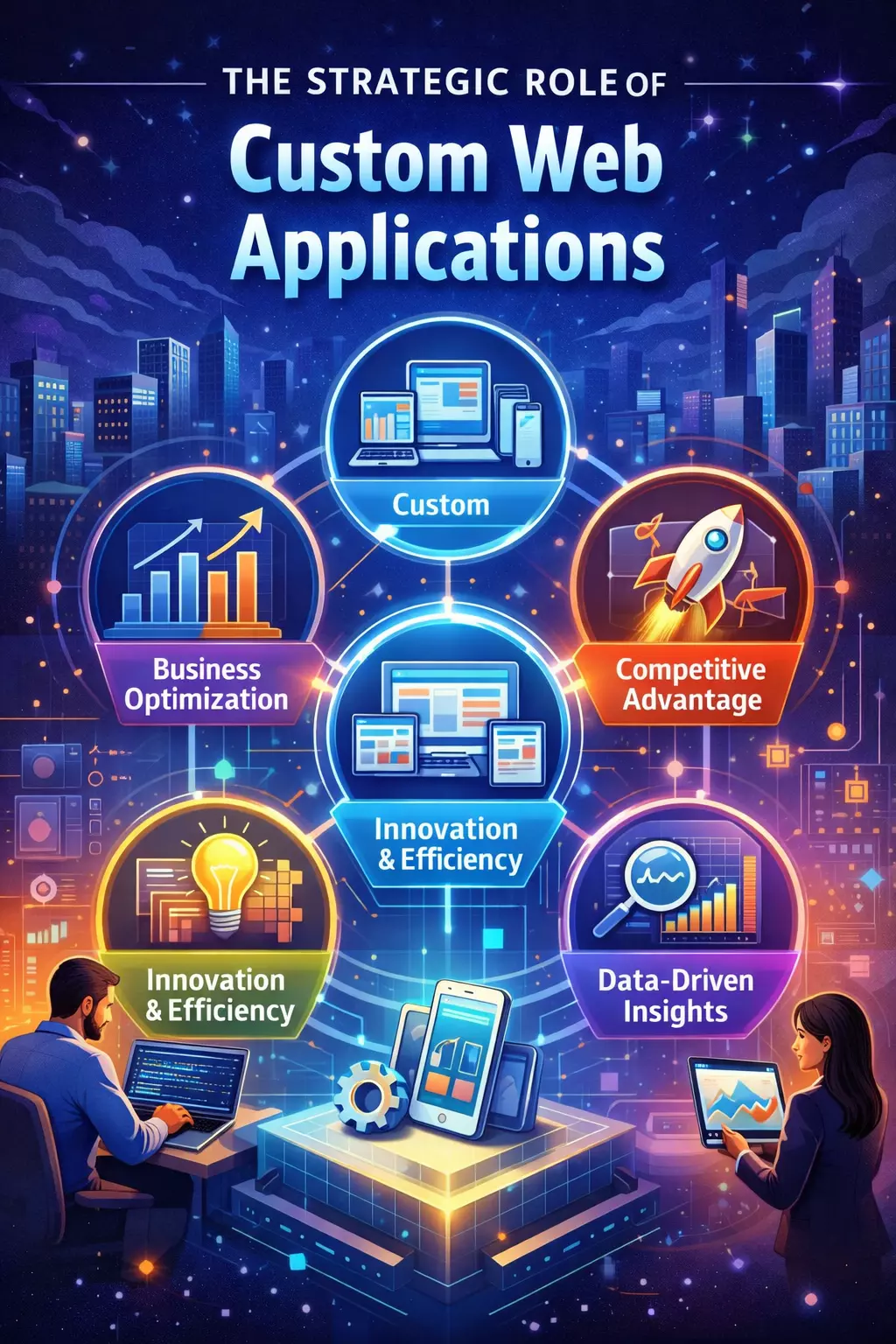
Custom web applications provide unique advantages compared to standardized software products. First, they offer complete customization according to business workflows. Companies can implement specialized features that match operational requirements. This flexibility improves productivity and reduces unnecessary system complexity.
Second, custom development enhances business process automation. Organizations can eliminate repetitive manual tasks through intelligent software design. As a result, employees focus more on strategic responsibilities rather than operational workload.
Third, custom applications improve competitive positioning in the market. Businesses can introduce innovative features that differentiate them from competitors. Additionally, tailored software helps companies respond quickly to customer feedback and market changes.
Furthermore, data management becomes more efficient with custom solutions. Businesses can design database structures that support specific reporting and analytics needs. This capability enables better decision-making based on real-time information.
Another advantage is ownership and independence from third-party vendors. Companies gain full control over system functionality and updates. Therefore, they avoid licensing restrictions associated with commercial software platforms.
Scalability and Performance Optimization
Scalability is a fundamental requirement for modern digital applications. Organizations experience unpredictable traffic growth during business expansion. Therefore, scalable architecture ensures uninterrupted service availability.
Cloud computing technologies play a significant role in supporting scalable infrastructure. Distributed server networks allow applications to handle large numbers of simultaneous users. Additionally, load balancing techniques distribute traffic evenly across servers.
Performance optimization improves system responsiveness and user satisfaction. Fast-loading applications reduce bounce rates and increase customer engagement. Developers implement caching mechanisms to store frequently accessed data.
Code optimization also contributes to performance improvement. Efficient programming reduces unnecessary resource consumption. Furthermore, database indexing accelerates search operations and query execution.
Content delivery networks help deliver multimedia resources quickly to global users. By storing content in geographically distributed servers, latency is minimized. This approach ensures consistent performance regardless of user location.
Continuous performance monitoring is essential for maintaining system stability. Advanced analytics tools track server health, memory usage, and processing speed. Early detection of performance issues prevents system failures.
Security and Data Protection
Cybersecurity remains a major concern for organizations operating online platforms. Sensitive business data and customer information must be protected from unauthorized access.
Encryption technology safeguards data transmission and storage processes. Secure communication protocols prevent interception of confidential information. Multi-factor authentication adds another layer of security verification.
Access control systems help restrict system permissions based on user roles. Employees receive only necessary privileges required for their tasks. This strategy minimizes internal security threats.
Regular vulnerability testing strengthens application security. Ethical hacking techniques identify potential weaknesses before malicious attackers exploit them. Security audits ensure compliance with international protection standards.
Backup and disaster recovery systems are essential for business continuity. Data replication across multiple servers protects information during system failures. Therefore, companies can restore operations quickly after unexpected disruptions.
Industries such as healthcare, finance, and e-commerce require strict security governance. Regulatory compliance ensures legal protection and customer trust. Secure development practices reduce financial and reputational risks.
User Experience and Interface Design
User experience directly influences customer retention and business success. Modern users prefer applications with simple navigation and attractive visual design.
Human-centered design principles guide interface development. Developers analyze user behavior patterns before creating layouts. This approach ensures intuitive system interaction.
Responsive design technology supports multiple device types. Applications function smoothly on smartphones, tablets, and desktop computers. As mobile usage increases globally, responsive interfaces become essential.
Interactive elements enhance user engagement. Smooth transitions, visual feedback, and dynamic content improve overall usability. However, excessive animation can negatively affect performance. Therefore, design balance is important.
Usability testing helps identify interface problems before public release. Real users participate in testing sessions and provide feedback. Development teams use this information to improve application structure.
Accessibility features ensure inclusivity for users with disabilities. Screen reader compatibility and keyboard navigation support are important components of modern design.
Integration and Automation Capabilities
Business organizations rely on multiple software tools to manage operations. Integration capability allows these systems to communicate efficiently.
Application programming interfaces enable data exchange between platforms. RESTful architecture simplifies integration development. Third-party services such as payment gateways and analytics tools can be connected easily.
Enterprise workflow automation reduces manual operational tasks. Automated notifications, order processing, and reporting systems improve productivity.
Customer relationship management software integration enhances marketing efficiency. Sales teams can track customer interactions through centralized dashboards.
Read: Essential Garage Door Maintenance Checklist for Homeowners
Middleware technology manages communication between complex enterprise applications. This approach simplifies data synchronization across departments.
Automation tools also support inventory management and financial processing. Real-time system updates help organizations maintain accurate operational records.
Maintenance and Technical Support
Software development does not end after product deployment. Continuous maintenance ensures long-term application reliability.
Bug fixing and security patch updates are necessary to maintain system integrity. Technical teams monitor platform performance regularly.
Feature enhancement is another important maintenance activity. Businesses introduce new functionalities based on customer requirements.
Backup management protects organizational data from accidental loss. Disaster recovery planning minimizes operational downtime during emergencies.
Documentation support helps internal technical staff understand system architecture. Proper documentation improves system management efficiency.
Many organizations prefer long-term service contracts with development providers. These partnerships ensure consistent technical assistance.
Technology Stack Selection
Choosing the right technology stack influences application success. Different projects require different programming environments.
Backend development technologies such as Node.js, Python, and Java provide powerful processing capabilities. These languages support complex business logic implementation.
Frontend frameworks like React, Angular, and Vue.js improve interface development speed. Developers can build interactive interfaces efficiently.
Database systems must be selected based on data volume and structure. SQL databases provide structured data management, while NoSQL databases support flexible storage.
Cloud hosting platforms offer scalable infrastructure management. Organizations can deploy applications without maintaining physical servers.
DevOps practices improve software delivery speed. Continuous integration and continuous delivery pipelines automate deployment processes.
Containerization technologies improve portability across development environments. Applications can run consistently on different machines.
Strategic technology selection supports innovation while controlling development expenses.
Conclusion
In the modern digital economy, businesses must adopt advanced software solutions to remain competitive. Partnering with a professional development team helps organizations build reliable digital platforms.
A high-quality custom web application development company delivers scalable, secure, and high-performance solutions. Through intelligent architecture design, user-centered interfaces, and strong security implementation, businesses achieve sustainable growth.
Scalability planning, performance optimization, and system integration are essential components of successful web applications. Moreover, continuous maintenance support ensures long-term operational stability.
As technology evolves rapidly, custom web development will continue playing a crucial role in business transformation. Organizations that invest in specialized development services gain stronger market positioning.
Ultimately, custom-built applications provide flexibility, efficiency, and innovation opportunities for modern enterprises. Businesses that embrace tailored software solutions can confidently navigate future technological challenges while delivering superior customer value.